“Behavioral Health and the Justice System”
Browse Articles Below View Full Issue (Flipbook) View Full Issue (PDF)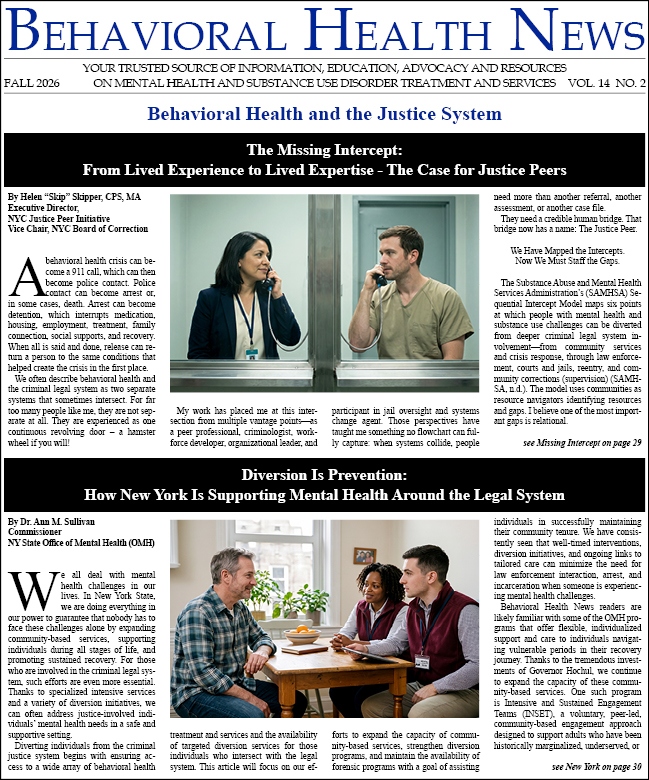
About This Issue
Behind every arrest, every courtroom decision, and every cell door sits a behavioral health story that too often goes untold. This issue brings those stories into view.
The Fall 2026 issue of Behavioral Health News examines where mental illness and substance use disorders meet policing, courts, incarceration, and reentry. Featuring perspectives from clinicians, peer professionals, attorneys, system leaders, advocates, and people with lived experience, contributors explore treatment before arrest, the growing role of peers across the justice system, assisted outpatient treatment, addiction care and continuity of care after release, and the financial barriers that follow reentry, along with the needs of youth, veterans, older adults, and parents. Together, these articles show how behavioral health and the justice system are connected at every turn, and what it takes to build a system that treats rather than punishes.
Articles in This Issue
A Qualitative Exploration of ADHD, Prosocial Bonds, and the School-to-Prison Pipeline
A Trauma-Informed Approach to Justice-Involved Veterans
Beyond Either/Or: Where Assisted Outpatient Treatment Fits in Mental Health Care
Beyond Punishment: Rethinking Behavioral Health Care in the Justice System
Closing the Re-Entry Gap: Connecting Justice-Involved Individuals to Addiction Treatment
Community Integration, Economic Security, and the Promise of Olmstead
Diversion Is Prevention: How New York Is Supporting Mental Health Around the Legal System
Dr. Isaac Mawuko Adusu Named 2026 Community Leader of the Year for Advancing Disability Inclusion
Financial Stability: Building Practical Infrastructure for Reentry
Florida’s Youth Incarceration Problem Has a Proven Fix
From Juvenile Hall to Clinical Care: De-Escalating Youth Trauma Through Deflection Pathways
It’s 2026. Why Are Peers Not Front and Center in Our Mental Health Crisis Response System in NYC?
Justice-Impacted Older Adults: Supporting a Vulnerable Population
Nobody Listened Until She Was in a Courtroom: Postpartum Illness and a Diagnosis That Runs Out
Preventing Forensic Involvement Through Continuous Care
Relationship-Driven Recovery: Reimagining Behavioral Health Support for Justice-Involved Individuals
Still Arresting Our Way Out: Why New York Needs to Expand Its Diversion Courts
The Justice System’s New Role in Behavioral Health Compliance
The Missing Intercept: From Lived Experience to Lived Expertise – The Case for Justice Peers
The NYSPA Report – Treatment Before Arrest: Why Diversion Begins With Engagement
The Role of CCBHCs in Reducing Incarceration
Westchester’s Behavioral Health Diversion Continuum: A Roadmap Through the Justice System