Recovery from addiction is often strengthened through connection with others who have lived experience. Across New York State, peer professionals – individuals with lived recovery experience – are playing an increasingly important role in behavioral health services. Through strategic policy development, workforce investment, and service integration, the New York State Office of Addiction Services and Supports (OASAS) is advancing peer services as a core component of the addiction treatment and recovery support system.
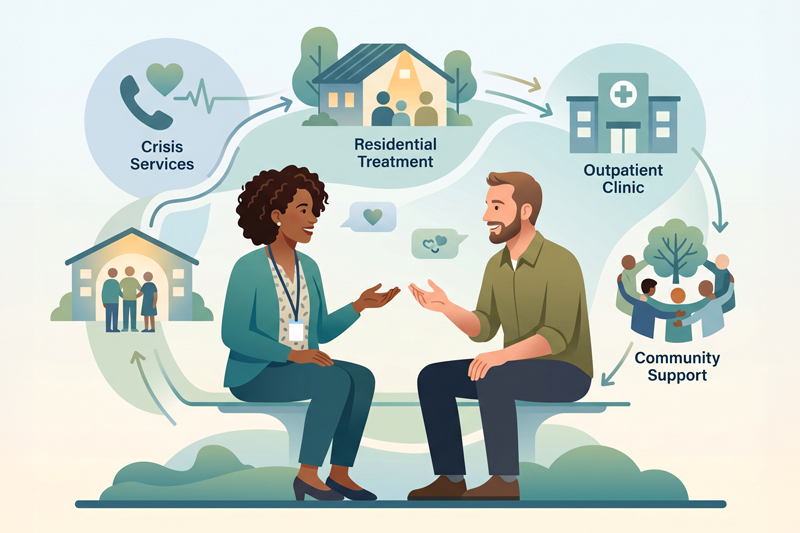
Peer professionals provide mentorship, encouragement, advocacy, and practical guidance grounded in their own recovery journeys. This shared experience fosters trust, improves engagement in care, and helps individuals navigate pathways toward recovery and stability.
Recognizing the value of lived experience alongside clinical expertise, New York State has prioritized peer integration across the continuum of care – from outpatient clinics and residential treatment programs to crisis services and community-based recovery supports. Embedding peer professionals within multidisciplinary teams helps address the emotional, social, and practical needs individuals and families face throughout the recovery process.
Integrating Peers into Treatment Settings
One of the most significant policy advances in New York has been the requirement that all Part 822 outpatient addiction treatment clinics include a Certified Recovery Peer Advocate (CRPA), or provisional CRPA, as part of their staffing model. This ensures that individuals entering treatment have access to recovery support from someone who brings both lived experience and professional training.
Peer professionals are also increasingly integrated into Certified Community Behavioral Health Clinics and Crisis Stabilization Centers, where their presence can be particularly impactful during moments of vulnerability. In these settings, peers often play a key role in building trust, engaging individuals in services, and connecting them to treatment and community-based supports.
Residential treatment programs across New York are similarly expanding the role of peers within their levels of care. In residential settings, peers support recovery planning, facilitate connections to mutual support communities, and assist individuals as they transition from structured treatment back into their communities.
A recent OASAS survey found that 85 percent of providers report using peer services, reflecting the growing recognition that recovery-oriented systems of care benefit from integrating lived experience into service delivery.
Supporting Engagement Before and After Treatment
Peer services also play an important role in supporting individuals both before and after formal treatment episodes. OASAS guidance highlights the importance of preadmission services that help stabilize individuals as they begin the treatment process. Early peer engagement can reduce barriers to care and improve treatment initiation and retention.
Peers are increasingly deployed in settings where individuals may first encounter the behavioral health system, including emergency departments, courts, jails, prisons, and harm reduction programs. In these environments, peer professionals can help individuals navigate complex systems and facilitate connections to treatment and recovery supports.
OASAS regulations also allow outpatient programs to deliver services in community settings outside the clinic, enabling individuals to receive support in environments where they may feel more comfortable. Through collaboration with the New York State Department of Health and the Centers for Medicare & Medicaid Services, OASAS secured federal approval for Medicaid reimbursement of certain off-site services — allowing both peer and clinical supports to be delivered where people live and work.
Peer services are also central to continuing care, an important component of the Part 822 regulatory framework. Continuing care enables individuals to remain connected to outpatient treatment long term. Through peer support and related services, individuals can maintain connections to care during periods of stress, return to use, or major life transitions — recognizing that recovery is often long-term and non-linear.
Building and Supporting the Peer Workforce
As peer services expand across the system, workforce development and effective supervision are critical to sustaining their impact.
New York State has placed increasing emphasis on strengthening peer supervision. The InUnity Alliance New York Certification Board has developed a Peer Supervision Professional Certification to ensure supervisors have the skills and competencies needed to effectively support peer staff. Clear supervision structures help maintain the integrity of the peer role while promoting professional growth and accountability.
Equally important is helping clinical staff and administrators understand the distinct role of peer professionals. Peers are not substitutes for clinicians; rather, they provide complementary support rooted in lived experience, empowerment, and recovery coaching.
OASAS continues to expand the peer workforce by supporting training, professional development, and leadership opportunities. Through initiatives such as the Addiction Professionals Scholarship Program and the OASAS Leadership Academy, the agency is investing in the next generation of recovery professionals. To date, OASAS has awarded more than 150 scholarships to support individuals pursuing the Certified Recovery Peer Advocate credential.
In alignment with Governor Hochul’s priorities, OASAS is also working to develop specialized training and certification pathways for peers supporting individuals affected by gambling harms. Additional initiatives are underway to expand recovery support services, including peer services, that address the unique cultural and developmental needs of young adults.
To further strengthen the field, OASAS and the recovery community have established peer and peer supervisor learning collaboratives. These collaboratives provide opportunities for shared learning, mentorship, and systems improvement across the state, while also helping organizations meaningfully integrate peers into their programs.
OASAS is also collaborating with the Office of Mental Health to convene peer professionals working across behavioral health systems. A statewide conference dedicated to peer professionals is currently in development and will further support knowledge exchange and workforce growth.
Strengthening Recovery-Oriented Systems of Care
The expansion of peer services represents an important evolution in how addiction treatment systems support recovery. By integrating lived experience alongside clinical care, programs can create environments that are more engaging, responsive, and person-centered.
Across New York State, peer professionals are helping individuals build hope, strengthen resilience, and sustain recovery over time. As OASAS continues to advance peer integration across the behavioral health system, the role of lived experience remains clear: people in recovery are not only beneficiaries of care – they are essential partners in helping others achieve it.


Adam Viera is the Associate Commissioner of Harm Reduction. Brenda Harris-Collins is the Director of Recovery and Social Needs at the New York State Office of Addiction Services and Supports (OASAS). For more information, visit oasas.ny.gov.