

It is a well-known fact that our traditional mental health care system has experienced a strain over the past six years. Not only are there ongoing needs for services across communities, but also an ongoing staffing crisis that impedes the successful delivery of those services. Mental health challenges from suicidality, stress, bullying, substance misuse, family planning, systems navigation, and relationship woes require innovative approaches to mental health service delivery. For many, the process of accessing a mental health service is even more challenging during their time of need, due to lengthy intake processes and changes in providers. Recent data indicate that our current national network of healthcare providers is only meeting 26% of the actual need, and an additional 6,200 providers would need to be hired to help alleviate this shortage.

Peer Specialists are uplifted as a valuable resource to support the complex needs of communities. In 2025, New York State awarded $2.75 million toward bolstering the Youth and Family Peer Advocate Workforce. Though Peer Specialists have been acknowledged as offering a unique approach to utilizing lived experience(s) to support those dealing with mental health concerns, the idea of lived experience has been an ambiguous concept. Peer lived experience has historically been linked to mental health challenges and concerns, meaning to be a successful peer, one must have had the same challenge as the specific population served. However, the understanding of shared lived experiences can be broadened to appreciate all aspects of a person that contribute to their mental health. In fact, peer work is understanding the need for genuine acknowledgement of the many facets of a person that need to be seen and understood. Those are the essential elements of any helping professional that can coalesce with the identities of our help seekers.
At Vibrant Emotional Health (Vibrant), we have prioritized peer roles across all service lines: crisis hotlines, youth education, and family and youth wellness programming. However, we emphasize the importance of all clinical professionals and leaders to consider their own identities in their work and how it is mirrored in the experience of those they support.
Consider the current state of Youth Mental Health in the United States. It is well documented that there is a current Youth Mental Health Crisis, where 40% of high school students express feelings of hopelessness, and due to several environmental and systemic barriers, youth have not engaged in therapeutic services. Innovative programs that integrate mental health with day-to-day educational support may be the key to supporting this population. The Fellowship Initiative, funded by JP Morgan Chase, models an innovative approach by offering comprehensive social and emotional wellness support to youth during formative years of their development; Vibrant integrates mental health support in all facets of their educational journeys as they apply for college. Clinical Youth Leaders, mental health professionals who share identities with the youth, are essential in this strategy. They can connect with their own experiences, utilize this knowledge to bridge mistrust, and find the opportunity to integrate tools for overcoming inevitable challenges that youth face growing up.
Damon Watson, Program Director for Vibrant Emotional Health’s Social Emotional Wellness arm of The Fellowship Initiative offers a layered perspective to how having a shared experience can benefit those who are often overlooked by a traditional mental health system of care.
“I have the honor of leading The Fellowship Initiative (TFI) at Vibrant, where we support young Black and Brown masculine individuals on their social and emotional wellness journeys. Every day, I sit at the intersection of clinical care, leadership, and lived experience. I’m also a Black, masculine-bodied therapist. And that identity isn’t separate from my work. It’s foundational to it – a vital part of its fabric. Before I became a therapist and before I entered leadership, I was a country boy who came of age in rural Virginia. I was raised around strong women and feminine energy. My sense of self was formed largely through the intentional care work of my grandmother, mother, and aunts. My grandma, in particular, taught me care, compassion, and accountability long before I had language for emotional wellness. Women like her often carried families, communities, and traditions on their backs, teaching us all strategies for being well in environments that weren’t always designed to protect and prioritize our wellness. But outside of those spaces, the message for boys like me was different: be tough, be silent, handle it on your own. Without question, these conventions of normal masculinity not only influenced me but also policed how I could show up in the world. And today, I see that same tension molding the young men I serve.
In behavioral health, we talk a lot about evidence-based practices, treatment fidelity, and outcomes, all of which are needed. However, one of the most powerful tools I bring into the room cannot be measured on a fidelity scale: shared identity, which refers to the common lived experiences and cultural backgrounds of provider and client that inform mutual understanding and build trust.
Early in this role, someone told me the most powerful thing I could do was ‘simply show up.’ I’ve come to understand the truth about that. When young Black and Brown masculine bodies see me, not simply as a therapist, but as a leader, something changes. That wall slowly comes down. Guarded postures soften. The initial belief of ‘he doesn’t see me’ starts to evaporate.
My upbringing taught me early on how culture shapes survival. I understand code-switching because I’ve lived it. I did not know it had a name back then. And yet, I performed it often. I understand hypervigilance because I’ve felt it. I understand the pressure to perform strength because I’ve carried it. So, when a fellow tells me he can’t afford to be seen as ‘soft,’ I don’t hear resistance. I hear strategy. I hear protection. I hear a young person navigating systems that haven’t always been safe.
Growing up surrounded by strong women taught me that care and even softness are strengths. Yet society often teaches Black boys the opposite: that masculinity requires emotional suppression. In my role as a therapist-leader, I don’t just talk about emotional wellness; I model it. I name emotions. I set boundaries. I place importance on well-being. I’m honest about the fact that I’m still learning the art of balance myself.
The young Black and Brown bodies that TFI serve are watching us. They’re learning that strength can include vulnerability; that accountability can live alongside compassion; that asking for help is not synonymous with weakness; that modeling is prevention work. When we normalize lived experiences and amplify naming emotions, crises become less inevitable.”
Damon’s reflection and leadership are essential in the behavioral health workforce. As we experience a staffing crisis, and look at innovative ways to fill that gap, we should remember that there are those with valuable lived experiences and shared identities that also need to be recognized. Fewer than 5% of psychologists in the United States identify as Black. (American Psychological Association, 2022). A comprehensive approach should therefore include both workforce diversity and system-wide improvements (Sanford 2020). Uplifting the identities of all mental health professionals will lead to effectiveness and more healthy outcomes.
Systems must invest in:
- Organizational cultures that acknowledge lived experience as an evidence-based practice
- Pipelines for clinicians of color and those facing inequitable access to career advancement in the field
- Leadership pathways for culturally grounded providers
- Metrics that measure trust and engagement, not just service volume
Damon’s experiences as a leader and therapist highlight what might be a simple approach to helping advance what peer work could mean:
“I often think about that country boy from Buckingham, Virginia, raised by powerful women, navigating expectations of masculinity, searching for places where he could be both strong and soft.
I became the therapist I needed when I was younger. I became the leader I wish I had seen.
Behavioral health care works best when those we serve feel noticed, heard, and understood. Shared identity doesn’t replace clinical skill; it strengthens connection, deepens trust, and accelerates healing. Sometimes the most powerful intervention isn’t a technique. It’s a recognition. Perhaps recognition is a technique. Because when young people see themselves mirrored in the people who hold space for them, they begin to believe that healing belongs to them, too.”
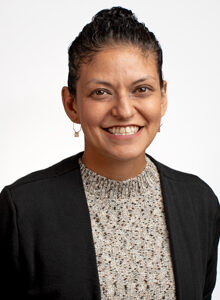

Dr. Jantra Coll, PsyD, is the Vice President of Community Programs, and Damon Watson, MPH, LPC, is the Program Director of the Fellowship Initiative at Vibrant Emotional Health.
Resources
American Psychological Association. (2022). Demographics of the U.S. psychology workforce. https://www.apa.org/workforce/data-tools/demographics
Stanford FC. The Importance of Diversity and Inclusion in the Healthcare Workforce. J Natl Med Assoc. 2020 Jun;112(3):247-249. doi: 10.1016/j.jnma.2020.03.014. Epub 2020 Apr 23. PMID: 32336480; PMCID: PMC7387183. https://pmc.ncbi.nlm.nih.gov/articles/PMC7387183/
https://comptroller.nyc.gov/reports/classrooms-counselors-clinics/


The author’s blend of personal experience with broader implications serves as a catalyst for change, urging us to create environments that value every individual.
There’s something deeply affirming about being supported by someone who not only studied mental health, but who also understands the lived realities, culture, language, and experiences that shape our communities. I’m grateful to have a therapist who shares an identity with me, but who also truly sees me and validates my experiences on a regular basis. That kind of care matters more than people realize