Workplace mental health challenges are often visible long before they are addressed. Changes in mood, attendance, communication, focus, or behavior may signal that an employee is struggling, yet many workplaces lack a clear and practical way to respond. Supervisors and coworkers are not trained clinicians, nor should they be expected to act as therapists. What they do need, however, is a framework that helps them recognize concern, approach others with care, and connect people with appropriate support before challenges escalate.
Research consistently shows that employees often delay seeking help because of stigma, fear of consequences, or uncertainty about what qualifies as “serious enough” to warrant support (American Psychological Association, 2023). When people feel isolated, misunderstood, or fearful of judgment, they often wait until distress becomes a crisis. Workplaces – where most adults spend a significant portion of their lives – can either reinforce that silence or become environments where support and connection are normalized.
That is the intent behind the Mental Health Association of Nassau County (MHANC) SAFE Workplace Mental Health Support Training, a practical model designed to help organizations take meaningful, human-centered steps when someone may be struggling. SAFE is not clinical training, nor is it intended to turn managers into therapists. It is a structured approach for building a supportive culture – one that encourages recognition, respectful communication, and timely connection to help.
Why Workplaces Need a Simple, Supportive Framework
Many organizations are investing in mental health awareness, Employee Assistance Programs, and workplace wellness benefits. While these resources are valuable, individuals do not always access them in the moments they are needed most. Employees experiencing stress, burnout, or emotional strain may still feel uncomfortable discussing these concerns with supervisors or colleagues.
Coworkers and supervisors often report the same uncertainties:
- What should I say?
- What if I say the wrong thing?
- Is it my place to step in?
- Could I unintentionally make things worse?
Without guidance, people may avoid the conversation altogether or respond in ways that feel transactional, disciplinary, or dismissive – even when their intentions are good.
SAFE provides a shared language and a clear path forward.
The SAFE Model
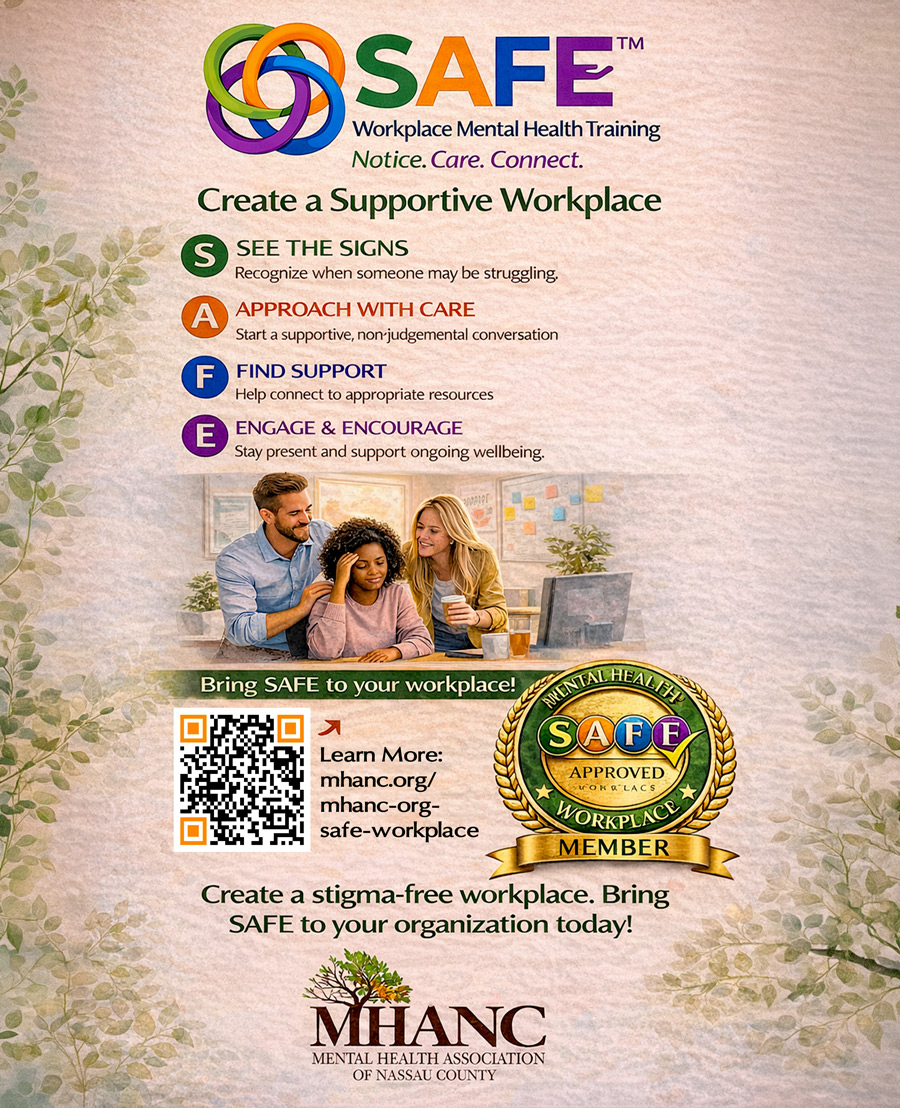
SAFE is a four-step framework designed to help workplaces recognize concern, approach with care, and connect individuals to appropriate support.
S – See the Signs. Recognize potential indicators of distress. These may include noticeable shifts in behavior, increased irritability, withdrawal, changes in performance, conflict, or increased absences. This step is not about diagnosing. It is about noticing and taking concern seriously.
A – Approach with Care. Learn how to begin a supportive conversation in a way that reduces defensiveness and stigma. This includes choosing the right time and place, using respectful language, listening without judgment, and communicating care rather than criticism. In practice, this means focusing on what you have observed and asking open, supportive questions.
F – Find Support. Identify pathways to help that match both the workplace and the individual’s needs. Support may include internal resources, external options such as EAPs or community-based services, or immediate safety supports when warranted. A key principle is knowing what is available before an urgent situation occurs.
E – Engage and Encourage. Follow-through matters. This step emphasizes ongoing support, encouragement, and appropriate check-ins. It reinforces that reaching out for help is not a one-time event and that recovery and stability often require more than a single conversation.
What SAFE Changes in Workplace Culture
It works because it is both practical and relational. SAFE focuses on human connection rather than rigid policy. It does not begin with policy; it begins with people. It helps workplaces strengthen what behavioral health has long recognized as essential: connection, empathy, boundaries, and clear pathways to support.
The World Health Organization emphasizes that psychologically safe workplaces rely on supportive communication, early recognition of distress, and clear pathways to help – all core elements of the SAFE model (World Health Organization, 2022).
When staff share a common framework, important shifts can occur. Employees are more willing to speak up early when something feels off. Conversations become more respectful and less reactive. Workplaces become better equipped to connect individuals to help before problems escalate.
SAFE also reinforces an important distinction: supportive workplaces are not workplaces without challenges. They are workplaces that respond to challenges with clarity, compassion, and responsibility.
The Role of Behavioral Health Organizations
Behavioral health providers have a unique opportunity to help communities extend support beyond clinical settings. Although workplaces are not designed to provide treatment, they can serve as protective environments where individuals feel seen, supported, and connected to the help they need.
In that sense, SAFE reflects a broader principle: mental health is not only a clinical concern; it is a community concern. Models that translate behavioral health values into everyday environments strengthen prevention, reduce stigma, and expand access to early support.
A Path Forward
Workplaces do not need to become clinical. They need to become capable – capable of recognizing concern, approaching people with care, and connecting individuals to support without shame. With shared language, clear steps, and a culture that values dignity, organizations can move from awareness to action and help create safer, healthier communities for everyone.
Jeffrey McQueen, MBA, LCDC, is Executive Director of the Mental Health Association of Nassau County. He can be reached at [email protected] or 516-489-2322, and more information is available at www.mhanc.org.
References
American Psychological Association. (2023). Workplace Mental Health Statistics and Trends.
Mental Health America. (2024). Mind the Workplace: National Employee Mental Health Report.
World Health Organization. (2022). Mental Health at Work: Policy Brief.