“It is people who go through suffering that have an empathy for the suffering of others.”
– Mary Robinson
The Journey
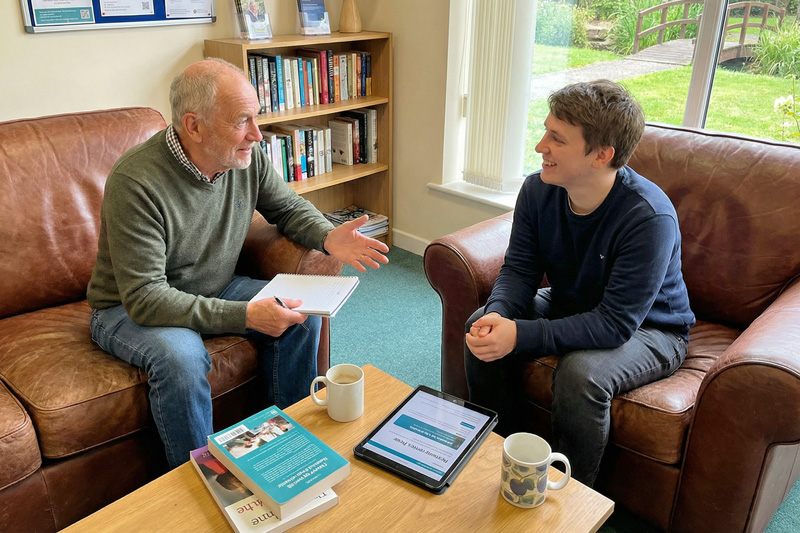
Traveling through suffering is best shared. Learning from suffering and being able to pass on knowledge is a blessing. Working with mental health consumers, I can see myself in their struggles and doubts, and hopefully they see hope from my struggles. Can the flow of such exchanges be like a ripple in a pond reaching outward, touching unknown shores?
Being a peer is more than just exchanging ideas and skills. It can also be a bond, because we can be more than just therapist and client. Unlike working with a therapist, the walls of separation are different, and the connections are different. There is a commonality of experiences, of pain, of disappointments, hopes, and successes shared.
My successes and failures, I can pass them onward. Who could have thought I would be stronger today? After involuntarily leaving an accounting career, after being misdiagnosed for twelve years, after several inpatient stays (five in five months), I would achieve an MFA in Creative Writing. Therapy developed mental resilience to survive radiation and chemotherapy and become a peer. Accomplished through therapy and using taught skills, treatment can bring a renewed future. Guiding by example.
My Groups
Weekend Planning: Via research, contacting local communities for everything from free events to food pantries. Making sure clients have something to do and are not overwhelmed by being alone or by downtime.
What’s New in the World: Discussions on issues affecting clients, new developments in the sciences, sports, nature, etc. Learning how fortunate we are (see the Village of 100). Avoid specific topics. Enhance goodwill.
Men’s Group: As most of the therapists are women, a session to talk freely about any subject.
Symptoms Management: Discussing issues occurring, preventing relapses, and skills to use. Sharing ideas, experiences, and what has personally worked.
Welcoming New Clients: Making new consumers feel comfortable. Giving tours of our facilities. It can feel like entering a class in mid-semester.
Socializing: Our recreation center offers various activities, from cards to movies, with an open policy. Location of the free bookstore, where clients, staff, and all programs can take what they desire. There are no sign-out sheets. Books do not have to be returned. Also, the location of free information and resources from all levels of government and various organizations.
Filling In for Therapists: We are there, we are the backups, the reserves, continuing the care clients deserve and need. Consistency of treatment.
Peers and Bridging Generational and Cultural Differences
With my peer clients, in groups or individually, there can be a generational gap that is an asset for all. Being in my late 60s, by explaining the benefits of today’s treatments, medications, and skills mostly unavailable a generation ago, younger clients realize how much has been overcome and the progress to come, gaining appreciation and gratitude for being here in this place and time. Every generation has shown a decrease in stigma and improvements in diagnosis, therapy, medications, employment opportunities, and more.
Through their eyes, I hope they see, learn, and respect what I try to offer. Their acceptance and resilience strengthen my own resolve. Their skills and the generational and cultural differences they bring, I apply to my own growth and lifestyle. Technology is one obvious example. The confidence and trust consumers have in my efforts help overcome a strong sense of insecurity from years of feeling different.
In discussions, while having any illness is difficult, younger generations have a greater understanding of the benefits and opportunities available, and they are learning and adapting to specific situations and life choices. From relationships and friendships to careers and goals, a renewed quality of life can be more focused. While misdirection will always occur, their future choices and options are clearer. Everyone has limited control over life’s circumstances; peers can assist those struggling with neurodivergent issues. Information is knowledge, and knowledge brings greater control and awareness.
Together with older clients, we share ways and ideas to climb new mountains from prior setbacks, be it prior careers, relationships, or financial hardships. There is a commonality of experiences not always available with some professionals.
I wish and hope one day peers can reach more people in our general community. Too many are not aware of how difficult it is to change the brain’s neural pathways, to manage medications, and to conform daily. The human brain is so delicate and fragile. Those who do not understand can make growth, life, and recovery more difficult. There are even some who do not believe in their own fallibility, causing real challenges for everyone.
To help non-consumers understand, I use the example of trying to use your non-dominant hand in activities, just a few muscles, just a small part of the brain. Let others see how difficult it is to be constantly mindful.
Teaching Daily Life Skills
Nutrition is an important part of well-being and balance. Our society is filled with unhealthy choices from foods to entertainment. Too many are intentionally addictive. It is difficult to block their visual and sensory media dominance. Cultural differences, especially in foods, have also enlightened me to healthier lifestyles.
Peering helps everyone deal with the difficulties and complexities of medications, relationships, issues with sleep, family, jobs, and daily life skills. Sharing experiences, a wall therapists cannot breach, peering is a display of successful living with mental illness. We can also share outside our community a greater understanding of the complexities of mental health issues. And our skills can be shared with others. Too many go through life without basic life supports. I had too many employees in the business world without the basic skills consumers learn here.
Many are surprised when I tell them about my cancer (now four years in remission) and how the tools learned through mental illness helped with the anxiety, the pain, and the unknown. Tools some other cancer patients did not have. And to accept, to seek, and to find the silver linings hidden in pain. It is difficult, but by peering, hope and strength are reinforced in both me and the client.
As a former accountant, I also assist clients with managing their own finances, budgeting, and value-focused shopping. From reading labels and creating a consistent diet to navigating digital shopping apps and understanding price, cost, and value. Daily living skills, especially simple and healthy meal preparation, are usually outside the general range of therapists, as they have more important client matters to handle.
As a peer, I research the availability of paid and volunteer jobs. A volunteer job led me to a part-time paid position at the local public library. From there, we established a free bookstore, receiving donations from numerous sources. I also make available free materials (accessible in the bookstore), from food pantries, free local activities, free self-help courses, and available public information on health, consumer protection, budgeting, and finance.
“Compassion is ethical intelligence: it is the capacity to make connections and the consequent urge to act to relieve the suffering of others.” – Will Tuttle
All quotes cited in this article were sourced from this website.

Glenn Slaby, MBA, MFA, is a Certified Peer Specialist with the PROS program at St. Vincent’s Hospital, a division of St. Joseph’s Medical Center. He can be reached at [email protected] or (914) 220-2140, and more information is available at www.glennslaby.com.