Children rely on their parents for so many things, such as learning how to tie your shoes, respect your elders, and navigate relationships with friends. Parents are often the first to celebrate their kids’ joys and support them with the challenges of life. Parents teach and role model through their words as well as their behavior, demonstrating skills on how to manage strong emotions, get along with others, make healthy decisions, and solve problems.
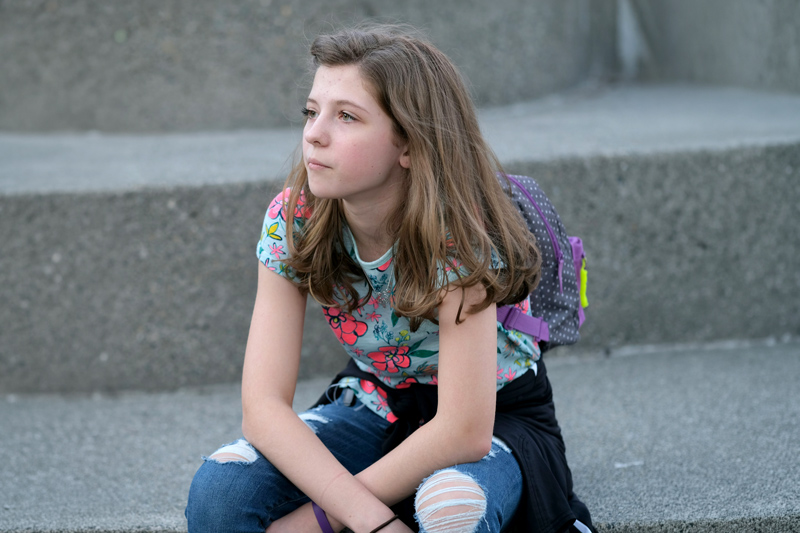
When a parent is living with mental illness, all of these domains can be affected. Parenting is hard to begin with…but regulating emotions, solving problems, being attuned to and engaged with your child, and making healthy choices can be more difficult when managing mental illness.
Research on Parental Mental Illness
Parental mental illness is one of the ACE (Adverse Childhood Experiences) categories that has been studied for several decades. Research shows that about 1 in 5 youth lives with a parent managing a mental illness (Swedo et al., 2024). While the severity of the illness can vary considerably, about 4 to 7% of youth live with a parent with a serious mental illness (Campo et al., 2020), including schizophrenia, major depression, or bipolar disorder.
Many of these youth are resilient, drawing upon personal and community supports. Research has found these children can develop strong empathy and compassion, skills that can serve them well throughout their lives (Sabella et al., 2022).
However, research also shows that parental mental illness is a risk factor for a variety of physical and mental health problems, difficulties with social relationships, and academic challenges (Rasic et al., 2014). A recent very large meta-analysis (Uher et al., 2023) found that about half of children whose parents have major depression or bipolar disorder will develop some kind of mental illness at some point in their lives. About 20% of youth whose parent has psychosis will develop some form of mental illness. Thus, due to both nature and nurture, these young people are at increased risk.
The Youth Experience
Children whose parents manage mental illness often experience a wide range of feelings. They may be:
- Embarrassed at their parent’s behavior in public
- Confused why their parent doesn’t come to their school events
- Angry that their family has to manage this situation
- Scared that they will someday develop a mental illness themselves
- Sad at seeing their parent hurting
- Lonely when they feel invisible and misunderstood
- Hurt when their friends make fun of their parent
These challenging emotions can be amplified when kids feel like no one understands their experience and they don’t have anyone to talk to.
How These Children Are Often Invisible
Sadly, all too often these children are invisible and fall through the cracks. There are many reasons for this state of affairs, including:
- Families’ fear of child protective services involvement
- Families being focused on the ill parent, leaving less time and energy for the kids
- Lack of community supports for these kids
- The siloed mental health care system where adult and child providers don’t consistently collaborate
- Children sometimes pretending they’re “fine” to avoid burdening the stressed family system
Interestingly, children whose parents manage other issues are more recognized and supported. A simple online search quickly reveals inviting resources, camps, support groups, and more for children managing parental cancer, dementia, and incarceration. Similarly, parental addiction (a commonly overlapping issue with other mental illnesses) has considerable supports, including a formal organization (National Association for Children of Addiction), free support groups (Alateen), children’s programs in some treatment centers (e.g., Hazelden’s Betty Ford programs), and many excellent books and resources. In comparison, I’m unaware of any formal programs, groups, or organizations in the United States specifically for youth whose parents manage mental illness; similarly, there are relatively few books and resources for these kids.
In addition, children of parents managing mental illness have formal legal rights in some countries. For example, Norway requires mental health staff to register the children in the health record, identify the children’s needs, educate parents, and connect families with other services. Similarly, the United Kingdom requires certain steps when a parent is involuntarily admitted to an inpatient psychiatric unit. Staff must identify the parent’s children, provide the kids with support, and provide appropriate referrals. Laws such as these in Norway and the United Kingdom can be exemplars for the United States to help identify and support these children.
A New Resource for Teens
In collaboration with my mother, an advocate and teacher, we have been working to raise awareness of these youth for 20 years, and are passionate about making them “visible” in our country. One component of our work is writing books for families, and we recently released the second edition of our interactive book for teens: “I’m not alone: A teen’s guide to living with a parent who has a mental illness or history of trauma” (2024, Seeds of Hope Books). Focusing specifically on parental depression, bipolar disorder, schizophrenia, and post-traumatic stress disorder (PTSD), it provides essential information, skills for effective coping, and empowering messages from teens who have “been there.” Throughout the book, readers reflect on their feelings and consider scenarios that may resonate with their experience. It’s a practical, hopeful book that strives to connect with readers so they feel informed, empowered, and not alone. Sample chapters and many free online resources are available on our website: www.seedsofhopebooks.com.
What Can We Do to SEE These Youth?
First, we need to recognize these young people, in our schools, healthcare settings, community activities, and neighborhoods. Remember, there are about 18 million kids navigating parental mental illness in our country. As noted above, there are many reasons these children and families may not choose to disclose the precise nature of what’s going on, but you might sense they’re struggling. Simply invite the child to join your family for an outing, or offer to drop off a meal. Sometimes it’s just the little things that can make a big difference.
Secondly, we need to create resources for youth-serving professionals. The science of prevention identifies skills that can be helpful for building resilience in children. Connecting kids with other supportive adults and youth, encouraging regular exercise and healthy eating, recommending kids avoid substances and excessive social media use, and instilling hope can be extremely valuable approaches.
Third, it’s imperative for mental health providers who work with adult clients to routinely, respectfully, and directly ask about their experience as parents and how their children are doing. Appreciating the potential for embarrassment and fear of being seen as an ineffective parent, it’s essential to take a strengths-based, affirming approach. Validate that parenting is hard, and explore how you might be able to help them as a parent and support their children. Learn who in your community has expertise in supporting kids managing parental mental illness, and collaborate in serving the entire family.
Michelle D. Sherman, PhD, LP, ABPP, is a board-certified clinical psychologist in Minnesota who has dedicated her career to supporting families of adults living with a mental illness or trauma history. She is a Fellow of American Psychological Association’s Society for Couple and Family Psychology, and was named their Family Psychologist of the Year in 2022. She is the Editor in Chief of the journal, Couple and Family Psychology: Research and Practice. She worked for 17 years in the VA system and as a Professor at the University of Minnesota and Oklahoma medical schools. She has published over 75 articles in peer-reviewed journals, and over 100 book chapters and articles in other sources. In her personal life, she serves on the NAMI-MN-Ramsey County Board and writes books (with her co-author mother) for family members who love someone living with a mental illness/PTSD. For more information, email [email protected] and visit www.SeedsofHopeBooks.com.
References
Campo, J. V., Fontanella, C. A., & Bridge, J. A. (2020). Intergenerational associations of parental mental illness and child health. JAMA Pediatrics, 174(8), e201755.
Rasic, D., Hajek, T., Alda, M., & Uher, R. (2014). Risk of mental illness in offspring of parents with schizophrenia, bipolar disorder, and major depressive disorder: A meta-analysis of family high-risk studies. Schizophrenia Bulletin 40, 28–38.
Sabella, K., Baczko, A., Lane, I. A., Golden, L., Pici-D’Ottavio, E., & O’Neill, M. (2022). A challenging yet motivating journey: The experiences of young adult parents with serious mental health conditions in the USA. Frontiers in Psychiatry, 13, 814185.
Swedo, E. A. (2024). Adverse childhood experiences and health conditions and risk behaviors among high school students—Youth Risk Behavior Survey, United States, 2023. MMWR supplements, 73.
Uher, R., Pavlova, B., Radua, J., Provenzani, U., Najafi, S., Fortea, L., … & Fusar-Poli, P. (2023). Transdiagnostic risk of mental disorders in offspring of affected parents: A meta-analysis of family high-risk and registry studies. World Psychiatry, 22(3), 433–448.