As soon as one learns that they are going to be a parent, the planning and preparation begins. It is a new journey. A journey that does not necessarily come with a handbook of how-tos, sure there are books, resources, literature etc. that can ‘guide’ you but there really isn’t a one tell all way to be a parent. You grow and learn with your child. When I discovered I was to be a mother, I was both overjoyed and terrified. I did what every new parent would do, I bought the books, I read the articles, I learned which bouncy seat was the safest, which bottle would reduce the tummy upsets, which diapers were all natural, and how to schedule with the best rated pediatric practice. I prepped the nursery, filling my heart with dreams and aspirations for my daughter and the person she would become. At no time during the baby clothes shopping or wallpapering the nursery did I stop and consider learning about the children’s mental health system. I did not have a need to, why would I?
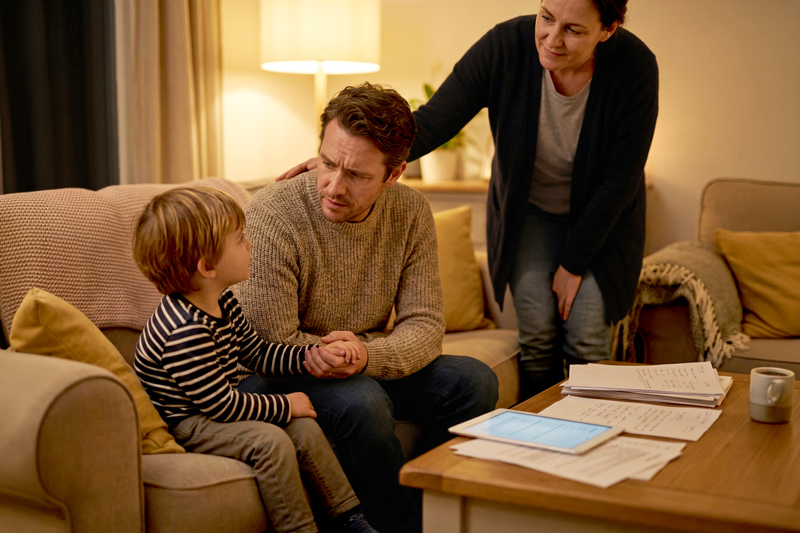
Fast forward 7 years…my daughter had just celebrated her birthday. She was a healthy, vibrant, active, and intelligent little girl. Her smile and laugh would light up every room, until one day it didn’t. Overnight, I found myself thrust into this uncharted system, the children’s mental health system. I became obsessed with navigating terminology, services, medication, therapies…without direction, without a handbook. I was lost, heartbroken and overwhelmed with guilt. I couldn’t help her feel better and didn’t understand what I had done wrong. I was alone and running in survival mode. I was no longer learning with her; I was learning for her – to support her health, her safety and happiness.
The children’s mental health system, a piece of a larger vast system of care, is a system that as a parent can at times be challenging and frightening to navigate. As a single parent, I was searching for any direction that would support recovery for my daughter. At times, it felt as if I was running at top speed on a treadmill unable to reach a final destination. It wasn’t until a fellow parent from a play group asked if I had heard of Family Support. Family Support was not something I was familiar with. It took a bit of time to make the connection with a Family Peer Support provider, also known as a Family Peer Advocate (FPA), however I quickly realized the incredible value this connection would bring to me and the journey of recovery for my daughter.
Connecting with another parent with similar lived experience was uplifting and encouraging. I found strength in our connection, I no longer felt alone. I had a co-captain that was supporting me through the uncharted system. Having an FPA walking alongside me provided me with moments to catch my breath and clear my mind, allowing me to see what it was my daughter and family needed.
The unique lived experience that Family Peer Advocates provide is an unmeasurable connection through strength. Supporting the family voice, respecting that you are the expert of your child, that a plan needs to work for you, your family and your home allows for successful engagement. When a person’s voice is valued and heard, it’s fuel to drive success and to drive recovery.
Family Peer Support fosters family driven care, bridges families with providers, and naturally supports positive successful engagement and trust. When trust is mutual, families feel less judged and stigmatized. Facing her challenges, my daughter experienced judgment – judgment from her peers, her teachers, even members of our family. As her parent, I too faced the same judgment. The shame was at times debilitating. Through support from my Family Peer Advocate, the stigma we experienced started to lift. Family Peer Support provided me with validation, allowing for an empowering journey toward my daughter’s recovery. Having faced adversity and stigma, I have highly regarded those that share their lived experiences to support and guide those in need which also led me to become a credentialed Family Peer Advocate in support of other parents.
The web that is the children’s mental health system challenges parents when they do not need additional challenges in life. A system designed to support emotional health, well-being and provide preventative support is often accessed not for prevention but rather when crisis strikes. Due to the stigma that accompanies mental health, families do not readily seek support services until they are in a crisis situation. Families enter the system already overwhelmed and at a disadvantage for navigating and understanding it. This is not due to lack of services or providers but more so because there is no guide or handbook. You may have case managers, therapists, crisis support, school counselors, all working toward a shared goal of successful interventions, all sharing their expertise and guidance. For a parent, that is equivalent to being in a room where everyone is loudly shouting suggestions at the same time – overwhelming, difficult to process and intimidating. In those moments, families can lose their sense of self and lose their voice.
Family Peer Support enhances the children’s mental health system in many different valuable ways. I have witnessed and experienced this at varying levels, from working with small grassroots agencies in creating Family Support Programs to amplifying family voice at the state level. Family Peer Advocates have become partners in program and service development, as well as development of policy and regulation guidance. Services and supports designed for families and children should be driven by the very same people accessing and utilizing them. Family Peer Support not only creates bridges between providers and families but also between families and system development.
Gaining momentum for its importance in elevating family driven care, Family Peer Support has evolved and is present in the various tiers of the mental health system – from community-based service supports, in-patient treatment facilities, residential treatment to crisis intervention. Similar to my experience, the literature shows that Family Peer Support Services can be a welcome addition to traditional mental health programs (Hoagwood et al., 2010; National Federation for Families, n.d.; Radigan et al., 2014). Parents and other caregivers can benefit from connecting and speaking with someone who has been in their shoes. They are more likely to feel heard, understood, and feel less alone and judged. Through these services, parents and caregivers can feel more empowered and have increased confidence in managing challenges and participating in services. Family Peer Advocates can also engage parents and caregivers in parenting skills, managing behaviors, and navigating services. The support and services received means that families may be more likely to stay engaged and involved in the services they and their child receive as it helps to reduce barriers.
Family Peer Support Services can be very successful when well-designed and thoughtfully implemented in mental health programs. Successful implementation of Family Peer Support Services involves:
- Leadership and program staff learning about Family Peer Support prior to implementation;
- Having a clear vision for how Family Peer Support can help families as its own service distinct from clinical work;
- Crafting job descriptions that align with Family Peer Advocate credential requirements and practice principles;
- Communicating to existing staff the value of Family Peer Support and how multidisciplinary teams can work together for a family;
- Creating workflows that include participation by all staff, including peers, as equal partners;
- Ensuring the Family Peer Advocate receives supervision in line with peer practices and principles (which is different than clinical supervision); and
- Supporting staff in continuous professional development and networking with other peers (Mirbahaeddin & Chreim, 2022).
There are a variety of resources that exist in which agency and program leaders can learn more about the implementation of Family Peer Support, such as by connecting with Families Together in NYS, FREDLA, National Federation of Families, Strong Families and Communities Training Center, or accessing resources at PeerTAC or CTAC. Agencies and programs can further extend their support for families by ensuring that more family voice and feedback inform services and supports family driven care. Family peer support does not replace clinical treatment but instead complements clinical care and ensures that the family is at the center. No parent should have to face the children’s mental health system alone. With the support of family peer advocates, families gain the encouragement, knowledge and confidence to advocate for their children. Services are family driven, making resilience and recovery possible.


Amy Piroli, FPA-C is the Director of Peer Support Training and Lydia Franco, PhD, LMSW is the Education and Innovation Officer at NYU McSilver Institute. To learn more about NYU McSilver, go to https://mcsilver.nyu.edu/. For questions, please contact the primary author at [email protected].
References
Hoagwood, K. E., Cavaleri, M. A., Serene Olin, S., Burns, B. J., Slaton, E., Gruttadaro, D., & Hughes, R. (2010). Family support in children’s mental health: A review and synthesis. Clinical Child and Family Psychology Review, 13(1), 1–45.
Mirbahaeddin, E., & Chreim, S. (2022). A narrative review of factors influencing peer support role implementation in mental health systems: Implications for research, policy and practice. Administration and Policy in Mental Health and Mental Health Services Research, 49(4), 596–612.
National Federation of Families (n.d.) Family Peer Support for Families, Parents and Caregivers in Mental Health and Substance Use Across the Lifespan. Retrieved from: https://www.ffcmh.org/_files/ugd/eeeef8_9e1c7e38235e477a8a35ae5af78c7224.pdf
Radigan, M., Wang, R., Chen, Y., & Xiang, J. (2014). Youth and caregiver access to peer advocates and satisfaction with mental health services. Community Mental Health Journal, 50(8), 915–921.