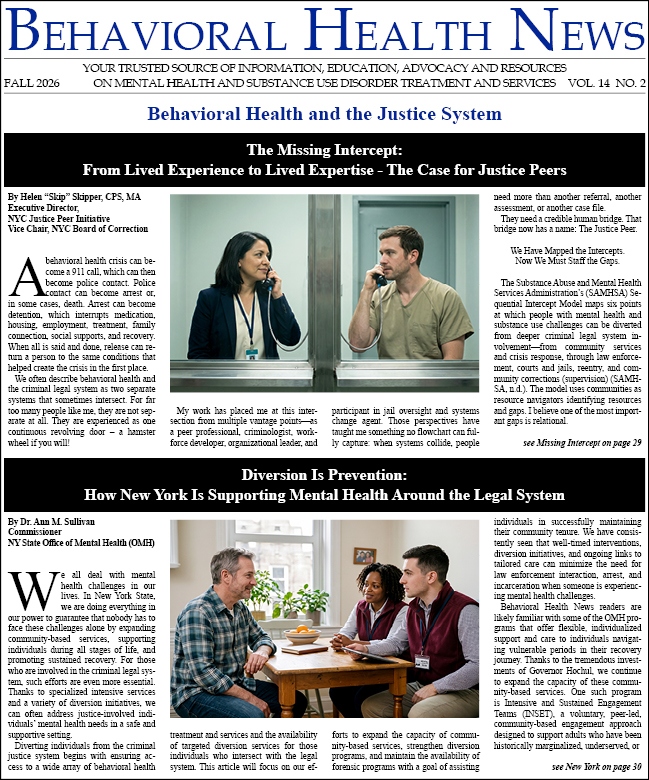
The Dream
Scene I
Psychiatrist X: We’ve got you covered….
Psychiatrist Y: Smothered
Psychiatrists X and Y: And if you don’t perform, we’ll make you permanent.
Me: Let me out of here and we’ll all be free.
Scene 2
Social Worker Z: We’re cancelling the group today.
Me: But I need to share my dream.
Scene 3
Me: My shrinks doubt me.
Peers A-W: You’re so much better now.
Me: Then how come after 60 years of therapy, I’m standing smaller.
Peers A-W: Where would our shrinks be without us? Poorer.
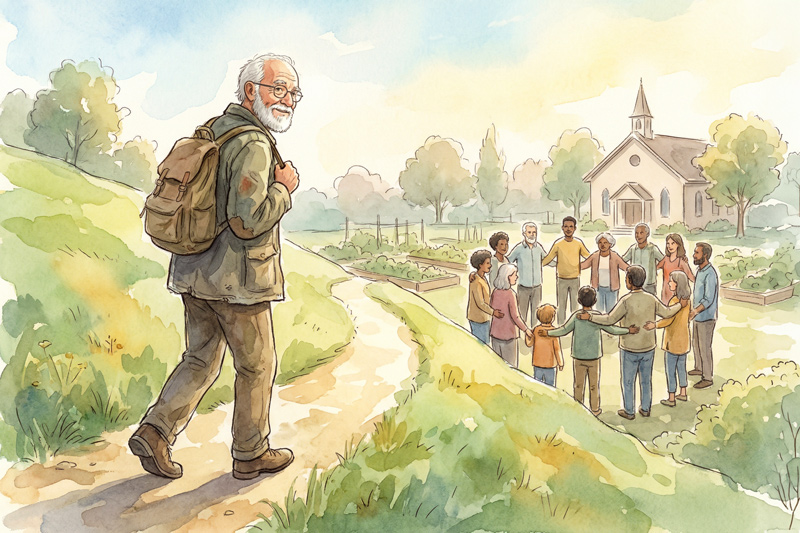
On Becoming a Peer Specialist Before It’s Too Late
Where would we be without labels? I’m an old, white, straight, middle-class guy, born and raised Jewish, now a liberal Protestant Quaker. (Our sect is known for its “honest to goodness,” but never owned Quaker Oats.) If not for my bipolar disorder diagnosis in 1974, at age 22, I’d have lived out my life in psychiatric obscurity. While at my worst during periods of suicidal depression, alternating hypomania enabled me to bounce back, including professionally as a community organizer, urban planner, and journalist.
But it wasn’t until 1999 when I heeded the plea of my mother, president of a community mental health center, to join the National Alliance on Mental Illness (NAMI Metro NYC) and tell my story publicly of how I had passed as “chronically normal” for so many years. In 2002, I cashed in my notoriety by becoming an employment specialist for Brooklyn, New York’s Baltic Street Mental Health Board (now “Baltic Street Wellness Solutions”). By the time I retired from Manhattan’s Fountain House in 2024, at age 73, I had worked as a peer specialist for a dozen agencies, my proudest stint being two years at NYC Well (now the 988 suicide and crisis line) during the pandemic.
Shooting for the Moon Medicinally and Falling Flat on My Face Emotionally
For years I had been reducing my dosage of the mood-stabilizer, Depakote, with the goal of eventually eliminating it. After all, in old age you need all the energy you can get. And being pre-diabetic, I was concerned about metabolic syndrome as a side effect. Cautioning against going cold turkey, my latest psychiatrist suggested I substitute Latuda, an anti-psychotic no less, to reduce that risk.
Unfortunately, around Easter last year, my hope for resurrection triggered what felt like a crucifixion. I fell into a depression with an agitation so great that, when I finally ran out of energy, all I could do was lie in bed for six weeks. Even though my wife, Susan, “force-fed” me, I lost 20 lbs. (down to 125). And stopping my medication didn’t help. Hard to know how much this reaction to the new drug was complicated by such “losses” as retirement, a sister’s death, and the completion of my “From Here to Recovery: Confessions of a Peer Counselor.” (The letdown after completing a manuscript can be devastating.)
Remembering what a long and tortured process my brother’s fatal anorexia had been, I finally admitted myself to the inpatient psych unit at Maimonides Medical Center, where I relearned that the quickest way out was to “fake it til you make it.” Notwithstanding the genuine care of the staff, I went through the motions with all the therapy, from talking to music, art, and drama. Given how weak I felt from weight loss and muscular atrophy, gaining discharge in just 10 days was a minor miracle. However, to achieve a quick escape, I abandoned “peer solidarity” for fear of sinking into other patients’ deep doo-doo. Even after returning home, it took me months to realize that isolation was not a winning strategy.
From Here to Recovery With and Without Peer Support
The price of my freedom was appointments with my social worker and psychiatrist every week or two, although I had little to say to them. Because regaining my strength was uppermost in my mind, I walked the two miles to and from the hospital, plus treks up and down a hill in my Prospect Park neighborhood. (I felt like Sisyphus, who the Greek gods condemned to roll a boulder against gravity for eternity.)
Then, returning to Quaker church, I cooked for social hour after Sunday worship, a “saving grace” you might say, but without socializing. Even if many congregants had “held me in the Light” during my absence, I didn’t know how to make small talk about something as deep as suicidal depression. I also prepared meals for our immigrant rights group because I wasn’t up to advocating at Federal Plaza’s detention center.
“Saved by Imagination: How Reading and Writing Restored my Mental Health” is one of my unpublished books. If writing was the last thing on my mind after the literary “epitaph” of “Confessions of a Peer Counselor,” I could at least escape through fiction. Because what’s a good story without characters who talk easily to each other, I shared with my psychiatrist the revelation that, if I didn’t open to others, I would bore myself to death.
She referred me first to an interpersonal skills group, motivating me to reconnect with people I had ghosted, then one with a concern for grief (because the tongue is a vital organ to lose). My attendance was sporadic as I took two steps back before each step forward. Whereas, when I was a peer specialist, compassion for peers’ predicaments was rule #1, I struggled to treat myself similarly.
For a few weeks I participated in an employment support group at my church, hoping to revive the ambition of parlaying my end-of-life midwife certification into a food service for families whose loved ones were dying. Once again, I abandoned my fellow sufferers because their lamentable job searches reminded me too much of my own.
Instead, I became a member of the culinary unit at Brooklyn’s Venture House. Unfortunately, the kitchen in their temporary storefront was so small that staff supervision left little room for members’ initiative. So, after studying for and passing the test to recertify my food handler’s license from the city’s health department, I returned to Fountain House, this time as part of their kitchen unit. With its commercial size, from which up to a hundred people are fed every meal, I was part of a dozen staff and members who accept individual responsibility while acting cooperatively.
A similar model exists for the volunteers of Good Neighbors of (Prospect) Park Slope. Although not officially a naturally occurring retirement community (NORC), our goal is a myriad of ways to maintain well-being by socializing. After participating in the aging transitions and conversational French groups online, I proposed writing book reviews together. To practice, I critiqued Alice Munro’s The Lives of Girls and Women (1972) and M. John Harrison’s Empty Space: A Haunting (2012), proving that I not only still had the gift of gab but also a steady enough hand to type my thoughts on paper.
Then, I shared my dark night of the soul during a discussion of our spiritual journeys at a Concern for Quaker Living meeting. That’s when I had the idea for this essay. Quakers have a history of speaking truth to power, but if you don’t have the power to listen for the still small voice within before translating it into words, you will be mired in stereotypes, like the ones in the dream with which I prefaced “Peer Specialist, Heal Thyself.” The lesson is that what’s good for the goose (peer) is good for the gander (peer specialist), otherwise known as the mutuality of intentional peer support. (If only I had applied such a maxim sooner.)
Never Too Late for Afterthoughts
One irony is that five years ago I helped create the New York Academy of Peer Services’ specialization in older adult behavioral health. If I had followed my own advice in the five courses and two-page job description for helping our elders age well despite psychiatric diagnoses, I wouldn’t have the pleasure of admitting I made a big boo-boo. Here I am a year later informing Jesus that I bore my cross just for him. Will he jeer me or cheer me?
Another irony is that, although I’m back on Depakote, I’ve maintained my weight around 130 lbs., to go with a height of 5’ 5”, resulting in a normal (no longer pre-diabetic) blood glucose level. How long I can keep up my slimmed-down Mediterranean diet is anyone’s guess. I invite you to play the betting markets and, if you win, share your winnings with me like a good peer specialist—intentionally!
Finally, I and Susan, who retired as a horticultural therapist at 75, and is now 81, had a lawyer draft our health care proxies, HIPAA permissions, and living wills for end-of-life decision-making, documents that everyone should have. We also made burial arrangements. But I neglected to create a psychiatric advance directive (PAD) in case of another crisis. So, please do as I now say by using this handy guide to avoid meeting your maker prematurely: FREE Webinar – Peer Perspectives on Psychiatric Advance Directives (PADs).
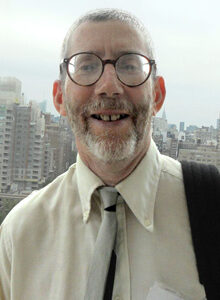
Carl Alan Blumenthal, MS, MA, NYCPS (retired) is a regular contributor to Behavioral Health News. Contact him at [email protected].