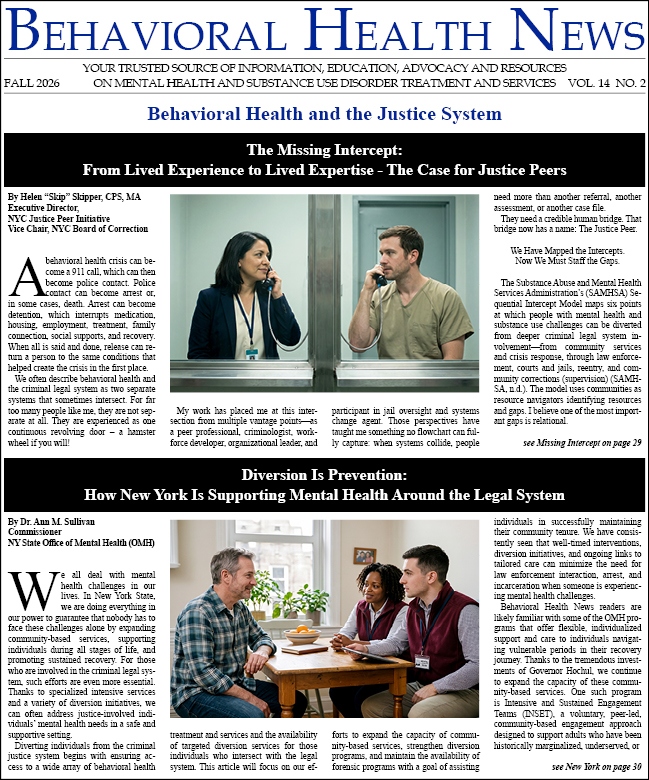
Certified Community Behavioral Health Clinics (CCBHCs) have shifted the way we approach treatment and the delivery of behavioral health services. Those who hold the designation of CCBHC have been tasked with providing a person-centered model that combines mental health services, substance use treatment, targeted case management, and physical health monitoring under one roof. This “one-stop shopping” approach reduces disruptions in care and helps to eliminate barriers that have historically prevented individuals from accessing the support they need. In this integrated model, Peer Navigators/Peer Specialists (at times used interchangeably) play an integral role in improving engagement, supporting recovery, and acting as a bridge between CCBHCs and the communities that have begun to embrace them as a resource.
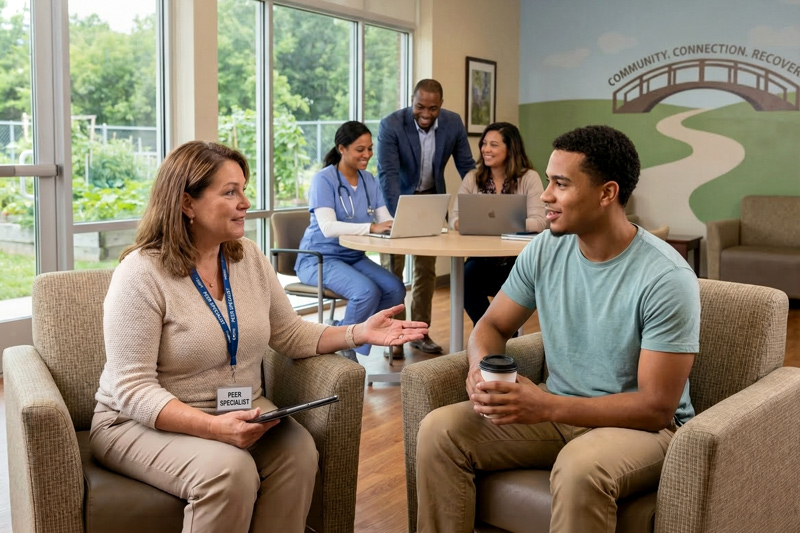
“You don’t understand.” We have all felt this way at some point in our lives. However, for those who are on their recovery journey, this statement is an outward verbalization of the isolation they often feel as they battle the symptoms that have added to the obstacles in their lives. While each person’s story is different, peers bring something valuable to the behavioral health workforce: lived experience. Peers are able to meet participants where they are and share their own stories of resilience and overcoming. They understand. Peers have utilized the tools that were shared with them, have successfully navigated that part of their recovery process, and are in a position to give back in the form of modeling and guiding with experiential knowledge. They offer empathy and insight that is different from other interventions because they have lived it. For individuals with mental health and substance use challenges, the peer perspective can make a world of difference.
Because of the integrative nature of CCBHCs, the population served includes individuals with co-occurring mental health and substance use disorders, often referred to as dually diagnosed. These individuals have historically encountered many barriers to care, including stigma and limited social support. Peers have helped to address these barriers by providing resources while creating spaces of trust and understanding. When someone speaks with a peer, the dialogue shifts from a clinical assessment to an authentic human connection. This connection often becomes a powerful source of hope because it is grounded in a shared path. Peers become mentors, advocates, and guides throughout the recovery journey. They help participants navigate complex systems, access resources, and build the skills necessary for maintaining overall wellness. Perhaps most importantly, peers within CCBHCs help reduce stigma related to mental illness and substance use. By sharing their stories of recovery, they demonstrate that goals are attainable and success is not out of reach. For many participants, this visible example of recovery provides a concept that clinicians may not be able to convey: if you can see it, you can be it.
Within CCBHCs, peers are not meant to function in isolation. Instead, they are an integral part of a multidisciplinary team that may include prescribers, case managers, substance use counselors, psychotherapists, nurses, and administrative staff. When peers are woven into this collaborative environment, they contribute a different lens through which treatment planning and service delivery can be viewed. Their insights can help clinical teams better understand the lived realities of participants and assist with interventions that are both practical and meaningful.
Successful integration of peers requires thoughtful planning and clear workflows that focus on delivery of high quality, wrap-around services. Peers should be supported through training and supervision. CCBHC training of peers often includes topics such as professional boundaries and ethics, motivational interviewing, trauma-informed care and recovery-oriented practices, and similar areas. While knowledgeable and trained in some clinical interventions, peer roles should be clearly defined as their responsibilities differ from counseling. Peer supervision should embrace the duality of their role: professional responsibilities and personal experience. Work in a CCBHC can be emotionally taxing for all, but perhaps particularly for peers who are on their own recovery journeys. An ongoing focus on wellness and self-care is needed in addition to workplace support to ensure optimal peer service delivery and peer retention.
When integrated effectively, peer support can enhance engagement in CCBHC services. Participants who may have struggled with consistent engagement often appreciate being able to speak with someone who understands what they have experienced firsthand. This increased engagement can lead to improved outcomes when one measures treatment adherence, symptom management of co-occurring disorders, improved physical health, and connections to stable housing and employment. However, success in peer support cannot be measured solely through traditional metrics such as achieving objectives, goals, and successful program completion. Peer support is fundamentally about connection. It is about building relationships that help participants rediscover their strengths and envision a future beyond a diagnosis.
In many ways, peer support functions as an intervention in itself. A connection that instills hope, a moment of shared understanding, or a simple affirmation that recovery is possible can significantly influence a person’s journey. Peers provide support not only to participants, but to the broader multidisciplinary team. Their insights often help staff better understand participant perspectives and community dynamics. As CCBHCs continue to evolve, the integration of peers will remain central to delivering truly person-centered care. By combining clinical expertise with lived experience, CCBHCs create comprehensive systems of support that address the full complexity of behavioral health needs—treating the whole individual. Peers represent another line of defense in the journey of treatment and recovery: one grounded in empathy, authenticity, and the belief that healing is possible.
The integration of peers into CCBHCs is not simply a workforce strategy. It is a commitment to honoring the voices and experiences of those who have lived through mental health and substance use challenges. When peers are fully supported, respected, and integrated into multidisciplinary teams, they strengthen the fabric of behavioral health care and help ensure that recovery remains at the center of every service delivered.

Sarah G. Gilliard, LCSW, is Program Director, Wellness Works Harlem CCBHC at Services for the UnderServed (S:US). To learn more about Services for the UnderServed, please visit sus.org. For more information about our CCBHC clinics, please visit Wellness Works or contact us at [email protected] or (212) 360-7116 in Harlem, or [email protected] or (347) 226-9025 in Brooklyn.