Individuals with lived experience with mental illness have a unique perspective that can play a crucial role in helping others on the path to recovery. A key facet of reaching and forming bonds with individuals seeking support is the strong connection peer support workers offer.

We have made significant progress in promoting peer services within recovery over the entire lifespan, particularly in supporting individuals experiencing complex mental health challenges. Mental health professionals now recognize the value of incorporating peer support workers into the continuum of care, making them part of planning and delivering services.
Peer support helps to build trusted relationships with individuals connected to the mental health system, improving outcomes by focusing on promoting hope, choice, self-determination, and mutuality. These bonds grow stronger because peer support workers emphasize the expressed goals of individuals in care — they listen, and they understand.
Today’s peer support services have deep roots in the Civil Rights movement. New York State is a trailblazer in recognizing the benefits of mutual support and implementing peer work. In fact, the late Celia Brown was a pioneering civil service peer specialist in our agency. While it has taken time to fully embrace peer work, over the past decade New York has forged a professional career path for peer work that includes certification pathways and Medicaid-billable peer services. This historical context provides a crucial foundation for understanding the significant advancements made in supporting peer services in mental health services today.
Peer workers successfully engage people into life. Going beyond clinical or traditional services, mutual support focuses on forging relationships, connecting with communities of choice, and promoting holistic perspectives built on the notion that everyone can and will recover. Peer organizations as we know them were born outside of psychiatric facilities, in diners and community settings where community organizers with lived experience in the mental health system would bring people together. Many of these organizations still exist today, building on this framework to offer formal programming. Today, peer support workers are present throughout our service landscape from psychiatric centers, clinics, crisis services, peer-led recovery centers, specialized teams, and more.
At the New York State Office of Mental Health, training and certifying individuals with lived experience in peer support roles has become a fundamental focus of our work. This includes peer specialists, family peer advocates, and youth peer advocates — who all offer connections and support across diverse programs and services. Also playing a critical role are peer bridgers, who help patients establish and maintain a trusting relationship as they leave hospital care and then engage in ongoing support as they reintegrate into their community.
Simply put, peer support workers work with people to identify their goals and wishes, connect with chosen supports, and improve outcomes, especially within inpatient settings. They have often experienced similar challenges and can provide inspiration and guidance at critical moments in care. Relating to a peer support worker can help individuals in recovery adopt better coping skills, improve their outlook, and reengage with the community. Of utmost importance is the support provided to individuals around living a life in which they feel satisfied, connected and engaged. While support is always available if needed, many individuals connected with peer support workers go on to enjoy recovery and do not require a lifetime of services.
Peer advocates work in every setting our agency touches. One example is Assata, who was featured in an OMH Recovery Story last year. Assata had been hospitalized on and off over a period of years. But thanks in part to connections made at Albany Community Support Center at Capital District Psychiatric Center, Assata was able to thrive in the community starting in 2018 — including becoming a peer advocate worker herself. “The peer advocate group was the best group. They had me host it one day, and it was so much fun. I didn’t really expect to be a peer advocate, but it’s a very good job, especially for me because I like to talk,” Assata said with a laugh.
The Intensive and Sustained Engagement Team or ‘INSET’ program is another great example of how peers can help individuals connect with care. These multidisciplinary teams engage people living with mental illness who have not had success with more traditional forms of care. The program is voluntary and provides an avenue for participants to access community resources in a non-restrictive manner. Teams are led by certified peer specialists, who bring special insight into building connections within the community. New York has four INSET teams operating in communities around the state, each helping about 60 individuals per month. A fifth specialized team on Long Island is now helping people who have been involved in the criminal justice system or are transitioning back into the community from prison or jail. And a sixth team was recently awarded and is expected to begin work in the Capital Region this summer.
Prior to engaging with INSET, one participant spent approximately 75 percent of the year in inpatient psychiatric settings. Other days were spent in shelters or overnight in the emergency department due to a lack of housing. Upon engaging this individual, INSET assisted them in finding housing. Thanks to this support, they have not returned to the hospital and express a general sense of happiness.
“I would not be alive today if not for the incredible support of New York State’s INSET program,” another participant said. “My peer specialist didn’t expect me to trust him right away, but he earned that trust through his consistent and compassionate support.”
A third participant added, “Being with INSET has helped me tremendously. I went from four hospitalizations a year to currently none for over a year. Before INSET, I couldn’t maintain that type of stability. I am grateful for them. They’re my buddies, my peers.”
Clubhouses are another model supported by OMH that incorporate individuals with lived experience into helping others on their recovery journey. This member-driven, evidence-based approach provides structure and support for adults so they may address their social, educational, and vocational needs through community integration.
Clubhouse members express autonomy and choice and can participate whenever they want for as long as they want. In this non-hierarchical environment, they work together with staff — including many who have lived experience — on daily operations that help promote a sense of shared ownership and teamwork. By joining a Clubhouse, members can take steps to avoid hospitalizations and readmissions in a setting where they are treated as valued participants, not patients or clients.
Soon, even more New Yorkers will be able to take advantage of this model. This year, we are making $6.6 million available to establish eight additional Clubhouses statewide, offering social support, employment resources, and life skills training in a safe environment.
We are also growing New York’s youth and family peer advocate workforce. Last year, OMH awarded more than $2.7 million to 10 community-based organizations to identify, train, and credential individuals with lived experience or family caregivers for those living with mental illness or behavioral health issues to become youth and family peer advocates. These youth and family advocates are in a unique position to help, with experience navigating the mental health system and the deeper empathy that often comes with it.
Peer support is a crucial resource for individuals, particularly those who haven’t benefitted from traditional mental health services for various reasons. Peer support workers are a crucial part of most services funded by our agency, offering non-clinical and non-hierarchical support. We must continue to ensure the quality of this model so individuals can rely on self-empowerment to recover and thrive in their community.
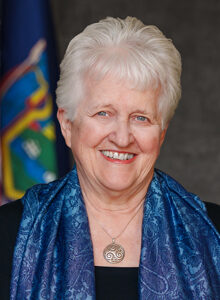
Dr. Ann M. Sullivan is Commissioner of the New York State Office of Mental Health. OMH Chief Advocacy Officer Liz Breier, OMH Office of Advocacy and Peer Support Services Deputy Director Em Wasserman, and OMH Assistant Public Information Director Ian Pickus contributed to this report.