Across colleges and universities, students are experiencing increasing mental health challenges while simultaneously navigating the social, academic, and developmental demands of campus life. For many students, the transition to college represents their first time living independently, managing complex schedules, and forming new social networks. For neurodivergent students and those with social communication differences, these transitions can be particularly difficult. Navigating unfamiliar environments, interpreting social expectations, and building peer relationships may create additional stress that can impact both well-being and academic success. In response, institutions of higher education are increasingly exploring ways to provide meaningful support that fosters both inclusion and independence.
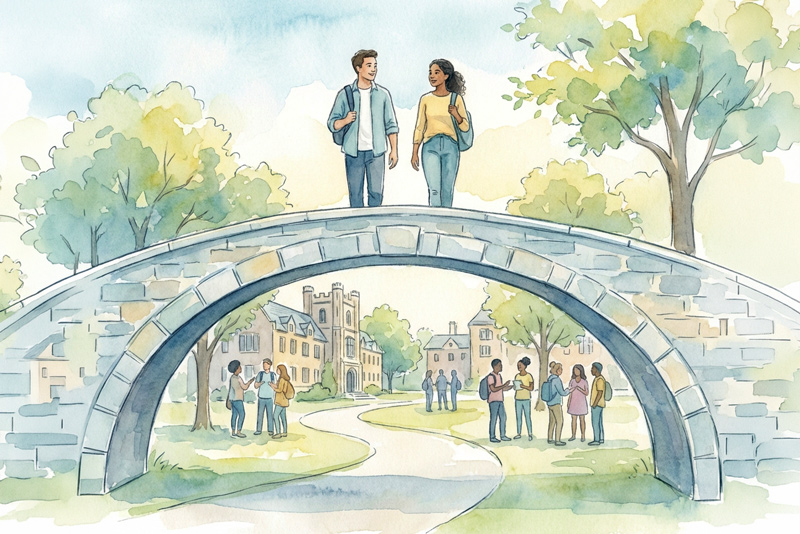
Peer mentoring programs represent a powerful and often underutilized strategy for supporting student success while promoting community inclusion and belonging. By pairing students with trained peers who can model social engagement and provide consistent support, these programs create opportunities for connection that extend beyond traditional academic accommodations.
The Bridges to Adelphi program, a campus initiative designed to support neurodivergent college students, integrates peer mentoring as a central component of its social support services. Through structured peer relationships, students are provided with consistent opportunities to practice social engagement, build friendships, and develop confidence navigating the university environment. The program emphasizes the importance of experiential learning in social contexts, recognizing that social skills and community participation are most effectively developed through meaningful interaction with others.
The Role of Peer Mentors
Peer mentors within the Bridges program are volunteer Adelphi University students who are recognized as leaders within the campus community. These mentors meet with participating students for approximately one hour per week, engaging in a range of social and campus-based activities designed to help students feel more comfortable and connected within the university setting.
Activities vary depending on student interests and may include attending campus events, exploring student clubs and organizations, studying together, walking around campus, visiting the student center, or simply practicing everyday social interactions in a relaxed and supportive environment. These shared experiences help students become more familiar with the rhythms of campus life while also creating opportunities to develop natural peer relationships.
Rather than focusing solely on formal instruction, peer mentoring emphasizes social modeling. Mentors demonstrate how to initiate conversations, navigate group settings, and participate in campus life in ways that feel authentic and accessible. Students are able to observe these interactions and gradually practice them within a supportive context. This approach allows social learning to occur organically, reducing anxiety and increasing confidence in social environments.
Through these relationships, students gain opportunities to develop authentic connections and experience the sense of belonging that is essential for both academic persistence and emotional well-being. For many participants, peer mentoring provides a bridge between structured support services and independent engagement in the broader campus community.
Recruitment and Training of Peer Mentors
To ensure the quality and safety of the program, peer mentors are carefully recruited and selected from the Adelphi University student body. Mentors are often students who have demonstrated leadership, compassion, and a commitment to creating inclusive communities on campus. Because mentors work closely with fellow students in supportive roles, they also undergo a university background screening process prior to beginning their work in the program.
Once selected, peer mentors participate in a one-day training program designed to prepare them for their role. The training provides an introduction to neurodiversity and emphasizes the importance of creating supportive, respectful relationships that promote student autonomy. Training topics typically include:
- Understanding neurodiversity and inclusive communication
- Building supportive peer relationships
- Recognizing appropriate boundaries and maintaining professionalism
- Strategies for facilitating social engagement in natural settings
- Identifying situations in which additional support from program staff may be needed
The training equips mentors with practical tools that help them navigate common situations that may arise during mentoring sessions. At the same time, the program emphasizes qualities such as patience, empathy, and flexibility, recognizing that each mentoring relationship develops in its own unique way.
Ongoing Supervision and Support
Peer mentors receive ongoing supervision throughout the semester, ensuring both accountability and continued skill development. After each meeting with their mentee, mentors complete weekly supervision reports that briefly describe the activities completed, interactions observed, and any challenges or questions that may have arisen.
These reports are reviewed by program staff and discussed during regular supervision meetings. Supervision provides mentors with an opportunity to reflect on their experiences, receive guidance, and discuss strategies for supporting their mentees effectively. These conversations also allow program staff to monitor student progress and provide additional support when needed.
Ongoing supervision is an essential component of the program, as it ensures that mentors feel supported in their roles while maintaining the overall quality and consistency of the peer mentoring experience. In addition, mentors often report that supervision meetings serve as valuable opportunities for professional development, helping them strengthen skills related to communication, leadership, and collaboration.
Reciprocal Benefits of Peer Mentoring
While peer mentoring provides meaningful support for participating students, the benefits extend to mentors as well. Many peer mentors report that the experience deepens their understanding of neurodiversity and broadens their perspective on the variety of ways students experience campus life. Through mentoring, students often develop stronger communication skills, increased empathy, and a greater sense of responsibility toward building inclusive communities.
For many mentors, the experience also strengthens their identity as leaders on campus. Mentoring relationships often evolve into genuine friendships that extend beyond scheduled meetings and contribute to a more connected campus environment.
In some cases, students who initially participated in the Bridges program as mentees later become peer mentors themselves. These students bring a particularly valuable perspective to the mentoring process, as they understand firsthand the challenges and successes associated with navigating the college environment. Some former mentees go on to mentor undergraduate students at Adelphi as well as local high school students who are preparing for the transition to college. This progression highlights the transformative potential of peer mentorship: students who once received support become leaders who guide others.
Building Inclusive Campus Communities
Peer support programs like Bridges demonstrate that meaningful inclusion requires more than accommodations; it requires opportunities for authentic connection. When students have access to supportive peer relationships, they are more likely to feel comfortable participating in campus activities, developing friendships, and engaging fully in their academic experiences.
By fostering relationships between students, peer mentoring programs help break down stigma, promote understanding, and create campus cultures where differences are recognized as strengths rather than barriers. These programs also reinforce the idea that building inclusive communities is a shared responsibility among all members of the campus environment.
In behavioral health systems, peer support has long been recognized as an effective intervention for promoting recovery, empowerment, and community integration. Universities can learn from these models by integrating peer mentorship into student support services, particularly for populations who may experience social barriers within traditional campus structures. As colleges and universities continue to prioritize student well-being, peer mentoring programs represent a practical, scalable, and human-centered approach to strengthening community and supporting mental health. By investing in peer support, institutions not only provide assistance to individual students but also cultivate a culture of compassion, leadership, and belonging across the campus. When students support one another, they do more than build friendships, they build bridges.



Diana Damilatis-Kull, MA, LMHC, is Director of the Bridges to Adelphi Program at Adelphi University in Garden City, NY; Stephanie Grindell, MA, LMHC, is Senior Associate Director of the Bridges to Adelphi Program at Adelphi University in Garden City, NY; and Yan Mei Nie, MA, MS, is Grant and Research Writer for the Bridges to Adelphi Program at Adelphi University in Garden City, NY. For more information about the Bridges to Adelphi Program at Adelphi University, email: [email protected], call (516) 877-4181, or visit www.adelphi.edu/bridges.