As a psychiatrist, I hear “I’m fine” a lot.
At the start of each session, I ask some version of, “How are you?” or “How have you been feeling since our last visit?” Inevitably, many people reply, “I’m fine.” I hear it from patients, friends, and colleagues. I’ve even caught myself saying it when the real answer feels too complicated, too vulnerable, or simply too exhausting to explain.

“Fine” is one of the most common responses we give – and one of the least informative. My favorite acronym for it is: Feelings I‘m Not Expressing. Most people laugh when I say that, but they laugh because it’s uncomfortably true. That response often deserves a follow-up question – or more.
This Suicide Prevention Month, it’s worth taking a closer look at what “I’m fine” may actually mean. While the phrase can be a convenient shortcut or a way to avoid a harder conversation, it can also mask emotional distress, depression symptoms, or struggles someone may not know how to put into words.
Because of how it’s represented on television or in what makes the news, we can think emotional distress will be obvious or easy to recognize – as if every single person with depression can’t get out of bed or cries all the time. While some people experience it that way, in reality, people can continue showing up to work, caring for their families, and meeting their responsibilities while quietly struggling. And the need for meaningful connection remains urgent: according to the CDC, an estimated 14.3 million U.S. adults seriously thought about suicide in 2024. Many of these individuals likely appeared – and may even have said they were – “fine.”
That number is a powerful reminder that we shouldn’t wait for someone to reach a crisis before making space for honest conversations about how they’re really doing. Being honest about the many ways people can struggle may also help people identify challenges much earlier in themselves – or their friends or family members. Knowing it’s OK to not be OK can reduce stigma and make it easier (and emotionally safer!) to admit you’re not fine. You don’t have to wait until it interferes with work or caregiving to ask for help.
For someone living with depression, “fine” can mean many things: from “I’m doing better than I was,” to “I’m getting through the day,” to “Things still aren’t where I want them to be, but I’m not sure they can get better.”
Every step forward matters. When you’ve been struggling with depression, returning to work or being more present with your family can represent meaningful progress. We should recognize that improvement while staying curious about what “fine” means for that individual and whether they still have symptoms getting in the way of the life they want to live.
Depression symptoms can persist in about two-thirds of people taking an antidepressant, and many people may begin to adjust their expectations around those lingering symptoms. In a global survey from Generation Fine, 78% of patients said they did not expect complete symptom relief from treatment.
As a psychiatrist, I find that striking and believe that disconnect raises an important point: depression has a way of changing the baseline. When you’ve felt bad for a long time, “better than before” can start to feel like the best you should expect. That’s why it’s worth asking whether “fine” really reflects how we’re feeling, or whether we’ve simply stopped expecting more.
Whether a person has struggled before or is acting differently for the first time, when someone says they’re fine, consider asking a follow-up question. Instead of moving on, pause and ask “How have things really been lately?” or “What’s been feeling most difficult?” Creating space for honest conversations, without judgment or pressure, can help people feel seen and supported. Maybe don’t ask in the hallways in passing, but instead in a different, more private or less rushed place.
None of this means we should assume something is wrong every time someone tells us they’re fine. It just means we can be a little more curious.
Being more specific matters in the doctor’s office, too. I know that “fine” gives me only part of the picture. Yet talking about what’s still not working isn’t always easy. In the Generation Fine survey, 84% of healthcare providers said patients have difficulty articulating what isn’t working with their current depression treatment.
That’s why it can help to think about the conversation before your appointment. It can be hard to know what to ask or report in the moment, and you are your best advocate. Instead of simply asking yourself, “Am I better?” consider:
- What am I really saying when I say, “I’m fine”?
- What symptoms or feelings are still getting in the way?
- Where is depression still showing up in my work, relationships, or daily life?
- If I could feel differently, what would I want that to look like?
The answers don’t need to be perfect. Writing them down before a healthcare visit can help start a more honest conversation about how you’re really doing and what may still be getting in the way.
Mental health treatment should be an ongoing conversation. Honest discussions with healthcare providers, family members, and trusted friends can help people recognize when they need support and remind them that they don’t have to navigate challenges alone.
Depression can lower our expectations, convincing us that getting by is enough. I know, both personally and professionally, how powerful it can be to challenge that belief.
This Suicide Prevention Month, let’s make room for one more question. Check in with the friend who says they’re fine. Ask yourself what “fine” means for you. And if you’re living with depression, talk with your healthcare provider about what’s still holding you back.
Because “fine” isn’t necessarily the end of the conversation. Sometimes, it’s where a more honest one begins.
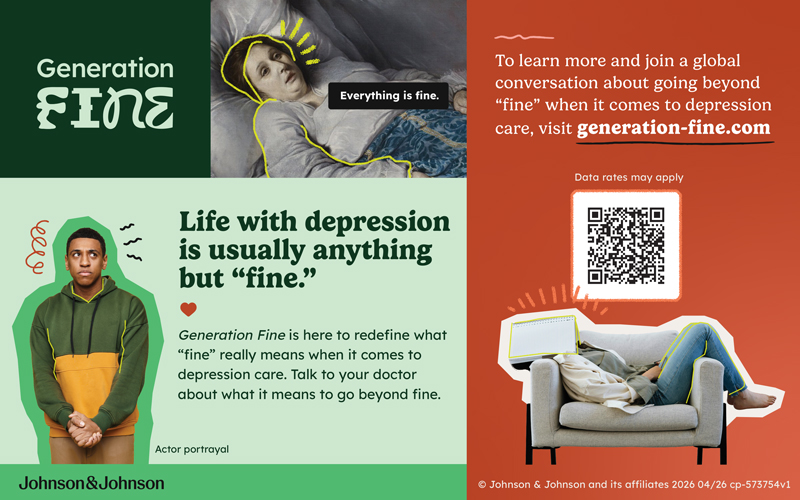
Generation Fine was created to help make those conversations easier, with educational resources, patient stories, and tools to help people living with depression talk more openly with their healthcare providers about how they’re really feeling.
To learn more and access resources that can help support conversations about depression and emotional well-being, visit Generation-Fine.com.
If you or someone you know is struggling or in crisis, call or text 988 to reach the 988 Suicide & Crisis Lifeline. The Lifeline provides crisis support 24 hours a day, seven days a week.
Jessi Gold, MD, MS, is a psychiatrist, mental health advocate, and highly sought-after expert in the media on everything from burnout to celebrity self-disclosure. Dr. Gold has written widely for the popular press, including The New York Times, The Atlantic, InStyle, Slate, and Self. Her debut book, “How Do You Feel,” is a national bestseller. In her clinical practice, she sees health care workers, trainees, and young adults in college.