The United States faces a persistent behavioral health access gap — one that varies by market but extends well beyond federally designated shortage areas. Health Professional Shortage Areas (HPSAs) identify communities, populations, and facilities where the supply of health professionals falls short of need. In mental health HPSAs, the shortage specifically reflects mental health providers. More than 150 million Americans live in a federally designated mental health HPSA, where licensed behavioral health providers are too scarce to meet population demand.1 But provider scarcity is not limited to HPSA-designated markets.
Even in higher-income and more densely populated areas, limited provider capacity and insurance network participation can restrict patients’ ability to obtain timely care. The challenge, in other words, is structural, not simply geographic.
The question is no longer whether demand exists. It does. The more important question is whether a scalable operating model can consistently expand access by placing providers where they are needed most. TCN’s experience operating across Massachusetts, Virginia, and West Virginia suggests that it can.
Entering underserved markets requires more than opening a physical location. TCN has developed the clinical supervision, workforce development, and operational infrastructure needed to support clinicians and expand provider capacity across multiple states.
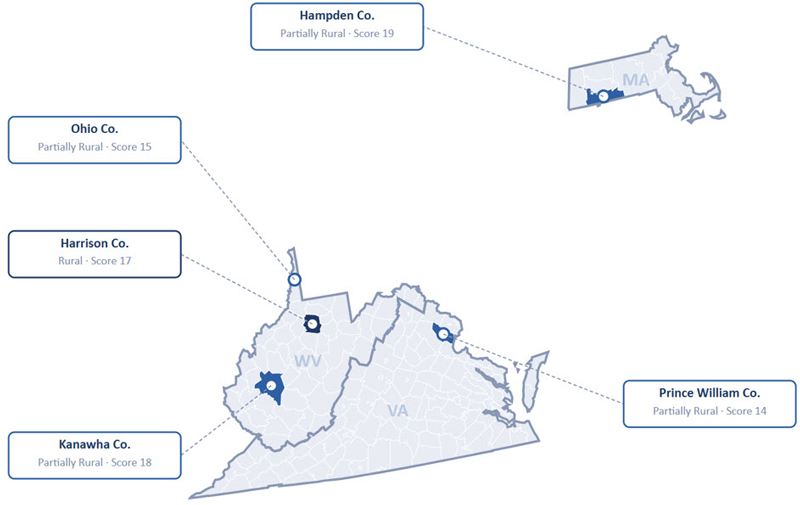
Mental health HPSA designations across selected TCN markets.
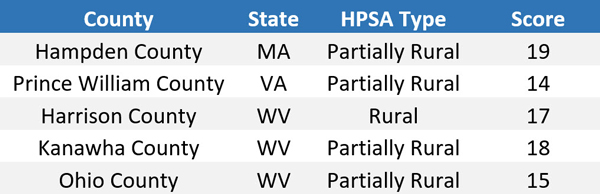
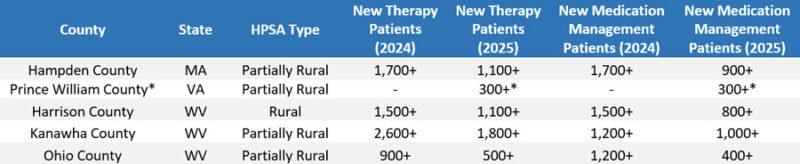
All five counties where TCN has sites score between 14 and 19, placing them in the moderate-to-high shortage tier.2 Patient volume provides another useful indicator of access across these communities. Across these markets, TCN clinics served the following volume of new patients by service line:
*Data for Prince William County reflects Q4 2025 volumes only, as those locations launched near the end of the year and do not yet represent a full year of operations.
Appointment volume tells a consistent story at the aggregate level: across these same five counties, total Medicaid appointments grew as follows:

Expanding access also depends on having enough clinicians to meet patient demand. One way to build that capacity is hiring master’s-prepared clinicians into supervised roles and supporting them as they progress toward independent licensure. In Massachusetts, Virginia, and West Virginia, this pathway generally requires approximately 3,000 post-master’s supervised hours over at least two years. Supervision can itself be a barrier to workforce growth. Providing supervision internally and at no cost to newly hired clinicians removes that barrier while creating a pathway for clinicians to continue developing within the communities they serve.
The goal is not simply to fill open positions, but to create a workforce pipeline that can grow within the market over time. As clinicians progress toward independent licensure, they add permanent capacity to the local behavioral health workforce and can eventually help support the development and supervision of future clinicians.
TCN’s workforce pipeline also begins before clinicians enter full-time practice. Through partnerships with graduate programs, interns can gain experience within TCN and, in some cases, transition into full-time roles after graduation while continuing to serve the communities where they trained. TCN provides this supervision internally and at no cost to unlicensed clinicians, helping them progress toward independent licensure while continuing to serve their communities.

*All figures are across all five HPSA-designated counties identified above, spanning six clinic locations.
HPSA designations are an important measure of provider shortage, but they are not a complete measure of real-world access. A market can experience meaningful provider constraints without necessarily having a current HPSA designation. Provider capacity, appointment availability, waitlists, and Medicaid participation can provide additional indicators of whether supply is keeping pace with demand.
The underlying issue is provider capacity. Expanding behavioral health access requires more than opening clinics; it requires clinician recruitment and development, supervision, Medicaid compliance, and the operational infrastructure needed to support care at scale. Building that capacity takes sustained investment, particularly in underserved markets where workforce shortages and limited supervision can make it difficult to recruit and develop clinicians.
Increasing provider capacity therefore requires investment not only in physical locations, but also in the workforce and infrastructure behind them. That includes recruiting and developing clinicians, providing the supervision needed to support licensure, and building the operational systems required to deliver care at scale. Policy should support that investment while maintaining appropriate clinical and financial safeguards. Limiting the capital available to behavioral health providers does not solve the workforce shortage; it can make it harder to invest in the people, systems, and infrastructure needed to expand access and sustain it over time.

Derek Yeung is Manager of Growth Strategy at Transformations Care Network. For more information, email [email protected], call (857) 249-1259, and visit transformationsnetwork.com.
References
1. Health Resources and Services Administration, Bureau of Health Workforce, “Health Professional Shortage Areas Dashboard” as of September 2026.
2. Health Resources and Services Administration, “HPSA Find” data accessed September 2026.