According to UN Women, women spend about 2.5 times as many hours as men on unpaid care work, like caring for family members and managing household needs. The extra hours weigh heavily on their mental health, and 47% of women surveyed for Iris Telehealth’s Invisible Load Index said they experienced burnout or emotional exhaustion often or very often over the past year.
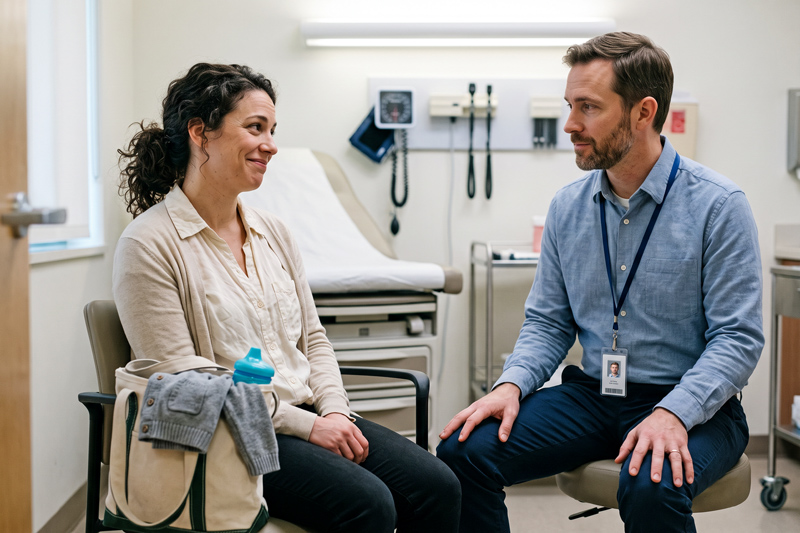
Woman Meeting Behavioral Health Clinician In Primary Care Exam Room
The same responsibilities driving women’s burnout make it hard to find time for behavioral health care, and women who do raise their stress with a provider often leave without a plan to treat it.
Women are running households, careers, and family caregiving at the same time, and most of the strain goes unaccounted for in how healthcare is designed. But health systems and behavioral health organizations can have support ready the moment women ask for it by embedding behavioral health clinicians in women’s health programs and extending care to their families.
A Referral-Based Model Asks the Busiest Patients to Do the Most Work
Most behavioral health care still sits outside the rest of women’s medical care, so getting help usually means finding a behavioral health clinician and fitting a separate appointment into a week already full of work and family obligations.
For many women, the appointment keeps getting pushed back. In the Invisible Load Index, 39% of women said they had delayed or avoided behavioral health care because of caregiving responsibilities, time constraints, or emotional load. Among women whose mental health is most affected by daily stress, the share rose to 59%.
The women who need behavioral health support most have the least time to chase it down, and the referral model depends on them doing exactly that. A health system leader would never accept a cardiology program that left patients to arrange their own follow-up care after a heart attack, but behavioral health referrals often leave women in the same position.
When care depends on the patient making the first move, it becomes reactive by design. Stress keeps building while the appointment gets pushed back, and care often begins only after symptoms escalate.
Screening Only Works When Clinicians and Care Pathways Are Ready to Respond
Many women do find time to raise their stress with a provider, and most feel understood when they do. In the Invisible Load Index, 86% of women said their provider recognizes the impact of daily responsibilities on their mental health, but 30% received no specific solution or treatment for their stress.
Healthcare has watched recognition outpace response before. When wearable devices started sending patients’ heart rate data to health systems, leaders worried they’d be liable for any warning sign nobody acted on. Without enough clinicians to review every alert, many held the data back from their care teams until it was too old to require action.
Behavioral health can’t put a woman’s request for help on hold the same way, especially with so many women needing care. NAMI estimates nearly 27% of U.S. women experience mental illness each year, compared to about 20% of men. Meanwhile, the behavioral health workforce struggles to keep pace.
When a woman tells her primary care provider, she’s overwhelmed, the provider should be able to connect her with a behavioral health clinician before she leaves the exam room instead of just handing her a phone number.
A same-day connection only works if clinicians are available to see patients and every provider has a clear process for connecting them to behavioral health care. Health systems and behavioral health organizations should settle the follow-up before screening begins, including which clinician picks up each case and how quickly.
Behavioral Health Belongs Inside Women’s Health Journeys, with Families Included
Fixing the referral model takes more than adding a screening question or posting a hotline number in the exam room. Health systems need to redesign behavioral health around what women go through to get care and what clinicians need to deliver it, fixing every point where care stalls instead of pulling one lever at a time.
The redesign starts with partnerships between behavioral health teams and women’s health service lines. Together, they can set behavioral health protocols at milestones like fertility treatment, pregnancy, postpartum care, NICU stays, and perimenopause, so support is part of the plan from the first visit rather than a response to a crisis.
Support should also reach the people around the patient. A high-risk pregnancy or a NICU stay affects partners and other caregivers, and a stable household shapes patient recovery. Offering behavioral health support to family members strengthens the patient’s care at home.
Telehealth lets health systems stretch a limited behavioral health workforce across sites, so a woman visiting a rural OB practice can see the same specialist as a patient in the city. AI can help on the administrative side by handling scheduling and referral routing, and leaders should hold it to the same ROI standard as any other investment.
Health systems and behavioral health organizations already see women struggling in exam rooms every day. With clinicians and care pathways built into women’s health programs, a routine visit can become the moment women get support, for themselves and for the families who depend on them.

As CEO, Andy Flanagan is responsible for Iris Telehealth‘s strategic direction, operational excellence, and the cultural success of the company. With significant experience in all aspects of our U.S. and global healthcare system, Andy is focused on the success of the patients and clinicians Iris Telehealth serves to improve people’s lives. Andy has worked in some of the largest global companies and led multiple high-growth businesses, providing a unique perspective on the behavioral health challenges in our world. Andy holds a Master of Science in Health Informatics from the Feinberg School of Medicine, Northwestern University, and a Bachelor of Science from the University of Nevada, Reno. Andy is a four-time CEO, with his prior experience including founding a SaaS company and holding senior-level positions at Siemens Healthcare, SAP, and Xerox.