According to a new national survey, over 41% of Americans say drug addiction is one of the country’s two most serious health problems, putting it ahead of obesity, cancer, heart disease, and diabetes and only behind mental health. For Americans in recovery, this number reached 51%.
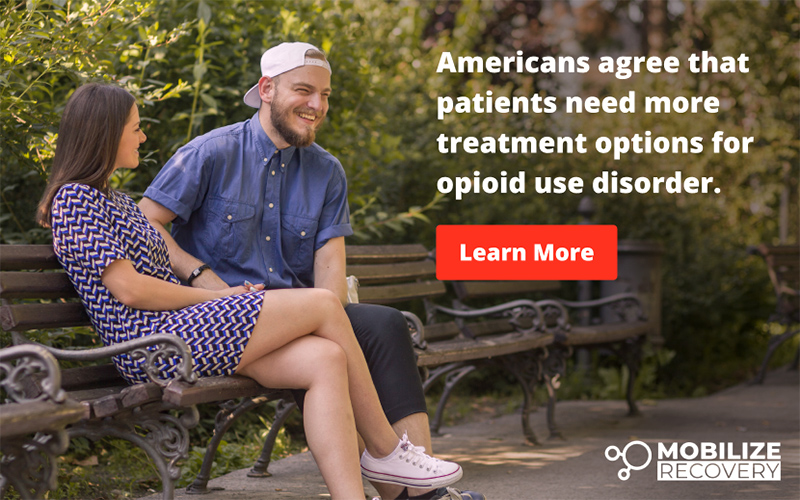
Despite 50 years of the modern recovery movement and three straight years of declining overdose deaths, the opioid toll remains unacceptably high. More than 44,000 people died of an opioid overdose last year, according to the CDC. More tragic still, fewer than one in five people with opioid use disorder receive medication to treat it.
Whether the opioid epidemic is improving depends on who you ask and what metrics are measured. This past August, Mobilize Recovery, a nonprofit organization, conducted a national survey of 1,076 U.S. adults, including 304 people in recovery from opioid addiction, to find out. The survey revealed that those with lived opioid experience felt more hopeful about the United States’ opioid response. Over 44% of those in recovery felt the opioid crisis has improved over the past five years, compared to just 18% of the general public.
Both groups, however, point to barriers to evidence-based care that persist. Here are five takeaways from the survey on where those gaps remain.
1. Nearly Everyone Supports Treatment Choice, but Many Patients Don’t Get One
Support for individualized care was close to unanimous. In the survey, 89% of the general public and 93% of people in recovery said choosing a treatment that fits a person’s circumstances could be valuable, and 88% and 92% said patients and doctors should be able to consider more than one option.
Reality is a different story. Among people in recovery, 44% said a provider discussed only one treatment option with them or none, and another 10% never saw a provider. Treatment for opioid addiction can include counseling, residential care, peer support, and three FDA-approved medications, which are methadone, buprenorphine, and naltrexone.
The findings point to a clear need to close the gap between preference and practice by ensuring patients have meaningful conversations with providers about the full range of evidence-based treatment options and can choose an approach that best fits their individual needs and circumstances.
2. Family and Medication Top the List of Supports
When asked which type of support makes the biggest difference in long-term recovery, people in recovery prioritized medication (26%) followed by family support (23%). The general public most often named family support (26%), followed by medication (19%).
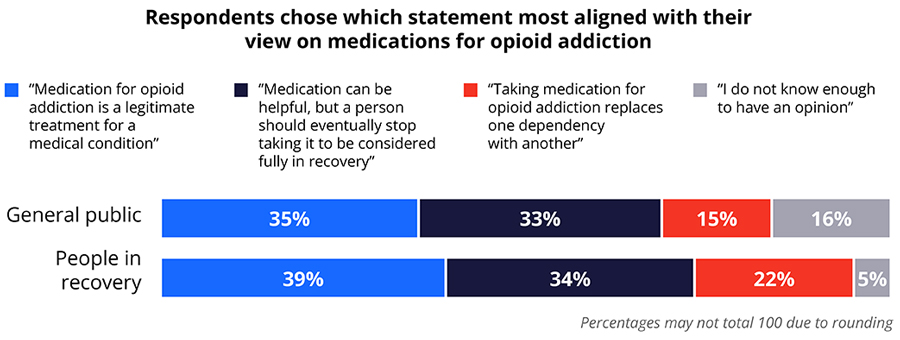
Views of medication itself were more divided. Only 35% of the general public and 39% of people in recovery called medication for opioid addiction a legitimate treatment for a medical condition, despite research showing that medication can significantly help people living with opioid addiction. This stigmatized view of medication to treat opioid addiction is another barrier that prevents people from getting the support they need for long-term recovery.
Source: National survey of 1,076 U.S. adults, fielded Aug. 14–18, 2026
3. People in Recovery Face Insurance Delays the Public May Not See
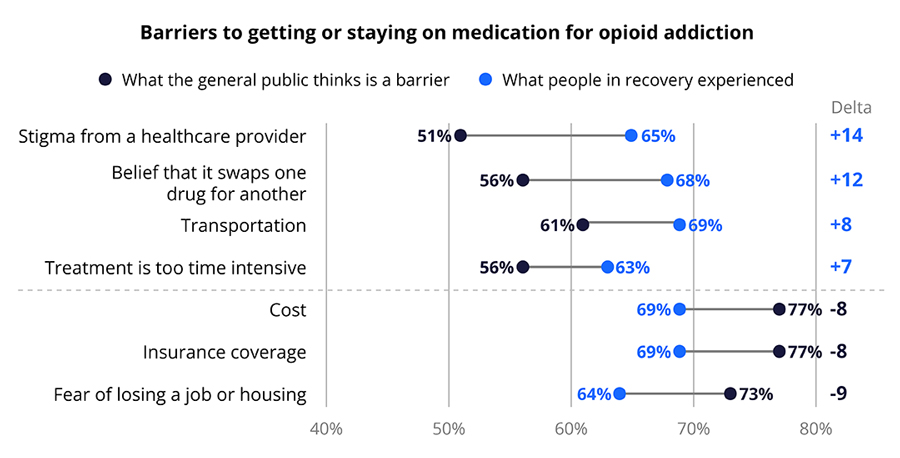
Among people in recovery who used medication, 53% said an insurer had delayed or denied coverage for their treatment. Most of the public recognizes insurance as an obstacle in general, but when asked whether people seeking treatment usually face approval delays, only 34% said yes and 48% said they weren’t sure.
Other gaps ran in the opposite direction. People in recovery reported stigma from health care providers and transportation problems at higher rates than the public expected, while the public overestimated how often cost and fear of losing a job or housing stood in the way. Closing these gaps will require targeted efforts to reduce insurance delays and contributing provider stigma that can limit access to care.
Source: National survey of 1,076 U.S. adults, fielded Aug. 14–18, 2026
4. Both Groups Agree Paperwork Shouldn’t Stop Someone’s Treatment
Eighty-one percent of the general public and 88% of people in recovery agreed that someone in active treatment for opioid addiction should not lose Medicaid coverage because of a paperwork or reporting error. Large majorities of both groups — 84% of the public and 89% of people in recovery — said maintaining coverage and continuity of care matters for someone in active treatment. Moving forward, efforts should focus on protecting continuity of coverage for people in active treatment and minimizing administrative disruptions that could interrupt access to care.
5. The Groups Want the Federal Response to Focus on Different Things
Respondents ranked priorities for the Great American Recovery Initiative, the federal effort the White House launched in January 2026 to coordinate the response to addiction. The general public put expanding treatment availability (60%) and recovery support services (56%) at the top. People in recovery ranked those lower and gave far more weight to increasing public understanding of addiction (48% versus 35%) and supporting successful reentry after incarceration (40% versus 24%).
The contrast points to an opportunity for future recovery efforts to pair expanded access to treatment and support services with greater attention to the priorities voiced by people with lived experience, including reducing stigma and strengthening reentry support.
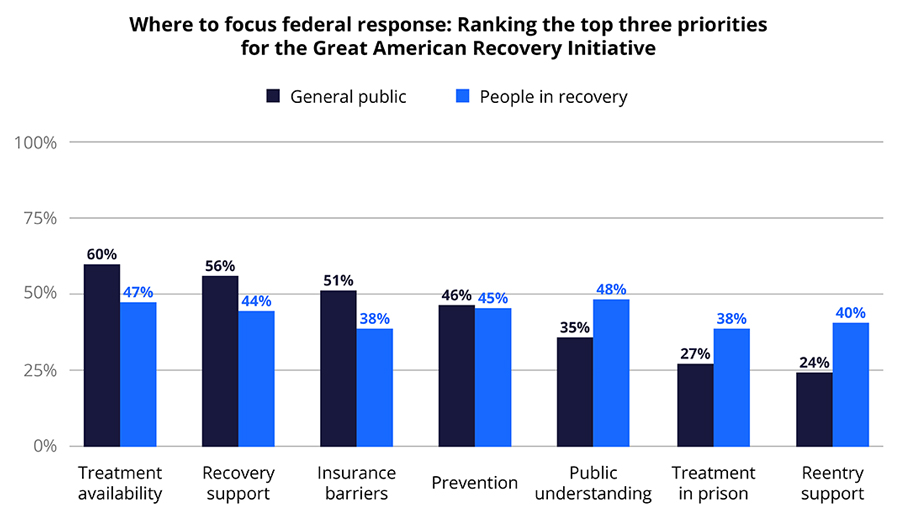
Source: National survey of 1,076 U.S. adults, fielded Aug. 14–18, 2026
Where We Go From Here
There are clear signs that the response to opioid addiction is moving in the right direction, but still too many people continue to face barriers to treatment, gaps in coverage, and stigma. The survey demonstrates that there is growing agreement around the importance of individualized care and ongoing support. The next step is turning that agreement into a system that better reflects what people need and what those with lived experience say will help them succeed.
For people seeking help for opioid addiction, FindTreatment.gov lists treatment providers by location, and the SAMHSA National Helpline is available at 1-800-662-4357.
The survey was fielded August 14–18, 2026, among 1,076 U.S. adults, including 772 respondents from the general population and an oversample of 304 adults in recovery from opioid addiction. Results were weighted to national benchmarks, and findings among people in recovery are reported on an unweighted base of 304. It was conducted by G2 Analytics and funded by Indivior, now named Supernus following the company’s merger. The margin of error for the full sample is ±3.7 percentage points and is larger for subgroups.

Ryan Hampton is Co-Founder of Mobilize Recovery.