Ten-year-old Marcus stopped talking after his father was incarcerated.
At first, school staff assumed he was angry. Then they thought he was being oppositional. Over time, his silence became impossible to ignore. He stopped participating in class discussions. He isolated himself during lunch. He kept his hood up even in warm classrooms and stopped turning in homework altogether. His backpack stayed zipped all day.

What looked like defiance was actually grief.
By the third month, Marcus had become emotionally invisible inside a building full of people trying to help him.
Then one afternoon during a school-based peer support group, another student quietly sat beside him and said, “When my brother left home, I stopped talking too.”
Marcus looked up for the first time in weeks.
That moment did not erase what Marcus had been through. But it gave him something he had not felt in months: connection.
In children’s mental health, healing rarely begins with behavior charts or clinical language. Healing begins when a child feels safe enough to reconnect with others. Peer support creates opportunities for that reconnection in ways traditional systems often cannot. As pediatric behavioral health professionals continue responding to rising rates of anxiety, depression, trauma exposure, emotional dysregulation, and suicidal ideation among youth, peer support has become increasingly important, not as an optional enhancement to treatment, but as a core component of trauma-informed care.
Understanding Mental Health Through a Child’s Eyes
Children experience mental health differently than adults. Many lack the developmental language to explain emotional pain clearly, so distress often appears behaviorally. A child struggling with anxiety may complain of stomachaches before school. A child experiencing depression may become irritable instead of withdrawn. Trauma may present as aggression, emotional shutdown, hypervigilance, perfectionism, or difficulty forming relationships.
Too often, adults focus first on correcting the behavior without understanding the nervous system beneath it. Throughout my work in pediatric behavioral health and trauma-informed care, I have seen children repeatedly labeled “difficult” or “noncompliant” when they were actually overwhelmed and operating from survival responses.
Children exposed to chronic stress or trauma are not asking themselves, “How do I regulate my emotions?” They are asking, “Am I safe?” and “Does anyone understand me?” For children carrying shame, hearing another child say “me too” can feel like finally being able to exhale.
Peer support offers emotional recognition without judgment. When children hear another young person describe a similar feeling or experience, shame begins to decrease. They realize they are not “bad,” “crazy,” or alone. For many children, that realization becomes the first step toward healing.
Why Peer Support Matters
Peer support is far more than children casually talking to one another. Effective peer support is intentional, trauma-informed, supervised, and structured around emotional safety and connection. Research shows that supportive peer relationships improve emotional regulation, reduce stigma, increase school engagement, and strengthen resilience among children and adolescents (NCTSN, 2022). Children who feel connected are also more likely to engage in treatment and seek support before reaching crisis levels.
This is especially important for children impacted by trauma. Many trauma-impacted children learn early that people leave, disappoint, yell, or hurt them. Some stop trusting adults entirely. While adults often attempt to support these children through directives and interventions, peer relationships operate differently. Children naturally interpret safety through one another.
A single statement like, “I’ve felt that way too,” can reduce emotional isolation more effectively than repeated reassurance from adults. Peer support also restores identity. Children receiving behavioral health services are often defined by diagnoses, school incidents, or treatment histories. Peer connection allows them to experience themselves outside of those labels. They become children again, not simply “patients.”
Trauma-Informed Peer Support Requires Intention
Not all peer interactions are therapeutic. Without structure and adult guidance, peer groups can unintentionally reinforce exclusion or emotional overwhelm. Trauma-informed peer support must prioritize emotional safety above all else.
This includes:
- Predictable routines and consistent facilitation
- Clear emotional and behavioral boundaries
- Developmentally appropriate communication
- Choice-based participation
- Cultural responsiveness
- Strength-focused interactions
Importantly, trauma-informed peer support should never pressure children to disclose personal trauma publicly. Healing does not require forced vulnerability. Some of the most meaningful moments occur through ordinary interactions: sharing art supplies, discussing difficult school days, or hearing another child admit they feel overwhelmed too. Most children need connection before they are ready to talk about what hurts.
The Role of Schools and Providers
Schools remain one of the most influential environments in a child’s emotional development. Teachers, counselors, pediatric providers, and behavioral health clinicians are often the first adults to recognize emotional distress. Unfortunately, many systems still respond to trauma-related behaviors through punishment instead of understanding.
A dysregulated child may be labeled disruptive. A withdrawn child may be viewed as unmotivated. A child experiencing chronic stress may struggle socially and academically while adults focus solely on performance outcomes. Peer support shifts the conversation from “What is wrong with this child?” to “What happened to this child, and how can we rebuild connection?”
When children feel emotionally connected to peers, they are more likely to attend school consistently, engage socially, participate in therapy, and develop healthier coping skills. Peer support also reduces stigma around mental health discussions, particularly among adolescents who may otherwise avoid seeking help. Behavioral health systems cannot rely exclusively on crisis intervention. Children deserve preventative supports before emotional distress escalates into hospitalization, self-harm, or school refusal. Peer support is one of those supports.
The Role of Families
Parents and caregivers often carry enormous emotional burdens while navigating their child’s mental health needs. Many experience guilt, exhaustion, confusion, and isolation. Many parents spend nights wondering if their child will ever feel normal again, make friends again, or enjoy school again.
Family peer support programs can help caregivers feel less alone while strengthening their ability to support their children effectively. As both a nurse and behavioral health advocate, I have watched parents visibly relax the moment another caregiver tells them, “You are not failing your child.” Those moments matter more than most people realize.
Children benefit when the adults around them feel supported too. Families also play a critical role in encouraging healthy peer connection outside formal treatment settings. Safe social opportunities, structured activities, school involvement, and emotionally supportive environments all contribute to a child’s sense of belonging. For trauma-impacted children, belonging itself becomes therapeutic.
Moving Beyond Crisis Care
Children’s behavioral health systems have historically operated reactively. Services often intensify only after severe emotional or behavioral deterioration occurs. Peer support offers an opportunity to intervene earlier.
When children develop supportive peer relationships, they gain protective factors that strengthen emotional resilience over time. They learn empathy, emotional language, communication, and problem-solving skills within relationships that feel authentic and relatable. Many children in crisis quietly believe they are a burden. Peer connection challenges that belief in ways adults sometimes cannot.
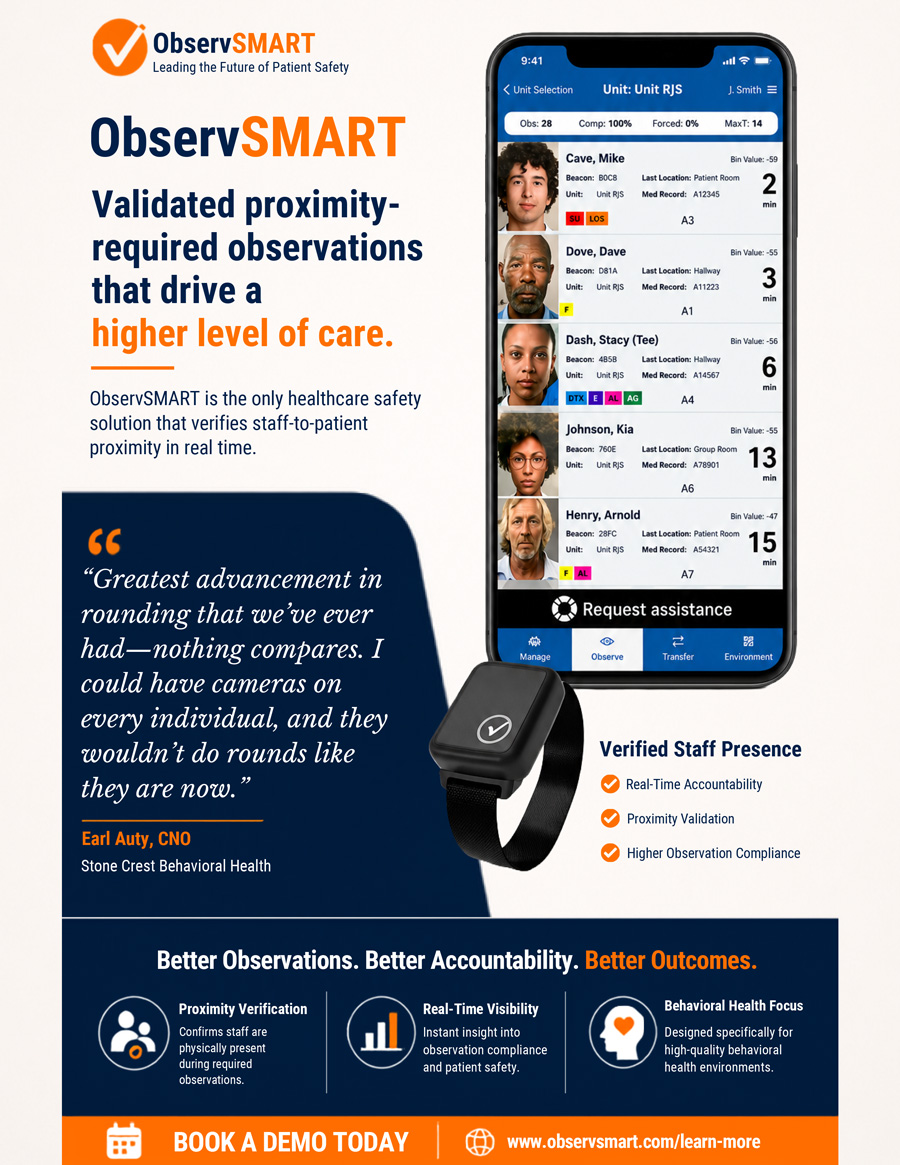
Human connection remains at the heart of trauma-informed care, but thoughtfully implemented technology can also strengthen emotional safety and earlier intervention. Companies like ObservSMART partner with behavioral health experts to provide technology that delivers real-time patient visibility and enables care teams to identify escalating risk early, respond more quickly, and help prevent elopements, behavioral incidents, and other unsafe situations. In these settings, timely awareness matters. The ability to discreetly alert the right people at the right time can reduce response delays, improve coordination, and create safer environments for both children and caregivers. Technology should never replace human connection, but when used intentionally, it can support it by giving care teams another layer of situational awareness and protection.
Several months after joining his peer support group, Marcus began participating in class again. He started drawing during group sessions before eventually sharing stories about missing his father. Other children listened without judgment. No one laughed. No one told him to “just move on.”
By spring, Marcus’s attendance improved significantly. He joined an after-school art club and began rebuilding friendships. One afternoon, a teacher noticed Marcus sitting at lunch with two other boys, laughing hard enough that milk came out of his nose. Months earlier, he had spent recess standing alone near the fence, avoiding eye contact with everyone around him.
The adults supporting Marcus mattered deeply. So did therapy, structure, and consistency. But healing accelerated the moment another child helped him realize his pain did not make him invisible.
Children do not need perfect words to support one another. Sometimes they simply need someone willing to sit beside them and say, “Me too.”

For more information regarding trauma-informed pediatric behavioral health and peer support initiatives, contact Susie Branagan, BSN, RN, CEO of Susie Branagan Consulting, at [email protected] or visit susiebranaganconsulting.com.
References
Centers for Disease Control and Prevention. (2023). Children’s Mental Health: Protective Factors and Prevention Strategies. https://www.cdc.gov
National Child Traumatic Stress Network. (2022). Creating Trauma-Informed Systems for Children and Youth. https://www.nctsn.org
Substance Abuse and Mental Health Services Administration. (2023). Peer Support and Youth Mental Health Services. U.S. Department of Health and Human Services.
Wentzel, K. R., & Muenks, K. (2016). Peer influence on students’ motivation, academic achievement, and social behavior. Handbook of Social Influences in School Contexts, 13–30.