In many cultures, being a “good son” is not just an identity. It is a lifelong obligation shaped by loyalty, sacrifice, and responsibility. For South Asian men in particular, this role often comes with explicit expectations to prioritize parents’ needs, provide financial support, and preserve family harmony at all costs. When adulthood brings marriage, children, and careers, these expectations do not change. Instead, they collide with the equally demanding role of being a committed partner and present parent.
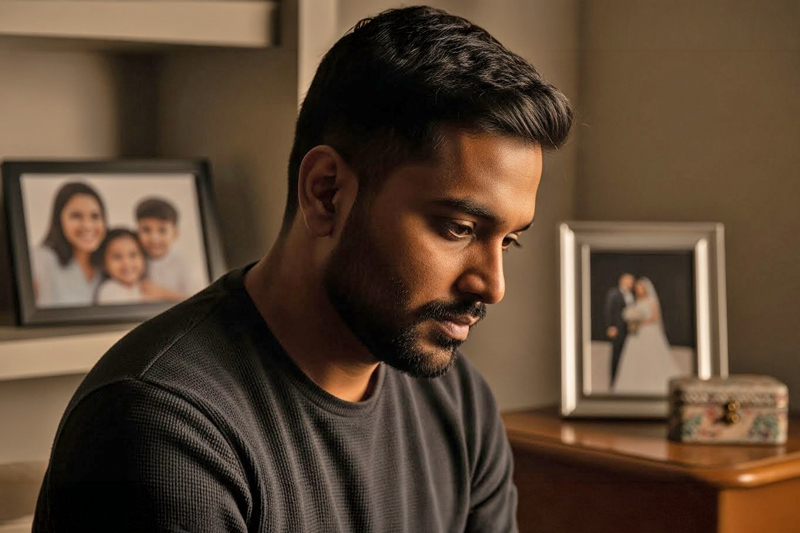
This collision creates a powerful and often invisible stressor: role conflict between parents and partners. Over time, this tension can cause burnout, withdrawal, anxiety, and depression. Because many men have been taught to endure silently, the psychological toll often goes unrecognized until relationships strain or mental health symptoms escalate.
Understanding the “Good Son” Identity
The “good son” ideal is reinforced early and often. Many South Asian boys grow up hearing messages such as “family comes first,” “parents sacrificed everything for you,” or “a son’s duty never ends.” These messages are not inherently harmful. They can help learn gratitude and responsibility. Problems arise when devotion becomes rigid.
In adulthood, the good son identity often demands constant availability. Parents may expect daily calls, frequent visits, decision making involvement, or financial support. These expectations may intensify when parents age and have health concerns. For married men, this can place them in an impossible position, especially when their spouse’s needs or boundaries conflict with parent expectations.
Role Conflict and Emotional Strain
Role conflict occurs when the demands of one role interfere with the demands of another. Research shows that chronic role conflict is associated with higher levels of stress, emotional exhaustion, and depressive symptoms. For men balancing parental loyalty and partnership, this conflict is rarely situational. It is ongoing.
A man may feel guilt when prioritizing his spouse yet feel resentment when parental demands overshadow his marriage. He may suppress frustration to avoid being disrespectful or ungrateful. Over time, this emotional suppression can contribute to irritability, somatic complaints, and a sense of emptiness.
Many men describe feeling as though they are failing everyone, despite doing more than seems humanly possible. This sense of inadequacy is a major component of burnout.
So, What Is a Good Son in South Asian Culture?
While there is no single definition, research and sociological studies point to a shared set of expectations shaped by collectivist family values. A good son is generally expected to place family needs above individual desires, maintain emotional and practical availability to parents, and demonstrate lifelong loyalty through respect, obedience, and support. This is a great burden to bear.
In many South Asian families, obligation extends into adulthood. Sons are often expected to remain involved in their parents’ lives, contribute financially when needed, and take responsibility for caregiving as parents age. Studies of South Asian families describe these expectations as internalized rather than explicitly negotiated, meaning that many men experience them as moral duties rather than choices.
Research on acculturative family dynamics has shown that adult children from collectivist cultures often experience tension when individualistic values such as marital autonomy and personal boundaries conflict with family expectations. This strain is especially pronounced for men, who are frequently positioned as the primary emotional and logistical bridge between parents and their own nuclear families.
These expectations are not always harmful. However, problems arise when the role of the good son is treated as unlimited and non-negotiable. When a man’s worth is implicitly tied to constant availability and self-sacrifice, there is little room to acknowledge competing responsibilities to a spouse, children, or personal well-being.
Understanding the cultural meaning of being a good son helps explain why many South Asian men struggle to set boundaries without intense guilt. It also clarifies why conflict between parents and partners is not simply a matter of poor communication, but a reflection of deep cultural values that collide with modern adult roles.
Cultural Silence Around Male Distress
In many South Asian families, emotional vulnerability in men is discouraged. Distress is often framed as weakness or lack of resilience. As a result, men may externalize stress through overwork or anger rather than articulating sadness or fear.
Depression in men presents atypically. Instead of tearfulness, symptoms may include fatigue, loss of motivation, irritability, or disengagement from relationships. When these symptoms are not recognized as depression, men are less likely to seek help and more likely to suffer in isolation. Studies have shown that men from collectivist cultures often experience higher internalized pressure to meet family expectations, which can worsen depressive symptoms when role demands conflict.
The Impact on Marriages
When role conflict goes unaddressed, marriages often bear the weight. Partners may feel unheard or expected to accommodate extended family needs indefinitely. Resentment can be built on both sides. The man may feel torn and misunderstood. His partner may feel emotionally abandoned.
Common patterns include difficulty setting boundaries with parents, avoidance of conflict, or triangulation where one partner becomes the messenger between spouse and parents. Over time, communication becomes strained.
Importantly, this dynamic is not about choosing parents over partners or vice versa. It is about the absence of a framework that allows men to honor both roles without sacrificing their mental health.
Why Burnout Develops
Burnout is not limited to the workplace. Emotional burnout occurs when prolonged stress exceeds coping resources. Men caught in the good son trap often experience:
- Chronic guilt regardless of what choice they make.
- Constant vigilance to prevent family conflict.
- Emotional suppression and lack of safe outlets
- Limited time for rest or self-reflection
Burnout can manifest as detachment, cynicism, or numbness. Men may continue functioning outwardly while feeling internally depleted. Without intervention, burnout increases the risk of major depressive episodes and anxiety disorders.
Moving Toward Healthier Balance
Breaking free from the good son trap does not mean abandoning family values. It means redefining them in a way that is sustainable.
- Redefining Duty – Duty does not require erasing one’s sense of self. Supporting parents can coexist with honoring one’s marriage and personal limitations. This often requires unlearning beliefs about sacrifice.
- Developing Assertive Communication – Learning to communicate boundaries respectfully is critical. Statements that acknowledge parents’ needs while setting limits can reduce guilt and resentment.
- Addressing Guilt – Guilt is often the glue that keeps men stuck emotionally. Therapy can help differentiate healthy responsibility from inherited guilt that no longer serves a purpose.
- Strengthening Marriage – When couples present a united front, decisions feel less isolated. Open conversations about expectations, fears, and cultural pressures can rebuild trust.
- Normalizing Mental Health Support – Seeking therapy is not a failure of resilience. It is an act of responsibility toward oneself and one’s family. Culturally informed mental health care can be particularly helpful in navigating intergenerational dynamics.
A Path Forward
The good son trap thrives in silence. Discussing the role conflict many men experience is the first step toward change. When men are given permission to acknowledge emotional burden without shame, they are equipped to care for their parents, partners, and themselves.
Healthy families are not built on suffering in silence. They thrive on honest communication and the recognition that one person cannot carry every role without support. By redefining what it means to be a good son, men can move toward emotionally balanced lives.

Vishwani’s opinions are her own and are for informational purposes only. They are not intended to diagnose, treat, or provide medical advice. Please consult a qualified mental health professional for personalized psychiatric care.
Vishwani Sahai-Siddiqui is a residency- and fellowship-trained psychiatrist, now a medical writer and editor. For more information, please email vishwanipsychmd@gmail.com.
South Asians and Mental Illness Series
- Therapy is for “Other People”: Why Many South Asian Parents Dismiss Mental Health Support
- The Burden of Being the ‘Good Child’: How South Asian Kids Suppress Mental Health Struggles
- Mental Health and Matchmaking: How Stigma Affects South Asian Marriage Prospects
- Spirituality Versus Psychiatry: Why Many South Asians Turn to Religion Before Therapy or Psychiatric Medication
- The Cost of Silence: How Ignoring Mental Illness in South Asian Families Leads to Physical Health Issues
- “The Son Belongs to His Mother”: South Asian Daughters-in-Law and the Mental Health Toll of Family Hierarchy
- Trapped by Tradition: The Anxiety of Being a ‘Good’ South Asian Daughter-in-Law
- The “Good Son” Trap: How Role Conflict Between Parents and Partners Causes Burnout and Depression
- Loved for What You Do, Not Who You Are: Emotional Neglect in South Asian Families
References
Awan, H., Mughal, F., Kingstone, T., & Chew-Graham, C. A. (2022). Emotional distress, anxiety, and depression in South Asians with long-term conditions: A qualitative systematic review. British Journal of General Practice, 72(716), e179–e189. https://doi.org/10.3399/bjgp.2021.0345
Gupta, R., & Pillai, V. K. (2000). A path model of elder caregiver burden in Indian/Pakistani families. The International Journal of Aging and Human Development, 51(4), 295–319. https://doi.org/10.2190/J9XY-V3E0-NP1B-UNA5
Gupta, R., & Pillai, V. K. (2000). Caregiver burden in South Asian families: A systems theory perspective. Journal of Ethnic & Cultural Diversity in Social Work, 9(1–2), 41–58. https://doi.org/10.1177/19367244052200203
Pan, Y., Chen, R., & Yang, D. (2022). The relationship between filial piety and caregiver burden among adult children: A systematic review and meta-analysis. Geriatric Nursing, 43, 113–123. https://doi.org/10.1016/j.gerinurse.2021.10.024