Over the past three years, Oklahoma City has reimagined its emergency response system to better meet residents’ behavioral health needs. The results are already impressive: the city’s new alternative response teams have kept thousands of people out of the emergency room and drastically reduced repeat 911 calls for non-emergencies.
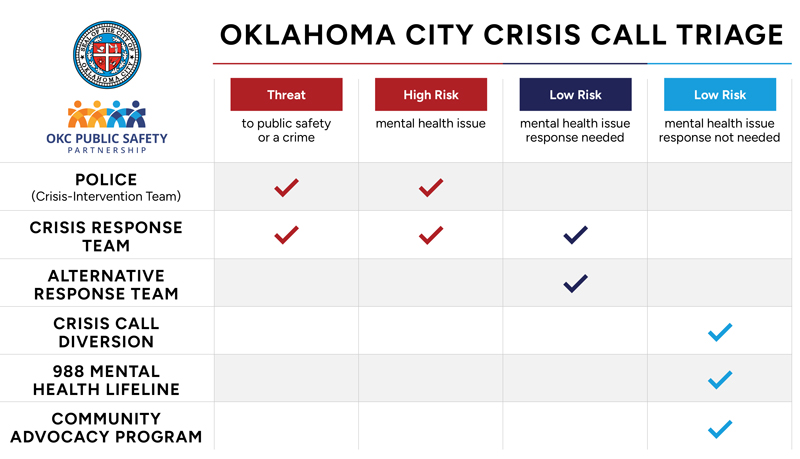
Oklahoma City’s Crisis Intervention Advisory Group developed a Crisis Call Triage process, indicating the appropriate public safety response for addressing high- and low-risk mental health calls to 911.
In my role facilitating the city’s Crisis Intervention Advisory Group, I’ve witnessed firsthand the collaboration and determination to bring about these changes. And having worked for years on community change projects — both in my role at Oklahoma’s Healthy Minds Policy Initiative and before that — I know that it is rare to see a city achieve the kind of progress and sustained focus we see in Oklahoma City.
Cities across the country are facing some of the same challenges that spurred Oklahoma City to action: an emergency response system strained by growing mental health needs among residents, and a recognition that the public servants who have for decades been the default response to a 911 call may not be the ones best equipped to help in a mental health crisis.
Today, Oklahoma City has found a path forward. Other cities can follow the playbook, too.
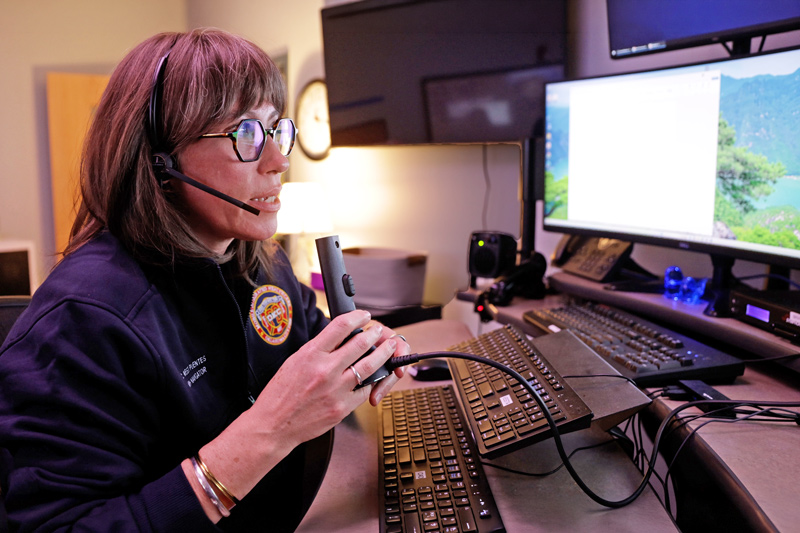
Oklahoma City’s Mobile Integrated Healthcare’s Crisis Call Diversion Team consists of mental health professionals embedded within the 911 Communications Center to help de-escalate a mental health call before a response team arrives.
Creating the Foundation: The Oklahoma City Public Safety Partnership
This work began in earnest with an assessment of law enforcement and community policing in Oklahoma City, leading to 39 recommendations across eight focus areas, including alternative response to mental health calls and law enforcement training in crisis response.
In response to the findings, the city launched the OKC Public Safety Partnership in 2023, a collaborative group of community stakeholders, city council members, public safety departments, and residents, all working to implement the 39 recommendations.
From the partnership, the city’s Crisis Intervention Advisory Group was formed, bringing together mental health professionals and service providers to guide how the city could better respond to behavioral health-related 911 calls. Members brought their own experiences and background in mental health care, conducted extensive research on best practices from other similar-sized cities, and reviewed current city policies regarding emergency response.
Ultimately, the group redesigned the city’s 911 call flow to work better for people in need — and for first responders. In addition to developing a call triage process to outline the appropriate response to high- and low-risk mental health calls to 911, the group worked on a quality assurance program that monitors the city’s crisis response system and regularly reviews mental health-related call data. Meanwhile, the Public Safety Partnership successfully increased the number of budgeted OKCPD patrol officers on the Crisis Intervention Team (CIT) from 150 to 200 in July 2024. Today, 41% of OKCPD patrol officers are CIT-trained, surpassing the national average of 25%. Starting with Recruit Class #145, all OKCPD cadets now receive CIT training as part of the standard cadet training curriculum. As of May 2026, 53% of all OKCPD sworn officers have completed CIT training.
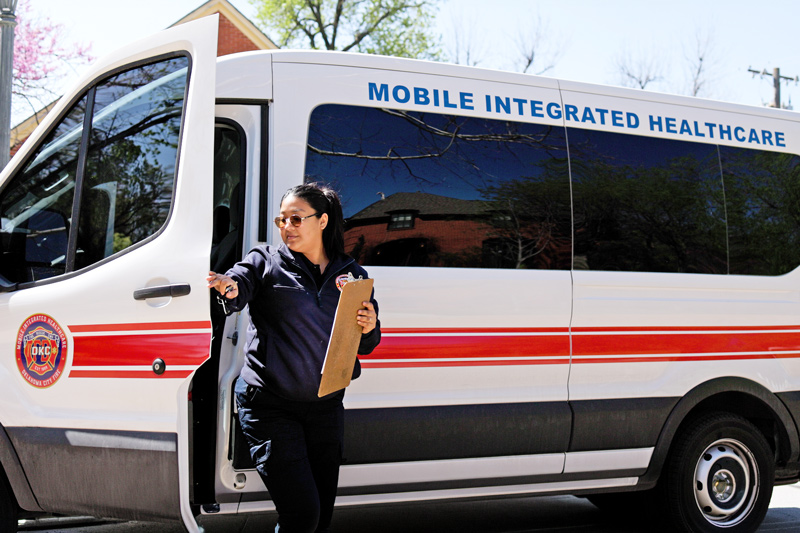
Mobile Integrated Healthcare teams are fully mobile, arriving in vans which are specially fitted to serve people in mental health distress. The team arrives on scene to respond to high- or low-risk mental health calls, meeting people where they are.
Developing an Alternative Response: Mobile Integrated Healthcare
At the heart of the Crisis Intervention Advisory Group’s work was the idea that people in a mental health crisis need a mental health response. In turn, police and firefighters can focus on public safety emergencies, and trained mental health responders can offer people the mental health support they need. From that work, Mobile Integrated Healthcare (MIH) was formed as a program under the Oklahoma City Fire Department in May 2025.
MIH is staffed with licensed mental health professionals and paramedics who provide specialized behavioral health and medical services as a supplemental diversion program for emergency response. Because it’s housed under the fire department, the program is seamlessly integrated within the city’s emergency response infrastructure. MIH consists of four teams:
- A Crisis Call Diversion Team of trained mental health professionals embedded within the 911 Communications Center
- A Crisis Response Team dispatched when someone is experiencing a mental health emergency and may be showing signs of being a risk to themselves or others – typically a co-response with Crisis Intervention Team officers
- An Alternative Response Team dispatched to less acute behavioral health calls and substance use emergencies
- A Community Advocacy Program that provides support to residents who frequently call 911 for non-emergency needs.
For residents, this means that when someone calls 911 in Oklahoma City and it’s clear they have a mental health or substance use-related need — there’s not a house fire, medical emergency, or criminal act — call-takers can send one of the city’s new MIH teams to them, wherever they are. This means police and firefighters are freed up from responding to these kinds of calls, and trained clinicians, peer recovery support specialists, paramedics, and behavioral health navigators can connect people with the care they need.
In the first 10 months of the program, which launched in 2025, MIH teams diverted over 5,000 calls away from first responders and stabilized more than 1,500 people in the field, without needing to transport them to a hospital or urgent recovery center.
To keep residents informed about the range of mental health services available to them, both through the city and within the larger community, the OKC Public Safety Partnership in 2024 began hosting free Mental Health Info Sessions during May, Mental Health Awareness Month. The info sessions include a panel discussion with mental health and crisis response experts as well as a resource fair.
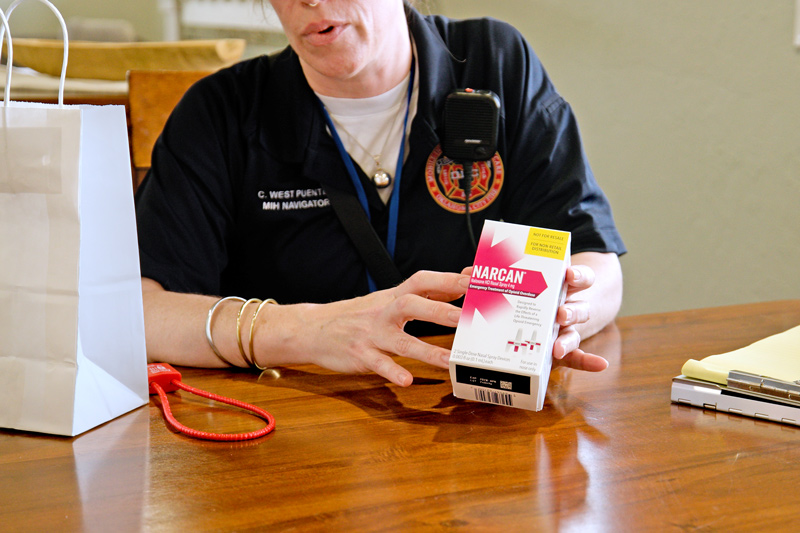
The Alternative Response Team responds to less acute behavioral health and substance use emergences, including overdoses. Team members provide immediate treatment as well as resources that connect a person to recovery.
Growing Support: Oklahoma City Mental Health Initiative
Recognizing the important role of people with lived experience as part of alternative response teams like MIH, Healthy Minds advocated for Oklahoma’s House Bill 4275 in 2026, which lets peers maintain their certification when working for cities and counties on these types of novel teams. The bill passed and will go into effect in November.
Now, I’m heartened to see Oklahoma City leaders taking this work even further. Buoyed by significant philanthropic support, the community has embarked on a broader initiative to align Oklahoma City’s mental health resources with the needs of its residents.
Led by a cross-sector coalition of community leaders and guided by Healthy Minds, the Oklahoma City mental health initiative will complement the city’s crisis system-focused work and address some of the broader challenges facing the community’s behavioral health system.
Each of these groups exemplifies the type of collaboration cities need to shape major mental health outcomes among their residents. There’s still work to be done, but Oklahoma City’s progress is a reminder of what’s possible when city leaders, mental health professionals, first responders, and residents work together.
Resources
- Crisis Intervention Advisory Group
- Healthy Minds Policy Initiative
- Law Enforcement Policy Task Force
- Community Policing Working Group
- City of Oklahoma City Recommendations Report
- Oklahoma City Public Safety Partnership
- Mobile Integrated Healthcare
- Oklahoma City Mental Health Info Sessions
- Oklahoma House Bill 4275

Jessica Hawkins is the senior vice president of community initiatives at Healthy Minds Policy Initiative and the lead facilitator for the Oklahoma City Crisis Intervention Advisory Group.