Advocacy in disability and behavioral health services often begins with a simple goal: improving quality of life for individuals and families. Yet meaningful and lasting policy change rarely emerges from isolated efforts. Systems transformation requires strategic leadership, coalition alignment, evidence-informed advocacy, and sustained engagement with policymakers.

Dr. Adusu interacting with Rep. Michael Chippendale-District 40 of RI on the left and Rep. Alex Marszalkowski-District 52 of RI on the right
In recent years, Dr. Isaac Mawuko Adusu emerged as a prominent voice in developmental disability and community-based service advocacy, contributing to policy reforms and service system changes that extended beyond individual organizations and influenced broader disability systems. His work reflects an approach that integrates policy strategy, coalition-building, direct legislative engagement, and community-centered advocacy.
Across Rhode Island and beyond, his efforts contributed to strengthening developmental disability systems, advancing funding reforms, improving workforce sustainability, and promoting more equitable service environments for individuals with intellectual and developmental disabilities (IDD). The impact of these initiatives demonstrates how advocacy can evolve into a model for system-level change.
Building a Strategic Advocacy Movement
Developmental disability systems across the United States face growing challenges, including workforce shortages, increasing service complexity, and financial pressures affecting provider sustainability. These challenges frequently result in fragmented advocacy efforts where providers, families, and organizations pursue reform independently rather than collectively.
Recognizing these barriers, Dr. Adusu’s advocacy evolved toward systems-level engagement. In 2024, after joining the Governmental Affairs Committee of the Community Provider Network of Rhode Island (CPNRI), he helped advance coordinated disability advocacy efforts focused on statewide Medicaid reform and service sustainability.
Rather than approaching advocacy as episodic engagement with policymakers, his strategy emphasized coalition alignment and unified policy narratives. Through extensive stakeholder collaboration involving providers, advocates, legislators, and community leaders, he promoted a model in which advocacy became coordinated, measurable, and outcome-driven.
This strategic orientation is what he named the Adusu Advocacy Framework, a structured approach to disability policy reform emphasizing coalition building, evidence-based messaging, public engagement, and long-term systems sustainability. The framework was developed to bridge an important gap within disability advocacy: translating recognized system problems into effective policy action.
A Historic Policy Achievement in Rhode Island
Among the most consequential outcomes associated with these efforts was Rhode Island’s landmark disability services funding reform initiative. Beginning in 2022 and continuing through 2024, disability providers and advocates pursued statewide efforts aimed at addressing longstanding Medicaid reimbursement challenges affecting developmental disability services. Funding limitations had strained provider organizations, threatened workforce retention, and affected access to services.
Dr. Adusu became actively engaged in coalition activities supporting these efforts through legislative outreach, advocacy planning, and policy messaging. He led direct engagement with elected officials and broad coalition mobilization at the Rhode Island State House. These efforts culminated in a historic outcome: Rhode Island approved approximately
$160 million in Medicaid investments for disability services, the largest single-year Medicaid investment in state history.
The implications extended far beyond fiscal policy. The investment strengthened workforce stabilization initiatives, supported provider sustainability, and expanded capacity for services affecting thousands of individuals receiving developmental disability supports throughout Rhode Island. The reform is one of the most significant policy victories in the state’s human services sector.
He noted that “the disability workforce crisis was never only a funding issue. It was a human issue. Behind every workforce shortage was an individual waiting for support, a family seeking stability, and providers trying to sustain critical services.”
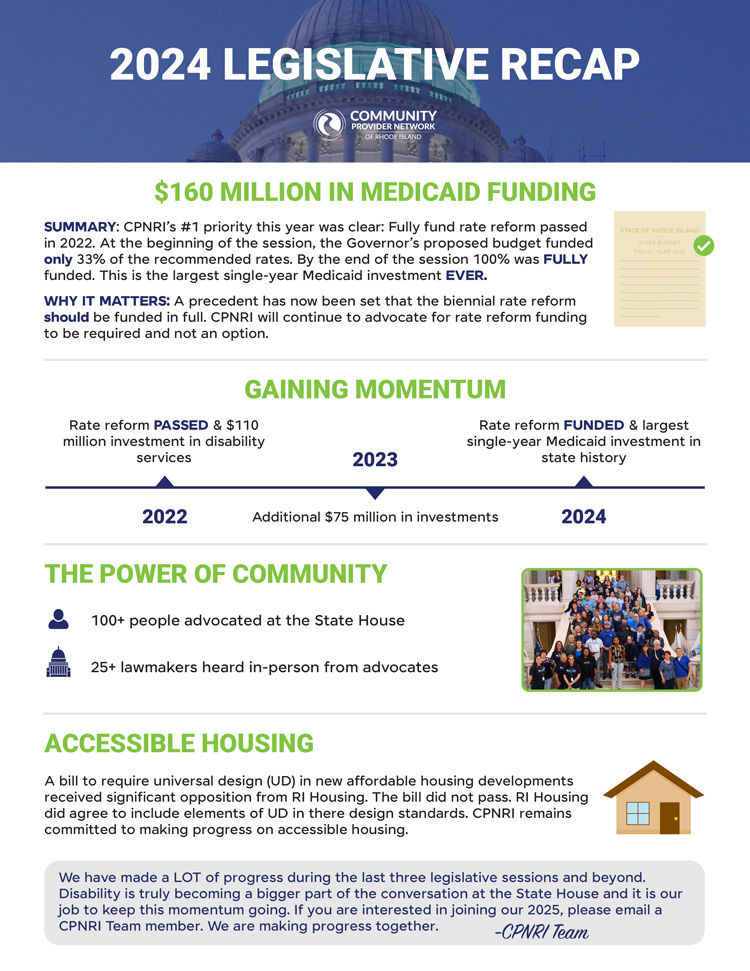
The largest single-year Medicaid investment in Rhode Island history supporting disability services. Source: CPNRI
From Legislative Success to a Replicable Framework
Policy victories often generate momentum but fail to produce enduring systems change when strategic lessons are not documented. Dr. Adusu sought to address this challenge by formalizing advocacy principles observed during reform efforts into a broader strategic model. His publication, The Adusu Advocacy Framework: A Strategic Model for Advancing Policy Reform in Developmental Disability Services, in this edition of BHN, outlined core principles for sustainable systems advocacy. The framework identified several central pillars:
- System-level advocacy
- Coalition alignment
- Evidence-based policy messaging
- Human-centered narratives
- Sustainable policy solutions
The framework further described a pathway moving advocacy from problem identification toward measurable outcomes:
System Challenge → Coalition Alignment → Policy Narrative → Legislative Engagement → Public Awareness → Policy Reform → System Strengthening.
Its significance extends beyond Rhode Island. By transforming practical advocacy experiences into a replicable model, the framework offers disability providers, advocacy organizations, and behavioral health leaders a structured roadmap for influencing policy reform across varied service systems.
“I developed the framework because I saw advocacy efforts happening in silos. Strong voices existed everywhere, but without alignment, meaningful change became harder to achieve. Systems improve when communities move with a shared purpose,” he stated.
Advancing Accessible Housing as a Disability Rights Issue
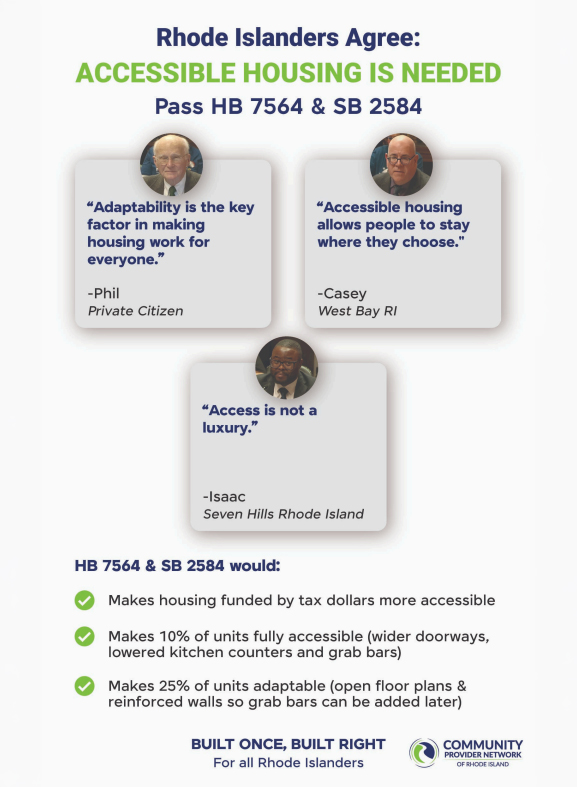
Advocacy efforts later expanded beyond reimbursement reform into broader issues affecting social determinants of health. In 2025–2026, Dr. Adusu testified before Rhode Island legislative committees supporting accessible housing initiatives, including legislation related to Home-Fit Dwelling Units and universal design concepts. These efforts emphasized the intersection between disability rights, aging populations, independence, and community inclusion.
Accessible housing remains a critical issue within disability services because environmental barriers frequently contribute to institutionalization risk, reduced independence, and inequitable access to community participation. His testimony and advocacy efforts framed housing accessibility not solely as an infrastructure issue but as a public health and social justice concern.
“Accessibility should not be viewed as a special accommodation. Communities should be designed with the expectation that all people deserve environments where they can live independently and with dignity,” he stated.
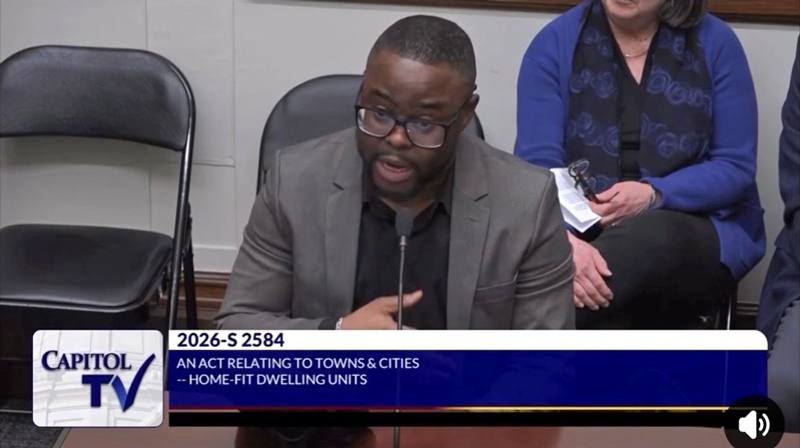
Dr. Adusu’s Legislative testimony supporting accessible housing and inclusive community design
Advocacy as collective action, providers, advocates, and community leaders working toward systems reform. (Source: CPNRI)
Impact on the Intellectual and Developmental Disability Systems
The significance of Dr. Adusu’s work lies not only in isolated policy achievements but in its broader influence on disability advocacy practice. Historically, advocacy within developmental disability services has often focused on organization-specific concerns or short-term legislative objectives. His approach emphasized systems transformation through stakeholder coordination and measurable policy outcomes. This shift carries several implications:
- First, it demonstrates that disability advocacy can be structured and evidence-informed rather than episodic.
- Second, it illustrates how provider organizations, families, advocates, and policymakers can function as aligned systems partners rather than independent actors.
- Third, it contributes a replicable advocacy methodology potentially adaptable to workforce crises, service inequities, and community-based care reforms nationally.
Behavioral health and developmental disability systems continue to face increasing demands, workforce instability, and evolving service needs. Addressing these challenges requires more than identifying problems. Sustainable reform demands strategic leadership capable of moving ideas into policy and policy into measurable outcomes.
From Medicaid reform to accessible housing advocacy, Dr. Isaac Mawuko Adusu’s work illustrates the potential impact of coordinated systems advocacy. His contributions suggest that advocacy, when supported by evidence, relationships, and strategic design, can do more than influence legislation — it can reshape systems and redefine how disability services evolve.
In an era increasingly emphasizing equity, inclusion, and person-centered systems of care, this work offers an emerging model for how advocacy can contribute to lasting transformation in disability and behavioral health services.
Dr. Isaac Mawuko Adusu, DHA, MSNPM, is a Policy Advocate, Assistant Vice President of Adult Services at Seven Hills Foundation, Rhode Island, and an internationally recognized nonprofit leader in intellectual and developmental disabilities (IDD) and behavioral health, specializing in workforce transformation, community-based care, and organizational innovation. He can be contacted at [email protected] or [email protected].