

When we think about justice-impacted older adults, there are three facts we need to keep in mind:
- A post-incarceration transition is difficult under the best of circumstances.
- Justice-impacted older adults tend to have complex behavioral and physical health needs.
- Adults over age 60 are less likely than younger people to have a network of family or friends to provide practical or emotional support.
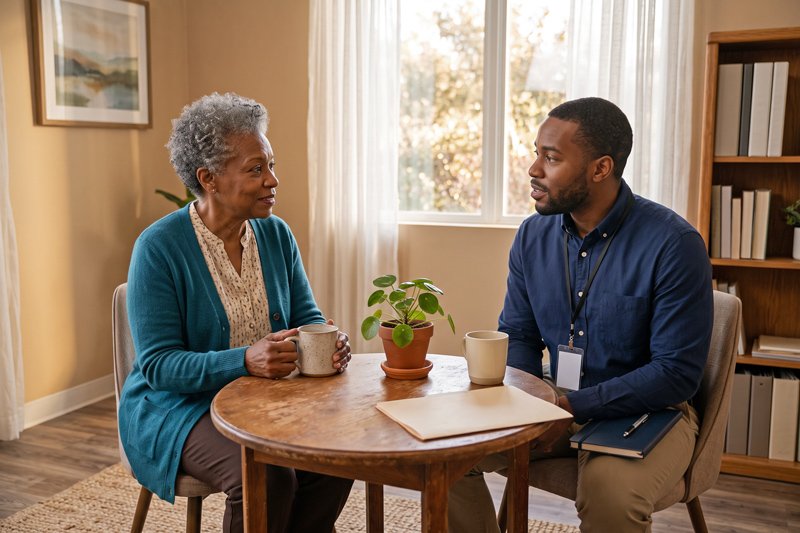
Given this scenario, one might expect communities to offer extra support for older adults. But that is not the case, and in fact the compounding bias of ageism + ableism + carceral history stigma often adds up to increased likelihood of homelessness, unemployment, and untreated mental illness.
SPOP is a community-based behavioral health provider for older adults (55+) based in New York City. We serve 1,000 clients annually through an outpatient clinic and a psychiatric rehabilitation day program (PROS) for adults with serious mental illness. We offer a full range of services including individual and group therapy, psychiatry, medication management, assessments, bereavement support, group-based psychiatric rehabilitation services, creative arts therapies, social healthcare, and linkages to support for housing, meals, and financial assistance. We have decades of experience supporting formerly incarcerated older adults, and we have seen how important behavioral healthcare, housing, and community are for successful re-entry.
We also offer training in aging and mental health that draws on our clinical expertise, with online and in-person workshops on various topics including best behavioral health practices for justice-impacted older adults. This particular workshop is designed to give staff the tools to recognize ageism and bias, understand the needs of this population, and connect older adults to appropriate services, housing, and social supports.
Recommendations for Better Supporting Older Adults in Re-Entry
I’d like to share a few recommendations on how we can all do a better job of supporting older adults as they re-enter society.
To start, we need to recognize that incarceration – together with the detrimental effects of racism, poverty, and limited access to healthcare – creates a dynamic of accelerated aging. These stressors literally erode the body by 10 years or more, so that a person leaving prison at age 50 is likely to have medical conditions and organ functions that mimic a much older person. This means that behavioral health programs that work with a justice-impacted population should pay particular attention to clients in their 50s, who may have acute needs but are too young to qualify for many aging-specific benefits and supports.
The mental health community must also confront ageism in behavioral health services. Age bias is rampant, even among behavioral health professionals, and we need to focus on providing age-affirming care. Justice-impacted older adults are especially vulnerable: 30% have clinical depression, 20–40% have symptoms of Post-Traumatic Stress Disorder, and overall they are more likely to die by suicide than any other imprisoned age cohort.
We need to become familiar with age-related risk factors and signs of older adult anxiety and depression, and we need to resist the temptation to use “elderspeak” or other reductive language, such as high-pitched voices or speaking too loudly, which may undermine an older person’s strengths and capacities. All agencies should screen older adults for substance use – and not wait until the client falls or develops a serious medical condition. Justice-impacted older adults should especially be supported with screening and healthy coping options.
Interventions can also focus on meeting social health needs such as stable housing, vocational or avocational support, transportation, food security, and safety. Social health includes frequent and consistent social contact — because loneliness and isolation can be a death sentence for older people. When older people who were formerly incarcerated are rebuilding an outside community, they need people, places, and things to sustain them.
Finally, behavioral health professionals can help justice-impacted older adults build positive identity and legacy. Incarceration disrupts the opportunity to generate a positive self-image, mastery of life skills, and a meaningful role in the community. Older adults emerging from the justice system benefit from professionals who value their contributions, encourage intergenerational activities, volunteerism, and community engagement, and give them the tools to live purposefully.

Catherine Thurston, LCSW, has served as Chief Executive Officer of Service Program for Older People (SPOP) since 2024, having previously served as Chief Program Officer. She has over 35 years of experience in gerontological social work. She has been a member of the Adjunct Faculty at the Silberman School of Social Work at Hunter College since 2016. She received her Master of Social Work from Hunter College School of Social Work.


