

Growing up in Jamaica, Queens, in a working-class family, I learned early that one’s circumstances do not define one’s potential. My grandparents instilled in me the value of perseverance and the belief that education is a powerful equalizer. I was driven not only to advance myself, but also to contribute to something larger, helping to repair systems and expand opportunity for others.
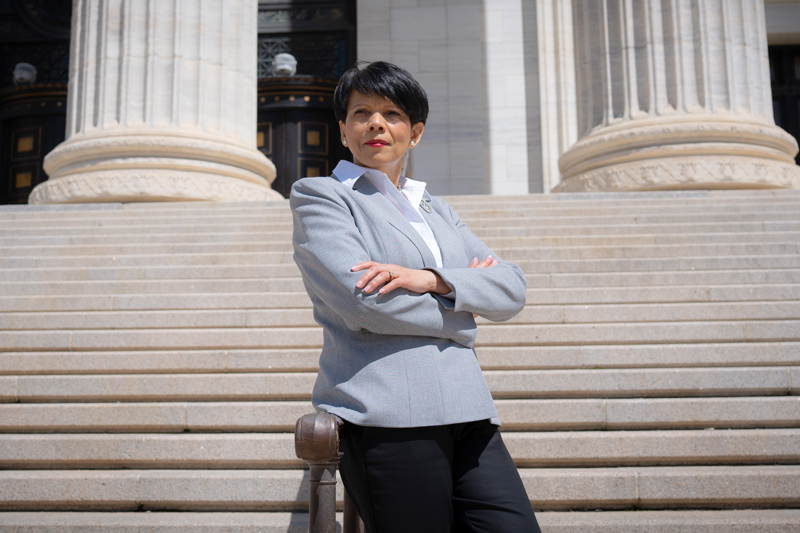
Carmen Collado, LCSW-R, on the steps of the New York State Department of Education. Copyright Darrell Camp, 2026.
That belief ultimately led me to the New York University Silver School of Social Work, an experience that transformed both my professional trajectory and my worldview. While working full-time in the Bronx, I attended graduate school at night and became the first in my family on my mother’s side to graduate from college. That experience reshaped my family’s trajectory and opened doors for future generations, including my children. NYU deepened my understanding of how to support individuals within the broader context of systems, adversity, and inequity.
For more than 35 years, my career in the nonprofit sector has focused on the intersection of trauma, poverty, and behavioral health. I have worked to advance equitable, community-based systems of care for vulnerable populations across New York, grounded in the belief that access, dignity, and opportunity should be available to all, regardless of where one lives.
One defining experience early in my career was leading a foster care mental health pilot designed to reduce placement disruptions among children in family foster care. In collaboration with Good Shepherd Services, Seamen’s Society for Children and Families, and the Jewish Board of Family and Children’s Services, we integrated on-site behavioral health services into foster care settings. The results were significant, with a 99 percent placement stability rate and only one disruption due to a foster parent’s medical condition. This work was later recognized in the Child Welfare Journal of Policy, Practice and Program and supported by leadership at the New York City Administration for Children’s Services and the New York State Office of Mental Health as a model for improving system-wide outcomes, demonstrating what is possible when care is both integrated and intentional.
Mentorship has shaped every part of my career. I have been fortunate to learn from leaders who challenged me to think beyond traditional systems and expand my impact. Paul Levine encouraged me early in my career to step into leadership and taught me a lesson I carry with me to this day: “Listen with a third ear to what people say and to what they do not say.” I also learned from Dr. Alan Siskind and Beverly Brooks, whose commitment to community-based care continues to influence my approach. As Dr. Siskind often said, “Mental health is about all of us. It is simply a matter of where we are on the spectrum.” That perspective reinforces the importance of building inclusive systems that meet people where they are, without stigma or barriers.
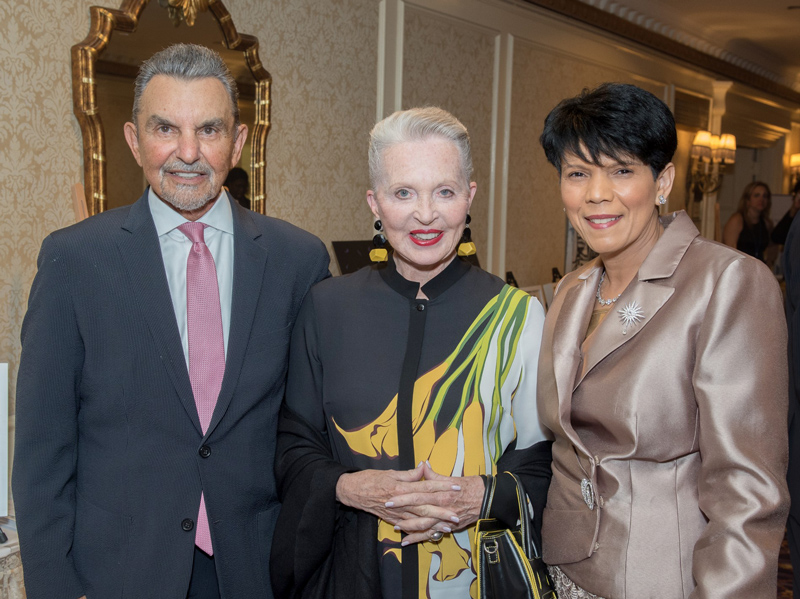
(From left to right) Martin Silver, Dr. Constance Silver, and Carmen Collado at an event honoring Dr. Silver at the Roosevelt Hotel in New York City. Copyright Carmen Collado.
My relationship with Dr. Constance Silver and Mr. Martin Silver has been especially meaningful. For more than 15 years, they have consistently asked what I think, challenged me to trust my voice, and created opportunities that have shaped my leadership. Dr. Silver has also encouraged me to remain grounded in purpose and accountability, leading with both humility and intention. Her mentorship has been deeply personal and rooted in trust, respect, and a shared commitment to equity.
Dr. Silver’s life story, shaped by early experiences of poverty and a lifelong commitment to giving back, reflects a philosophy that resonates deeply with my own: the responsibility to repair the world. This belief, grounded in the idea that we are called to contribute to something greater than ourselves, has shaped how I lead, how I mentor, and how I approach systems change. It is a value that transcends cultures and traditions and speaks to the importance of addressing trauma, inequity, and opportunity with intention and compassion.
As a social worker and leader, I have sought to carry these lessons forward. This work is bigger than any one person. It requires humility, accountability, and a commitment to bringing others into the field. Mentorship is not optional. It is an essential responsibility of leadership.
In addition to my work in direct services, I have served on the New York State Board for Social Work under the State Board of Regents, including as Chair. In that role, I have focused on maintaining professional standards and ensuring that the field continues to respond to the evolving needs of communities.
These lessons are increasingly relevant as behavioral health continues to evolve. We must integrate research, policy, and emerging tools, including artificial intelligence, to better address disparities in care. At the same time, we must remain grounded in people and equally committed to preparing the next generation of leaders.
I was honored to be recognized during Women’s History Month through HITN’s “Women Leading the Charge” initiative and to contribute to the “Dear Future Leader” campaign. These recognitions reflect not only individual achievement, but a broader commitment to lifting others as we lead.
Advancing behavioral health equity requires more than innovation. It requires intentional mentorship, accountable leadership, and a shared commitment to building systems that truly serve all communities. At its core, this work is about repairing and strengthening the conditions that shape people’s lives.
We are each shaped by those who guide us, and in turn, responsible for guiding others. This article is dedicated to the mentors who shape our paths and to the responsibility we carry to support those who come next.
Carmen Collado, LCSW-R, is Chief Operating Officer and Chief External Relations Officer at Community Counseling & Mediation (CCM). For more information, please contact Carmen at [email protected].


Congratulations, Carmen! This recognition is so well deserved. Your leadership and commitment to improving behavioral health care and supporting our communities truly make a difference. Thank you for sharing your story and for all the meaningful work you do every day at CCM.
Carmen, thank you for sharing your powerful journey with us! It’s very inspirational and terrific to witness via your article.
Amazing!!!!!
It was my honor to work with and learn from Carmen. She listens, hears, assesses, plans and then is all-in doing what’s needed to improve policy and keep watch on its implementation.
I’m retired. I don’t think Carmen ever will. Her work is her heart.