This article explores the pervasive impact of intergenerational racialized trauma and emphasizes the importance of healing spaces for marginalized groups. It examines how systemic socialization and traumatic interactions within family systems contribute to emotional suffering and behavioral patterns that affect individuals and communities. It is important to highlight the role of safe, open dialogue environments—particularly in workplace and therapeutic settings—in fostering transformative change. The Sawubona healing circle serves as a cycle of liberation and is examined as a framework for understanding how systemic roles reinforce inequity and how deliberate dialogue can challenge misconceptions, promote social transformation, and empower marginalized populations. Ultimately, behavioral health professionals advocate creating courageous spaces that foster awareness, understanding, and liberation.
Healing Circles: Embracing Ubuntu and African Traditions to Foster Resilience
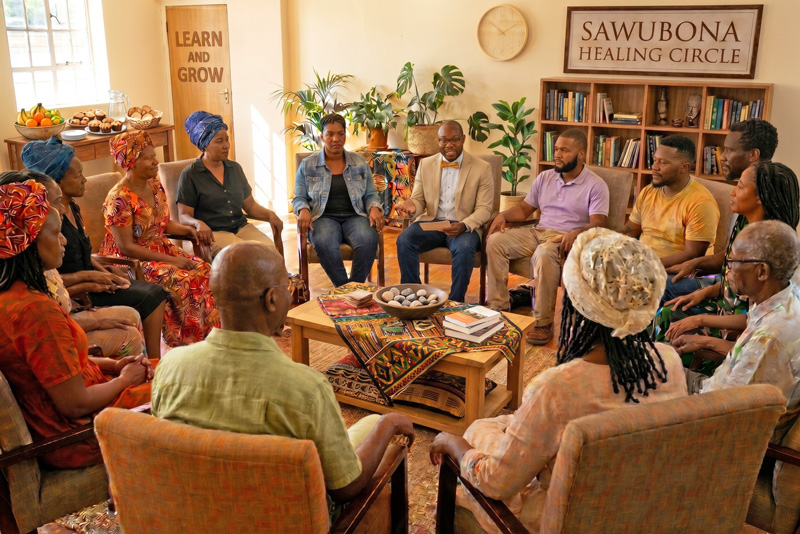
Sawubona healing circles are rooted in the ancient Zulu greeting Sawubona, commonly translated as “I see you” or “We see you.” These circles are not designed as psychotherapy spaces; rather, they aim to promote healing, resilience, and restoration among marginalized groups exposed to systemic adversity, including racial trauma, health disparities, economic hardship, and police violence. Inspired by African-centered principles such as Ubuntu, Nguzo Saba, and Ma’at, Sawubona healing circles emphasize multigenerational collaboration involving elders, community leaders, and participants (Auguste et al., 2022). The circles employ culturally affirming practices that integrate African-centered coping strategies and intentional language, including expressions such as Asante (“Thank you”), Asante Sana (“Thank you very much”), and Ase (“I have spoken”). Thus, oppression is understood as a collective human experience, and adversity becomes mutually recognized through the Ubuntu principle, “I am because you are.” This approach differs from traditional Western clinical models by centering collective healing, cultural affirmation, and communal resilience.
Trauma, Intergenerational Effects, and Healing
In My Grandmother’s Hands: Racialized Trauma and the Pathway to Mending Our Hearts and Bodies, Resmaa Menakem (2017) describes the pervasive and enduring effects of racialized trauma across generations. When one group oppresses or brutalizes another, the resulting trauma may be transmitted intergenerationally through learned behaviors, survival responses, and family dynamics. Systemic socialization processes further reinforce both individual and collective trauma. Clinical intervention and community-based healing may play an essential role, as marginalized communities often experience chronic exposure to discrimination and traumatic interactions within broader social systems and family structures.
Arline Geronimus (2020) noted that humans face life-threatening stressors, such as encountering a tiger in the bushes. For individuals facing discrimination and systemic racism, this stress response is infrequent but persistent, resembling an endless series of tigers. Such experiences can cause deep emotional distress, impair relationships, and lead to recurring behavioral patterns that impact families, children, and interpersonal connections.
Creating Safe Spaces for Healing and Liberation
To advance this process, it is crucial to introduce individuals to healing spaces that promote open dialogue. Sawubona healing circles play a vital role in normalizing ongoing unresolved issues and helping marginalized individuals recognize that they are not alone. A colleague once remarked, “Brave spaces empower individuals to reflect on and share their experiences honestly, even when feeling paralyzed or fearful of repercussions.” Creating courageous, inclusive environments within workplaces and therapeutic settings is essential for fostering healing among marginalized communities. These safe spaces allow individuals to openly discuss experiences related to race, racism, discrimination, and socialization without fear of judgment, retaliation, or invalidation. The Cycle of Liberation illustrates how we develop roles within systems of oppression that sustain the frameworks shaping our perceptions. These patterns often persist and become self-fulfilling (Harro, 2000). The Sawubona Healing Circle exemplifies a practical approach to healing-centered care that is both relevant and impactful.
Exploring Differences: The Cycle of Liberation in Dialogue
The Sawubona healing circle represents a journey toward tranquility. It involves engaging in dialogue to recognize differences, resolve misunderstandings, question assumptions, and replace misconceptions with increased understanding and empathy. This process requires the collaborative development of shared guidelines and principles that encourage active participation, mutual respect, and collective responsibility among participants.
By cultivating courageous spaces within the Sawubona framework, individuals can begin to identify the systemic roots of oppression and critically assess their own social positions within these structures. This heightened awareness paves the way for social transformation, empowerment, and collective liberation (Harro, 2000). Ultimately, healing circles rooted in African-centered traditions offer a culturally responsive approach to addressing racialized trauma and fostering resilience, communal healing, and social change. As behavioral health professionals continue to confront the effects of racialized trauma, culturally grounded healing spaces, such as Sawubona circles, emerge as vital pathways toward resilience, collective healing, and community empowerment.

Shane King, MSW, LCSW, is a psychotherapist and professor. He can be reached at (646) 450-4151 or [email protected]. For more information, visit www.psychologytoday.com/us/therapists/shane-king-new-york-ny/771629.
Special thanks to Priscilla and Cameran for your inspiration and motivation.
References
Auguste, E., Lodge, T., Carrenard, N., et al. (2022). Seeing one another: The creation of the Sawubona healing circles. PsyArXiv. https://doi.org/10.31234/osf.io/hwn6x
Geronimus, A. T. (2020). Weathering the pandemic: dying old at a young age from pre-existing racist conditions. Wash. & Lee J. Civ. Rts. & Soc. Just., 27, 409.
Harro, B. (2000). The cycle of socialization. In M. Adams, W. J. Blumenfeld, R. Castañeda, H. W. Hackman, M. L. Peters, & X. Zúñiga (Eds.), Readings for diversity and social justice (pp. 15–21).
Harro, B. (2000). The cycle of liberation. In M. Adams, W. J. Blumenfeld, R. Castañeda, H. W. Hackman, M. L. Peters, & X. Zúñiga (Eds.), Readings for diversity and social justice (2nd ed., pp. 52–58).
Menakem, R. (2017). My grandmother’s hands: Racialized trauma and the pathway to mending our hearts and bodies. Central Recovery Press.