The philosopher Søren Kierkegaard said, “Life can only be understood backwards, but it must be lived forwards.” Few things illustrate this better than using one’s lived experience to support another person seeking recovery from co-occurring disorders. Now formally recognized as “peer” support, this approach allows individuals who are successfully navigating their own recovery to share their insights and achievements to guide others on their journey.
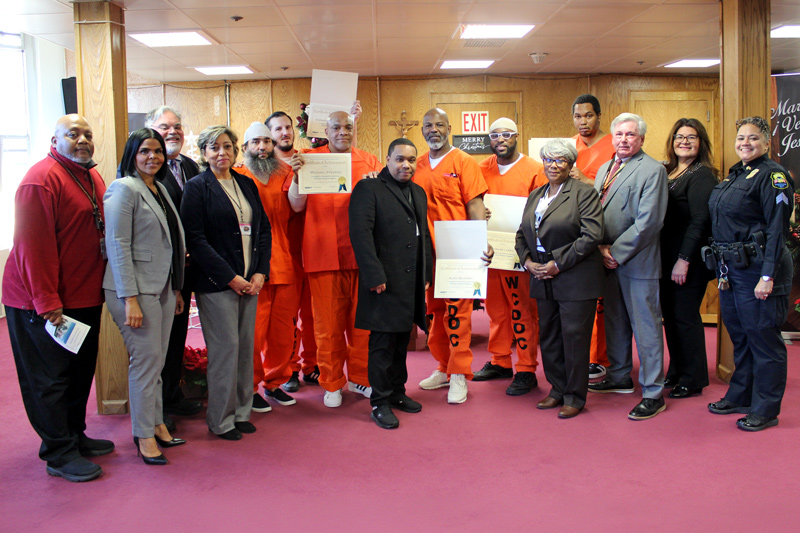
Lives Forward graduation for the fifth cohort of students, held in early December in the Westchester County jail.
The Federal Substance Abuse and Mental Health Services Administration (SAMHSA) highlights the value of peer support in recovery: “Peer support workers are people who have been successful in the recovery process who help others experiencing similar situations. Through shared understanding, respect, and mutual empowerment, peer support workers help people become and stay engaged in the recovery process and reduce the likelihood of relapse. Peer support services can effectively extend the reach of treatment beyond the clinical setting into the everyday environment of those seeking a successful, sustained recovery process.”
Co-occurring disorders (the simultaneous presence of mental health and substance use disorders) can be complex and challenging to treat. Treatment systems are often misaligned, requiring individuals to navigate a range of service providers and treatment approaches. Individuals with lived experience can play a vital role in supporting others on their recovery journey. Both the New York State Office of Mental Health (OMH) and the Office of Addiction Services and Supports (OASAS) have established certification protocols to ensure that well-trained paraprofessionals serve as Peer Specialists (mental health) and Recovery Coaches (addiction).
The value of peers with lived experience is recognized throughout the treatment world. Hospitals, residential providers, outpatient clinics, mobile crisis teams and more are all seeking trained, certified peers to incorporate into their systems of care. The NYS Offices of Mental Health and Addiction Services and Supports are incorporating peer services into their licensed programs.
Lived experience can, and frequently does, include contact with the criminal justice system, often intertwined with co-occurring disorders. Research shows that 30-50% of incarcerated people have, or had, significant co-occurring disorders, with an additional percentage being diagnosable with one or the other. According to SAMHSA (2020), there are lower rates of mental health disorders and SUDs within the community than compared to rates within incarcerated people. Another statistic reported from the National Survey on Drug Use and Health (NSDUH) found more than 9 million adults meet criteria for a mental illness and substance use disorder simultaneously. Another report from the Bureau of Justice Statistics (BJS) (2017) reported that 42% of state prison inmates along with 37% of federal inmates meet criteria for a co-occurring disorder.
Additionally, according to one researcher, even before the pandemic, formerly incarcerated people had an unemployment rate of around 27%. That is higher than at any point since the Great Depression. People who have been incarcerated lose up to $500,000 in earnings over their lifetimes.
Those released from incarceration often owe upwards of about $13,000, on average, in court fees and fines.
It is through a confluence of all these points that the “Lives Forward” program was created. Seeking to create a pool of dually certified peers with lived criminal justice experience, Westchester County developed a model for currently incarcerated individuals to potentially fill a need in the service system, as well as foster deeper insight into one’s own on-going recovery.
Lives Forward is a collaborative model developed by the Westchester Department of Community Mental Health (DCMH) that works directly with the Westchester County Department of Corrections (WCDOC) and community-based service providers, as well as accredited peer program trainers for both the OMH and OASAS systems. Like prospective peers, the Lives Forward trainers have concomitant lived experience with mental health and/or addiction diagnoses, as well as criminal justice system contact.
With broad-based agreement across the community that peers with lived experience can make a great impact on those with co-occurring disorders and those who are entering either the mental health or criminal justice system, it has been found that meeting the need and finding peer counselors has been difficult. Lives Forward is a program that serves to help us “grow our own staff”.
Funding from the Opioid Lawsuit Settlements is used to contract with the peer certification training providers. Currently, the Mental Health Empowerment Project (MHEP) provides the Peer Specialist Program, and the National Council on Alcoholism and Drug Dependency, Westchester, Inc. (NCADD) provides the Recovery Coach training.
Since early 2024, the program has been serving individuals who reside in the Westchester County Jail. Facility and program staff inform current residents about the opportunity to become dually certified as peers. Those who are interested and self-identify are then screened for their potential to successfully participate. The trainers work collaboratively with WCDOC staff to fill each class with 8–12 participants. The program uses a small-group format and recognizes that participants may return to the community before completing it. Upon return to the community, individuals will be able to continue the program until completion and certification.
Working with DCMH, the community providers will serve as a “clearinghouse” to connect now-dually certified peers with potential employers, with the goal of facilitating timely employment as paraprofessionals. This creates a potential win-win: strengthening recovery for successful Lives Forward participants while also benefiting the individuals they ultimately support and guide.
The creation of this expanded workforce offers numerous lasting benefits. Community-based providers frequently seek peers and recovery coaches, and Lives Forward ensures the development of a trained workforce to meet this demand. Returning citizens gain real opportunities for meaningful work and career growth—opportunities they may not have imagined—while participating in a program that supports their own recovery. This collaboration not only helps build a sustainable workforce but also provides essential peer support that can reduce recidivism and keep people out of the criminal justice system.
To date, Lives Forward has completed five cohorts in the jail, with more than 40 students successfully completing both programs. Because residents in the jail do not have internet access, accreditation requires intensive support in the community after release. Several students have gone on to become certified Peer Specialists and/or Recovery Coaches, with some securing employment in the treatment field.
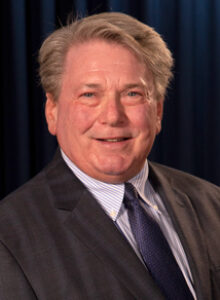
Joseph A. Glazer, Esq., is Deputy Commissioner of the Westchester County Department of Community Mental Health. For more information, visit mentalhealth.westchestergov.com.