Protocol is important in Transcranial Magnetic Stimulation (TMS), but what makes the biggest difference is consistent care and support. A patient comes in every day depressed, exhausted, and not sure it will work. But there’s a person who made it easier to show up anyway. In TMS care, that person is almost always the technician. TMS technicians are an essential workforce innovation in behavioral health care and a day-to-day support system that directly shapes patient healing.
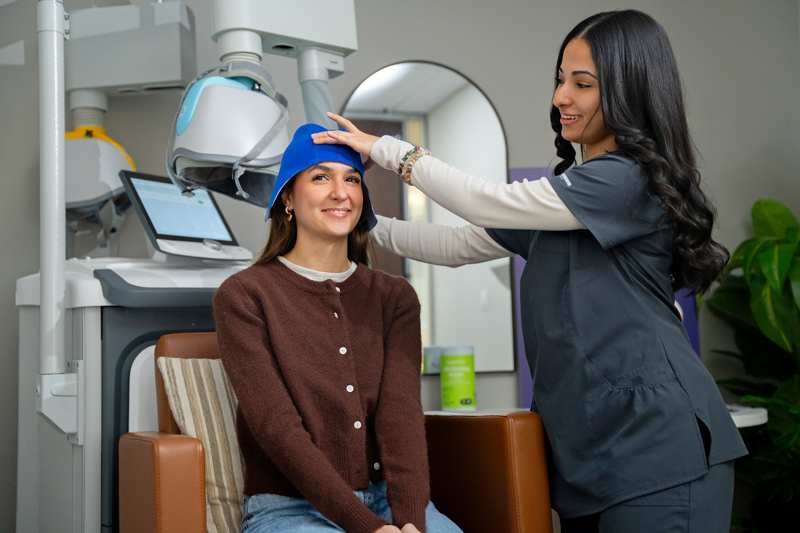
Behind every TMS success story is a relationship: technicians provide the daily support that helps patients stay the course.
The Relationship Dimension
Behavioral health care workforce development often focuses on psychiatrists, psychologists, social workers, and nurses. But positive innovation outcomes can also come from building reliable, trained support roles for patients’ daily healing.
TMS is a perfect example. The treatment is physician-ordered and clinically supervised, but it is carried out in practice by technicians. Over six to eight weeks, five days a week, 30 minutes a day, they become a consistent presence in a patient’s journey.

The tech role expands the behavioral health workforce by focusing highly trained attention on adherence, comfort, and emotional safety.
It’s easy to forget, amid protocols and motor thresholds, that many patients begin TMS while still in severe distress. Some patients initially experience minor headaches, fatigue, or discouragement when they don’t feel immediate change. Add transportation issues, schedule changes, childcare, and external daily life factors. The dropout risk could be high.
The tech is the person who notices the patient’s subtle and gradual improvements each day, who hears the hesitation in “I don’t know if this is doing anything,” who can say, “Let’s just get through today and we’ll reassess together.” This supportive structure changes everything.
TMS technicians aren’t therapists, but the daily relationship they build creates micro-therapeutic moments: brief interactions that shape motivation, hope, and self-efficacy over time.
A patient might say to the technician, on day 12, “I don’t think I can keep doing this.” A tech who has been trained to respond calmly, validate feelings, and escalate concerns appropriately becomes critical. Their role isn’t to directly treat the underlying disorder. Instead, it’s to support the patient through the treatment with comfort.
Patients often come to trust technicians because they’re the steady presence that shows up for them, session after session. The relationship is repetitive, comfortable, and grounded in a shared routine. For many patients, that consistency is stabilizing and strengthens their motivation to stay with the treatment.
Technicians’ Actions Change Outcomes
The conversations that happen during treatment matter. Patients might joke, vent, cry, or shut down. Many say that practicing gratitude and goal setting while receiving treatment becomes a main part of their healing.
They are trained in supportive communication that is clinically aligned:
- Normalization without minimization: “A lot of people feel uncertain around week two. You’re not doing anything wrong.”
- Providing reassurance: “We’ll keep tracking progress together, sometimes it’s subtle before it’s obvious.”
- Tackling patient goals: “You said you want mornings to feel more manageable. Let’s set a small goal that helps with that.”
- Motivational micro-skills: Practicing reflective listening, providing reasons to continue, and affirming effort.
Over dozens of sessions, these small interactions help patients endure the “middle stretch” of treatment, where outcomes are being built.
In Serenity clinics, techs are quietly doing some of the highest-impact work:
- They often notice the first shifts: A patient laughs once, makes eye contact again, arrives on time without struggle.
- They get to celebrate the small wins early: Lighter conversations, a little more energy, or even said a “today felt easier than yesterday.”
- They reflect progress back in real time: Helping patients see that change is happening even if it still feels slow.
- They add encouragement to the routine: Each visit feels less like a task and more like momentum.
In fact, Serenity is one of the only TMS clinics nationwide that can self-certify our own TMS technicians. Our TMS program has an 84% response rate and a 78% remission rate, with results lasting 3 years+ for most patients.
What Workforce Innovation Requires
If we’re serious about behavioral health workforce development, we must professionalize what technicians already do. That means standardized, clinic-supported training in protocol safety, communication, informed care, and more.
Techs hear people at their lowest. Without support, tech burnout can become the hidden bottleneck of TMS access. Workforce innovation isn’t just hiring more techs; it’s retaining them through supervision, career pathways, and recognition as a skilled behavioral health role.
This can be done through care planning, setting clear promotional paths, and highlighting their contributions in team culture. When techs believe what they do matters, they pay closer attention. When they feel supported, they stay longer. When they stay longer, patients get better care.
The Takeaway
Behavioral health care needs more roles that expand access, stabilize engagement, and humanize high-tech treatment. The future of workforce development is designing teams where every role is trained, valued, and aligned to healing.
So next time you think about TMS outcomes, don’t only think about science. Think about:
- Who greets your patient on day one.
- Who sees their progress every day.
- Who helps them work through gratitude exercises.
- Who helps them practice gratitude under the helmet while their brain relearns the possibility of change.
Because every time a patient graduates from TMS and says, “I’m glad I didn’t quit,” there’s almost always a technician behind that sentence.

Dr. TeeJay Tripp is Chief Medical Officer at Serenity Mental Health Centers. Visit www.serenitymentalhealthcenters.com or call (844) 310-1649 to learn more.