The truth is that accessing healthcare is a part-time activity. There is the morning travel, the hour (or three) you spend waiting in line at the doctor’s office, the panic call to your boss about a late report, again. It is not only a nuisance, but it is a colossal waste of the most precious commodity of our time and our working capacity. But what should happen is that a large portion of this friction simply disappears? Hello Telehealth, the mute revolution that is doing much more than just providing screen-based care. It essentially adds to our workforce, puts idle time back to work, and makes people healthier and more productive at work. This is not merely one of the tech upgrades but a release of human potential.
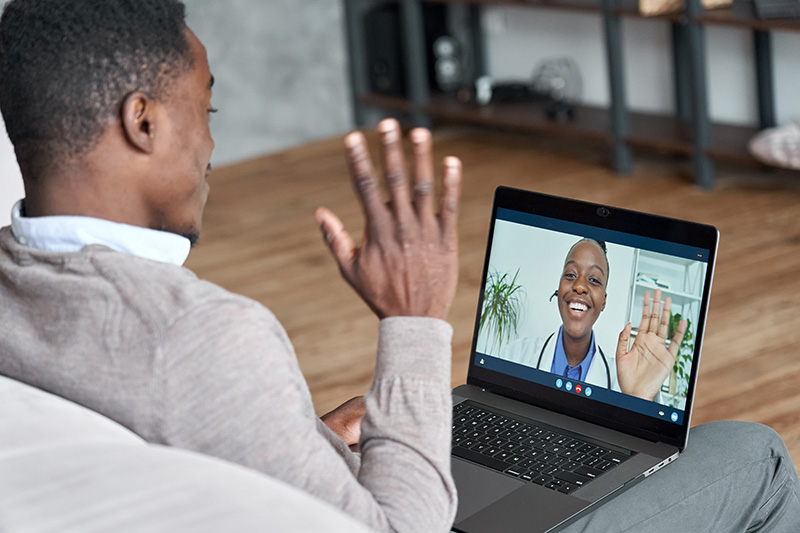
Waiting Room versus Living Room
Consider your last visit to the half-day check-up of an employee or yourself. The math is sobering. A 20-minute follow-up to a stable condition may easily take 2-3 hours of travelling and waiting. Now multiply it by millions of appointments per year. With Telehealth, the timeline collapses to just 20 minutes in your office, your home, or your car during a lunch break. The saving of time is instant and dramatic.
However, the effect is more than a few hours saved. It’s about continuity. A parent does not need to quit work early to pick up a sick child, take them to a clinic, and lose another half day. During a break, they can consult a pediatrician. An employee with a chronic illness such as diabetes or hypertension can undergo fast, frequent check-ins and not always have to vanish behind the desk, which will enable them to better manage their health conditions that can lead to larger, more damaging crises later. Telehealth transforms healthcare into an aspect of life without interrupting the working day.
The Facts Behind the Disruption
It is not a feel-good theory. The data is accumulating, with actual returns of workforce participation and productivity.
The Mental Health Lifeline Study: A 2018 study, involving a seminal study, concluded that patients in telehealth who underwent psychotherapy had significantly lower levels of absenteeism and presenteeism (being at work but not fully functioning) than those in only in-person care. With mental health support being more accessible and less stigmatized, as it is available at the convenience of their homes, telehealth has directly ensured that people remain more engaged and productive at their workplaces. It addressed the burnout until it resulted in a resignation.
The Chronic Condition Management Proof Point: A study in the American Journal of Managed Care highlighted a program for patients with complex chronic conditions. With remote monitoring equipment and frequent virtual visits, the program achieved a 63 percent reduction in hospital admissions. To the workforce, this is a massive development. Reduced hospitalization results in fewer catastrophic and long-term absences. The employees remain steady, regarding their treatment schemes, and more importantly, within the workplace.
The Integrity Multiplier: A report by the CDC itself highlighted a significant increase in telehealth use during the pandemic, particularly among populations with a history of transportation barriers or those in rural areas. To these workers, attending the specialist may have taken an entire day to get there. Telehealth eliminates such a geographical penalty, allowing individuals to have equal access to care without having to lose a day of earnings or productivity. It increased the proportion of workers who were put out of commission by logistics.
A Systemic Capacity Boost
The role of telehealth magic is not limited to a single employee. It is developing systems capacity in two ingenious ways. Telehealth enables busy physical clinics and emergency rooms to be free of less acute and less urgent visits by eliminating them virtually, allowing the clinics and emergency rooms to attend to patients who require physical and practical care. This will imply that we reduce the waiting time for all people and save energy more efficiently, benefiting our valuable healthcare workers. It optimizes the entire healthcare system, which consequently helps ensure a healthier population.
Second, and arguably most importantly, it addresses professional burnout in the field of healthcare itself. The pandemic demonstrated the harsh price of an overworked medical staff. Telehealth provides clinicians with the flexibility to conduct some patient visits from a home office, eliminating the stress of commuting and allowing them to maintain more controlled schedules. It may serve as a retention tool to retain doctors, nurses, and therapists in the profession by providing a more sustainable model of practice. Through the support of our caregivers, we will be able to provide support to the entire workforce.
Conclusion
At its finest, telehealth is a powerful tool for empowerment. It provides individuals with control over their health and their time. By integrating care into the aspects of our daily lives, it prevents health maintenance as a professional barrier. It is unobtrusively opening the billions of hours of missed productivity not by causing us to work more, but by eliminating the unnecessary friction that prevents us from working well. Finally, the need to increase workforce capacity is not about increasing the number of people, but about giving everyone the ability to be present, healthy, and capable – perhaps the most essential prescription of all.

Temitope Fabayo, BA, MBA, is President of DMC HomeCare.
References
Boersma, P., Black, L. I., & Ward, B. W. (2020). Prevalence of Multiple Chronic Conditions Among US Adults, 2018. Preventing Chronic Disease, 17. https://doi.org/10.5888/pcd17.200130
CDC. (2020). Trends in the use of telehealth during the emergence of the COVID-19 pandemic — united states, january–march 2020. MMWR. Morbidity and Mortality Weekly Report, 69(43). https://www.cdc.gov/mmwr/volumes/69/wr/mm6943a3.htm
Muppavarapu, K., Saeed, S. A., Jones, K., Hurd, O., & Haley, V. (2022). Study of Impact of Telehealth Use on Clinic “No Show” Rates at an Academic Practice. Psychiatric Quarterly, 93(2), 689–699. https://doi.org/10.1007/s11126-022-09983-6
Shende, V., & Wagh, V. (2024). Role of Telemedicine and Telehealth in Public Healthcare Sector: A Narrative Review. Cureus, 16(9). https://doi.org/10.7759/cureus.69102
Testa, D., Salma, I., Iborra, V., Roussel, V., Dutech, M., Minvielle, E., & Cabanes, E. (2025). Remote Patient Monitoring System for Polypathological Older Adults at High Risk for Hospitalization: A Retrospective Cohort Study (Preprint). Journal of Medical Internet Research, 27, e71527–e71527. https://doi.org/10.2196/71527