Maternal mental health conditions are the most common complication associated with childbirth1 and the leading cause of maternal mortality in New York.2 Perinatal Mood and Anxiety Disorders (PMADs) include depression, anxiety, OCD, PTSD, and psychosis during pregnancy and up to one year postpartum. Overall, at least one in five pregnant and postpartum people3 struggle with a PMAD – while up to 40% of Black and Brown birthing people45 experience these conditions due to structural inequities and racism. An estimated 75% of all cases remain undiagnosed and untreated.6 Untreated illness contributes to preterm birth, low birth weight, impaired bonding, long-term cognitive and developmental challenges for children, and in severe cases, suicide and infanticide.7 These consequences cost the U.S. an estimated $14 billion annually.8
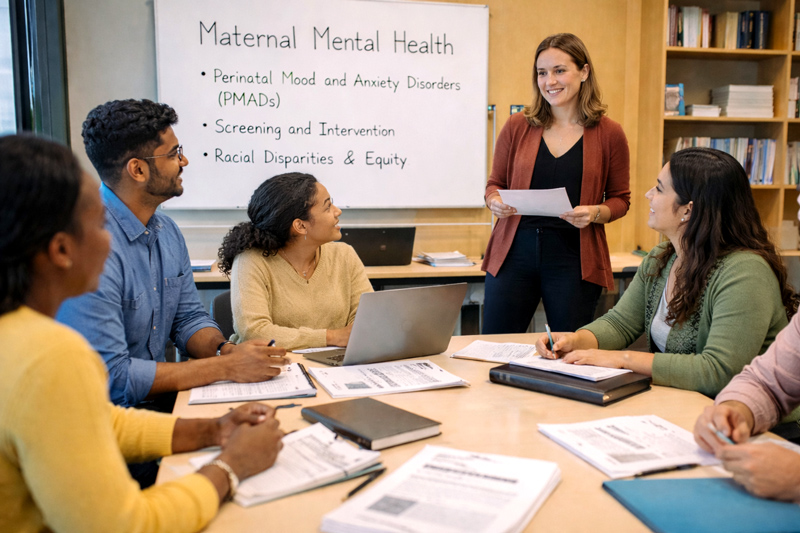
A core driver of this PMAD crisis is the shortage of culturally responsive, perinatally trained mental health providers. Expanding access to perinatal mental health education within New York’s public university system offers an achievable strategy to reduce this gap. Encouraging all CUNY and SUNY Master of Social Work (MSW) programs to offer a maternal mental health elective would significantly increase the state’s workforce, improve access to specialized care in under-resourced communities, and help reduce New York’s persistent maternal mental health crisis.
New York’s Perinatal Mental Health Workforce Gap
National workforce data reveal a widening crisis. HRSA’s National Center for Health Workforce Analysis has projected growing shortages in mental health providers through 2037. Within this broader workforce shortage, gaps between the number of adequately trained mental health providers and the need for such providers are likely to similarly widen.
A 2025 report from the Policy Center for Maternal Mental Health found that 84% of birthing-age women in the United States live in areas with a shortage of perinatal mental health professionals. Nearly 700 counties face high PMAD risk with insufficient resources, and more than 150 counties are considered perinatal mental health dark zones. Kings County and Queens County—two of the most populous counties in New York—rank among the top 15 counties nationwide with the greatest perinatal mental health resource needs and the highest provider shortages. Many low-income rural New York counties have only one or no maternal mental health specialist serving an entire region.
The Policy Center’s 2025 New York State Report Card further reflects a failing grade for the ratio of non-prescribing maternal mental health providers to births (5 per 1,000). At the same time, increasing rates of mothers report their mental health as “fair” or “poor.”9 These findings underscore the urgent need to expand a workforce trained to identify, treat, and support individuals experiencing PMADs.
Policy Momentum for Maternal Mental Health Workforce Expansion
In recent years, federal, state and local agencies have emphasized the need for maternal mental health workforce development. The 2024 U.S. Department of Health and Human Services Task Force on Maternal Mental Health identified specialized workforce shortages as a primary cause of unmet treatment need. The Task Force recommended:
- Educating future and current clinical providers in perinatal mental health conditions and substance use by ensuring that these topics are included in the curricula for mental health care providers and in continuing education requirements.
- Increasing funding, incentivizing, and bolstering recruitment and training efforts to expand and diversify the perinatal clinical mental health and substance use workforce, particularly in under-resourced areas.
Similarly, the New York State Office of Mental Health’s 2025 Maternal Mental Health Recommendations Report highlighted that critical maternal mental health workforce shortages drive inequities in health care across the state. The report emphasized the need to train professionals across the perinatal care continuum—including mental health counselors, substance use providers, and allied health professionals—in maternal mental health.
At the local level, The 2025 NYC Mayor’s Office of Community Mental Health also underscored the importance of educational pathways in its 2025 Bridging the Gap: Challenges and Solutions for a Thriving Behavioral Health Workforce report, citing high vacancy rates among behavioral health providers in public institutions and organizations along with insufficient investment in workforce expansion and sustainability. The report explicitly recommends expanding access to behavioral health training and credentials through graduate-level education.
Collectively, these recommendations align directly with the proposal to expand perinatal mental health education across CUNY and SUNY MSW programs.
Why Social Workers Are Critical to Maternal Mental Health Care
Social workers comprise the largest mental health workforce in the United States and are uniquely positioned to deliver culturally responsive perinatal care. According to the Council on Social Work Education and the National Association of Social Workers, the social work field is more racially and ethnically diverse than most mental health professions – with over 22% of new social workers identifying as Black/African American and 14% as Hispanic/Latino. This diversity is critical given persistent racial and socioeconomic disparities in maternal mental health outcomes.
Social workers are committed to empowering marginalized individuals and communities as a core part of their mission to promote social justice and well-being. Their work involves advocating for and supporting vulnerable populations, addressing systemic inequalities, and ensuring access to resources for those who face discrimination or oppression. They are embedded across public hospitals, community clinics, early childhood programs, schools, and social service settings—precisely where pregnant and postpartum people seek support.
A 2023 NYC Department of Health and Mental Health report, Barriers to Mental Health Treatment among New York City Adults, found that approximately 945,000 adult New Yorkers experience unmet mental health treatment needs annually, with cost and lack of culturally attuned providers as leading barriers—especially in low-income communities and communities of color. A more diverse, perinatally trained social work workforce is essential to reducing these disparities.
The Case for a Standardized Perinatal Mental Health Elective in CUNY and SUNY MSW Programs
New York State has ten (10) MSW programs within the CUNY and SUNY public university system. With average class sizes of 25 students and two semesters per academic year, a maternal mental health elective offered in each program could train more than 500 students annually. These graduates would be equipped to identify PMADs early, provide psychoeducation, conduct screening and assessment, facilitate referrals, and deliver evidence-based treatment – particularly in communities with the highest need.
Currently, only one public university program—Hunter College’s Silberman School of Social Work—offers a dedicated maternal mental health elective. The course provides comprehensive training on:
- PMAD signs, symptoms, prevalence, and risk factors
- Assessment, diagnostic considerations, and evidence-based interventions
- Perinatal substance use disorders
- Racial disparities and structural contributors to PMADs
- Trauma, maternal mortality, and related systemic factors
Survey responses from students enrolled in Hunter’s maternal mental health course demonstrate its impact:
- 83% reported little to no prior awareness of maternal mental health conditions
- 88% felt very or extremely confident identifying PMAD symptoms after the course
- 93% felt very or extremely prepared to support pregnant or postpartum people with PMADs
- 90% reported they were very or extremely likely to pursue employment in the field of perinatal mental health
These outcomes illustrate the transformative potential of standardizing this training across all CUNY/SUNY MSW programs.
Projected Impact of Implementing a Statewide Elective
Encouraging CUNY and SUNY MSW programs to offer a perinatal mental health elective would:
- Expand New York’s workforce by more than 500 culturally responsive, perinatally trained clinicians each year while improving early identification, screening, referral, treatment, and support for PMADs
- Increase access to specialized perinatal mental health services in low-income communities and communities of color
- Align social work education with federal, state, and local workforce development priorities
- Reduce disparities that contribute to maternal mortality
Conclusion
New York’s maternal mental health crisis is urgent, costly, and deeply inequitable. One of the most significant—and addressable—barriers to care is the shortage of culturally responsive, perinatally trained mental health providers. Encouraging all CUNY and SUNY MSW programs to offer a maternal mental health elective is a practical, scalable strategy to strengthen the workforce, expand access to specialized care, and advance health equity across the state. This commitment would save lives, support families, and build the foundation for a more just and effective maternal health system.
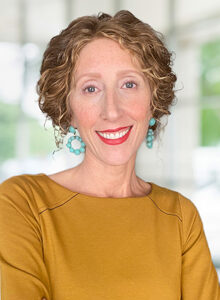
With over two decades of experience in maternal mental health public policy, advocacy and clinical practice, Paige played a key role in the passage of New York State legislation mandating PMAD education and screening in birthing hospitals and is a founding Director of The Motherhood Center of New York.
Paige is an adjunct professor at the Silberman School of Social Work at Hunter College and a frequent public speaker and media contributor. She has appeared on the Today Show and Good Morning America, and in the New York Times, The Wall Street Journal, and The Atlantic.
To contact Paige, please email paigebellenbaum@gmail.com.
Footnotes
- Wang, Z., et al. (2021). Mapping Global Prevalence of Depression Among Postpartum Women. Translational Psychiatry, 11, 640.
- https://www.health.ny.gov/community/adults/women/maternal_mortality/docs/2023_mmm_council_report.pdf
- Fawcett, E., et al. (2019). The Prevalence of Anxiety Disorders During Pregnancy and the Postpartum Period: A Multivariate Bayesian Meta-Analysis. The Journal of Clinical Psychiatry, 80(4), 18r12527
- UPMC Health Beat (2020, July 23). Black maternal mental health: The challenges facing Black mothers.
- Taylor, J. and Gamble, C. (2017, November). Suffering in silence: Mood disorders among pregnant and postpartum women of color. American Progress.
- Byatt, N., Levin, L., Ziedonis, D., Moore Simas, T. A., & Allison, J. (2015, November). Enhancing participation in depression care in outpatient perinatal care settings: A systematic review. Obstetrics & Gynecology.
- Luca DL, et al. (2020). Financial toll of untreated perinatal mood and anxiety disorders among 2017 births in the United States. American Journal of Public Health.
- Luca DL, et al.
- Daw, J. R., MacCallum-Bridges, C. L., & Admon, L. K. (2025). Trends and disparities in maternal self-reported mental and physical health. JAMA Internal Medicine, 185(7), 857–865.