Behavioral health clinicians are seeing more patients with complex, co-occurring disorders and acute symptoms that require multidisciplinary care. At the same time, referrals and expectations for timely, high-quality care are rising.
These demands take a toll on care quality and clinician well-being. Emotional strain, high caseloads, and limited opportunities for skill development contribute to burnout, leaving even the most dedicated clinicians feeling underprepared.
Workforce development is key to addressing these challenges. By providing ongoing training and professional growth opportunities, organizations help clinicians feel supported, laying the foundation for compassionate, effective, and sustainable patient care.
Training That Meets Today’s Clinical Realities
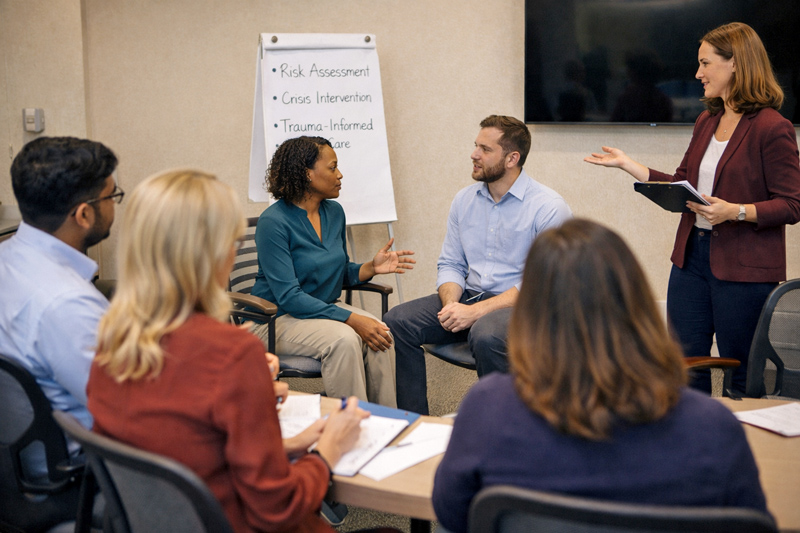
Today’s behavioral landscape is increasingly complex. Clinicians are working with patients who present co-occurring conditions and rapidly shifting needs. To respond effectively, clinicians need more than foundational knowledge. They need evidence-based skills they can rely on in the moment when treating patients.
Organizations can help clinicians meet these evolving needs by offering targeted training in key areas, including:
- Trauma-informed care – understanding and responding to the impact of trauma on mental health
- Acceptance and Commitment Therapy (ACT) – helping patients align actions with values while managing difficult thoughts and emotions
- Risk assessment and crisis intervention – identifying and safely responding to acute clinical situations
- Neuromodulation and interventional psychiatry, including transcranial magnetic stimulation (TMS) – delivering advanced, evidence-based treatments with consistency and safety
- Measurement-based care (MBC) – using standardized tools to track outcomes and guide treatment
By equipping clinicians with these skills, organizations ensure care is not only evidence-based, but also tailored, responsive, and effective.
Using Miller’s Pyramid to Strengthen Clinical Competence
Annual continuing education is helpful, but not enough. Most CEU programs emphasize theory, which supports knowledge but does not fully prepare clinicians for complex, real-time decisions. Clinicians need training that clarifies concepts, builds confidence, and strengthens skills on an ongoing basis.
Miller’s Pyramid provides a framework for linking training to clinical competence. It shows how clinicians progress from foundational knowledge to independent application of clinical skills.
- Knows – foundational knowledge
- Knows How – understanding how to apply that knowledge
- Shows How – demonstrating skills in a structured or supervised setting
- Does – applying skills independently in real clinical practice
Consider how the levels of Miller’s Pyramid correspond to behavioral health clinical development. Each step strengthens not only what clinicians know, but also how they perform and apply skills in daily care.
“Knows” and “Knows How” – Clinicians start by building a solid foundation through learning modules, readings, or self-paced materials on topics such as evidence-based practices, measurement-based care, trauma-informed approaches, or emerging treatments. These opportunities, and their knowledge assessments, can help demonstrate that the knowledge has been retained and that learners understand how and when to apply it.
“Shows How” – Next, clinicians practice their skills in safe, supportive environments. Case consultations, simulations, and structured supervision give clinicians a chance to demonstrate competence and receive constructive feedback. This step bridges the gap between knowledge and real-world applications.
“Does” – Finally, clinicians apply what they’ve learned in their daily work. Ongoing supervision, peer consultation, outcome review, and reflective learning help ensure that skills are applied consistently, confidently, and with fidelity to evidence-based care.
Real-World Application: Family Care Center’s Workforce Model
Family Care Center, a national leader in outpatient behavioral health services, has built its training philosophy around a simple belief: Clinicians do their best work when they feel supported, prepared, and connected to a shared mission. The organization invests in both external and internal development, offering paid time and reimbursement for CME and CEU activities while also serving as an accredited sponsor of continuing education grounded in real clinical needs.
Across more than 45 clinics, internal programs focus on the challenges clinicians encounter every day, such as trauma, complex diagnoses, measurement-informed care, and team-based treatment. These shared learning experiences create a common language and a culture where clinical excellence is a reality, not a distant hope.
A meaningful example of this approach emerged during Suicide Awareness Month in September 2025. Rather than simply recognizing the occasion, Family Care Center used it as a chance to deepen practice and build confidence.
“We launched an accredited three-part suicide risk course series designed to equip clinicians for some of the most intense and emotionally charged moments in patient care,” shared Heather Hallman, MSHA, MHA, CSSBB, the Director of Quality, Safety, and Training at Family Care Center.
The training focused on routine risk screening, structured assessment, and clear response workflows.
“Clinicians had a roadmap when a patient was struggling,” Hallman said. “They had shared tools and clear expectations that reduced uncertainty and improved safety. These courses boosted provider competency, strengthened documentation, and aligned roles, protocols, and responses across the system.”
This same commitment to preparation and excellence guides Family Care Center’s work in emerging treatment modalities. As interventional psychiatry grows, Family Care Center has invested in a rigorous TMS training program that blends clinical precision with compassionate delivery, helping patients achieve outcomes that are higher than national averages. The goal is to ensure that every person receives consistent, high-quality care, no matter which clinic they walk into.
How to Build a Culture of Continuous Learning and Support
Workforce development should be more than a checkbox; it must be embedded in an organization’s culture. By fostering an environment that prioritizes ongoing learning, mentorship, and clinical excellence, organizations support both clinician well-being and patient outcomes.
Key elements of a supportive, continuous-learning culture include:
- Protected time for learning and skill development for clinicians at all career stages
- Supervision, mentorship, and consultation groups that offer guidance and reflective space
- Clear pathways for advancement and specialization to encourage professional growth
- Peer collaboration across clinics and disciplines to share knowledge and best practices
- Integration of measurement-informed care across the system
- Recognition and celebration of clinical excellence to reinforce high standards and motivate teams
When organizations intentionally design training and support structures in this way, clinicians feel more confident, capable, and engaged. For providers managing increasingly complex cases, acute symptoms, and rising expectations for timely care, this support is critical. Continuous learning transforms what can feel like an unsustainable workload into a more manageable, collaborative practice. The result is reduced burnout, stronger job satisfaction, and the sustained capacity to deliver high-quality, compassionate care at scale.

Sarah Grey is Chief People Officer at Family Care Center. For more information, visit fccwellbeing.com.