I am delighted that my colleague Marc Damsky, Senior Program Officer at the Mother Cabrini Health Foundation (MCHF), has joined me for a conversation about workforce innovation as it relates to mental health and aging. We are proud that MCHF is currently supporting two workforce projects at Service Program for Older People (SPOP), one focused on internships for social work students, and the other on providing training for those working in the aging or mental health sectors, particularly in rural areas of New York State.
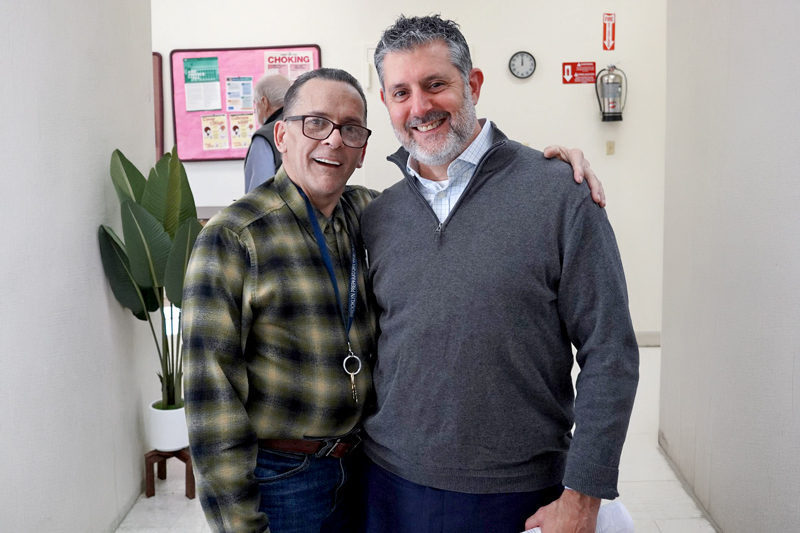
Marc Damsky, MPH, with a client on a visit to SPOP. Photo Credit: Manny Amatrudo
As the only agency in New York City that is entirely dedicated to community-based behavioral healthcare for older adults, SPOP plays a vital role in the healthcare and aging sectors. We have assembled a staff with unrivalled expertise in aging and mental health, and we provide treatment to more than 1,000 clients annually. Marc, how does our work at SPOP fit within MCHF’s mission?
Marc Damsky: Thanks, Catherine, and I’m really looking forward to this conversation. As you know, MCHF seeks to honor the legacy of our namesake by advancing the health and well-being of underserved and vulnerable populations across New York State. Our work is organized through five program areas: Basic Needs, Access to Healthcare, Mental and Behavioral Health, Healthcare Workforce, and a General Fund that supports our eight priority populations: immigrants, veterans, older adults, pregnant women/new parents/children, youth and young adults, and other low-income individuals.
I serve on the Mental and Behavioral Health Team. Our grants in this area focus on the full spectrum of issues: raising awareness and reducing stigma; advancing prevention; expanding access to services and treatment; and supporting individuals in their recovery. We recognize that mental and behavioral health is impacted by an individual’s background, culture, community, and systems they may interact with. As a result, we strive to support work that is integrated, culturally responsive, and person-centered. We are grateful for our partnership with SPOP, which aligns with one of MCHF’s areas of interest – addressing the mental health of rural older adults.
We also understand the critical role that the workforce plays in all of this. Can you talk about the specific workforce challenges SPOP faces?
Catherine Thurston: Staff recruitment and retention are high priorities for us. We monitor annual compensation trends to remain competitive, even as community-based agencies like ours face challenges in matching the resources of large hospital systems. The demand for specialized roles — particularly bilingual prescribers and social workers — underscores the complexity of our mission, and these positions require a rare combination of skills that are essential to serving our diverse community.
At SPOP, we are committed to fostering a workplace culture where staff feel valued, supported, and inspired. Using the resources that we have at our disposal, we are always looking for ways to build a positive workplace culture. We encourage a healthy work-life balance, with little evening or weekend obligations and generous time off for vacation and wellness. We were fortunate to receive a NY State Office of Mental Health grant to support social work student loan repayment, which has been a great perk for our staff. We also offer generous staff training, continuing education, and advancement opportunities – all of which have resulted in an average annual retention rate of over 80-90%, reflecting the strength of our organizational culture.
For those entering the field, ageism is one of our greatest challenges. Negative, harmful stereotypes persist – such as the belief that “depression is a normal part of aging” or that “older people can’t change.” I see proof every single day that the opposite is true. Older adults demonstrate resilience, growth, and joy, and it is my personal mission to inspire every social work student to toss out these misconceptions and discover how profoundly gratifying it is to work with older adults.
Marc, how do you think about the behavioral health workforce challenges within New York State?
Marc: I’m impressed by your retention rate, Catherine. Our perspective on the challenges is very similar. We see how pipeline and retention issues contribute to large vacancy rates – reported to us as high as 40% – which inevitably affect service delivery. We have learned that barriers preventing more people from entering the field include the following: stigma, as you note; affordability of obtaining a master’s degree, certification, or even the development of a new skill; insufficient wraparound supports such as childcare, tutoring, or mental health counseling, which are critical for successful completion of a program; and limited access to high quality internships. Ideally, we envision a workforce that reflects the communities it serves with opportunities for professional development in topics such as trauma, utilizing evidence-based practices, and specialized support for populations with unique needs such as veterans, survivors of domestic violence, or older adults.
In terms of retention issues, we understand compensation is a major factor, but so are effective supervision, opportunities for career growth, and strategies to reduce burnout. And as a funder supporting all of New York State, we are acutely aware of the shortage of mental health professionals in rural areas, which compounds these challenges.
But enough complaining about problems. I’d love to hear more about how SPOP is actively addressing these challenges.
Catherine: I’m so glad you asked! First, I can’t tell you how tremendously proud we are of our student internship program for social workers. With support from the Mother Cabrini Health Foundation, we have built a nine-month internship program that fully integrates students into the agency. They receive excellent training and supervision and gain hands-on experience serving clients across all clinical programs. The students receive a stipend – which, unfortunately, is not the norm in our field – as well as mentorship opportunities and invitations to participate in clinical training sessions. Although it’s too soon to measure the internship program’s long-term impact on students’ career plans, last year’s participants expressed a strong interest in pursuing work in the aging sector, which is encouraging.
Looking beyond our own staff, we have also expanded our workforce training offerings in aging and mental health. For more than 25 years, SPOP has provided training designed to expand the knowledge, skills, and confidence of those who work with an older population. Thanks to grant funding from the MCHF, in 2025 we expanded that program statewide.
Using targeted outreach and marketing, we have provided no-cost training webinars to over 400 individuals throughout New York State this year, including about 150 participants from rural communities. We also partnered with the Dutchess County Department of Mental Health and Dutchess County Office for the Aging to offer two full days of customized workshops on aging and mental health, developed specifically to fill knowledge and skills gaps that they had identified. This collaboration – remarkably, the first of its kind between these two agencies – brought together 27 staff members for shared learning and skills building.
I can’t overemphasize how valuable this kind of experience can be for mental health and aging services professionals who are burned out or feel alone in their work. We look forward to doing more on-site consulting and learning with providers throughout the state.
How does MCHF address workforce issues?
Marc: Yes, we are proud of our partnership with SPOP to address stigma surrounding mental health and ageism, and the internship program to help strengthen the pipeline. Other projects we’re supporting to expand and diversify the workforce include educational scholarship programs, wraparound supports for graduate students to improve graduation rates and help them pass required certification/licensing exams, and programs that introduce high school students to rewarding careers in mental health through classes that can be applied toward college credit in a concentration for future work in mental health. Other grants invest in helping bilingual college graduates living in workforce shortage areas to obtain a master’s degree, enabling them to practice in communities where they already happily reside.
Retention initiatives focus on employee recognition, supporting fair-market salaries, professional development, including supervision required for social workers to become LCSWs, and training to obtain skills to treat trauma or use evidence-based practices for SUDs or other complex conditions. We have also supported a social work residency program and a career ladder initiative to provide opportunities for lower-level workers to become mid-level managers.
MCHF recognizes the unique role foundations can play in supporting these initiatives that are essential and not reimbursable. At the same time, we are mindful that any project in mental and behavioral health we seek to fund needs to include staff, and should not be individuals pulled from other existing, core services. This is where providers and foundations can effectively collaborate.
How do you see direct service providers and funders working more closely together to address these issues?
Catherine: One of the important lessons we have learned is the power of collaboration. By working with staff from the Mother Cabrini Health Foundation, mental healthcare and aging services providers in the field, local and regional agencies, and schools of social work, we have expanded the conversation about aging and mental health throughout the state of New York. Together, we strengthened the workforce by providing skills-based training to more than 400 individuals and welcomed social work interns into the broader community of mental healthcare providers.
At SPOP we envision a world that values older adults and ensures age-affirming behavioral healthcare for all. But we know we cannot achieve this vision alone. Strategic alliances are the most effective way I know to overcome ageism and stigma related to mental health, raise awareness of the benefits of mental healthcare at every stage of life, and build a workforce equipped to support the health and independence of older adults.
Marc: I couldn’t agree more – partnerships and collaboration are critical in any work in mental and behavioral health. These problems are too large and complex to go at them alone. That is why we value our partnership with SPOP. Your perspective has helped shape how we view opportunities to improve mental and behavioral health outcomes for rural older adults, and your partnerships with adjacent sectors and organizations have advanced our shared mission. In turn, I know the connections we have facilitated have helped expand your work throughout New York State.
We must remain open to having an ongoing dialogue — identifying the problems and collectively brainstorming solutions that work.
Thank you, Catherine, for your partnership and for this meaningful conversation.
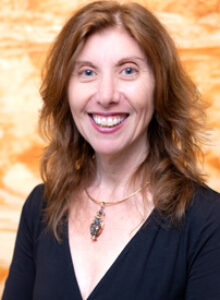
Catherine Thurston, LCSW, has served as Chief Executive Officer of Service Program for Older People (SPOP) since 2024, having previously served as Chief Program Officer. She has over 35 years of experience in gerontological social work. She has been a member of the Adjunct Faculty at the Silberman School of Social Work at Hunter College since 2016. She received her Masters of Social Work from Hunter College School of Social Work.
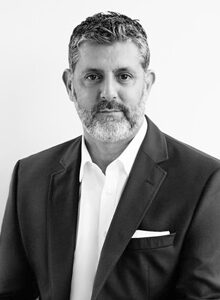
Marc Damsky, MPH, is a Senior Program Officer at the Mother Cabrini Health Foundation, supporting its grantmaking focused on Mental and Behavioral Health and responding to needs in the Long Island region. He received his BS from Brandeis University and Masters in Public Health from The Mailman School of Public Health. Before coming to MCHF, he spent his career in the service delivery system focused on older adults across different long term care settings and those with serious mental illness throughout New York City.