The quiet exhaustion in Sarah’s eyes told a story that statistics could never capture. After eight years as a behavioral health nurse, she found herself sitting in her car each morning, summoning the strength to walk through the clinic doors. Anxiety in her chest, her neck, and the very hands she uses to heal. Her experience mirrors that of countless professionals across behavioral health settings who carry not only their own stress but also absorb the trauma of those they serve. This invisible weight has become an unspoken epidemic within our caring professions (National Council for Mental Wellbeing, 2023).

As someone who has walked the hospital floors for over 25 years and witnessed firsthand the toll that unaddressed trauma takes on healthcare workers, I understand that transforming our workplaces requires more than policy changes. It demands a fundamental shift in how we see, support, and sustain the humans who dedicate their lives to healing others. The journey from a traditional workplace to a trauma-informed environment is about creating spaces where professionals can thrive, heal, and rediscover their purpose.
Understanding the Depth of Professional Trauma
Burnout in behavioral health extends far beyond simple workplace stress. These professionals navigate unique challenges: bearing witness to human suffering, managing crisis situations, working within systems that often feel broken, and carrying the weight of life-and-death decisions. Secondary trauma compounds these challenges. Each story of abuse, each suicide attempt prevented or lost, each child removed from their home leaves an imprint on the professional’s psyche (SAMHSA, 2014).
Research reveals that up to 70% of behavioral health workers experience high levels of burnout, while secondary trauma affects nearly half of all mental health professionals (National Council for Mental Wellbeing, 2023). These numbers represent real people with families, dreams, and their own histories of resilience and struggle. When we fail to address these realities, we create environments where the helpers themselves become wounded, where compassion fatigue replaces the calling that brought them to this work (Maslach & Leiter, 2016).
The physical manifestations are equally concerning. Chronic stress activation leads to inflammation, cardiovascular strain, immune suppression, and disrupted sleep (The Joint Commission, 2019). Emotionally, professionals may experience numbness, hypervigilance, intrusive thoughts about client situations, and gradual erosion of hope. The ripple effects extend into personal relationships and overall quality of life.
The Foundation of Trauma-Informed Transformation
Creating a trauma-informed workplace begins with acknowledging that trauma lives within our walls, shapes our policies, and influences every interaction (SAMHSA, 2014). A truly trauma-informed organization recognizes that healing happens in relationships and that safety must be felt, not just spoken of.
The transformation starts with leadership embodying vulnerability and authenticity. When leaders share their own struggles with secondary trauma and demonstrate genuine care for staff wellbeing, they give permission for others to acknowledge their humanity (The Joint Commission, 2014). This cultural shift moves us away from the harmful myth that professional strength means emotional invulnerability.
Physical safety forms the first layer, but psychological safety runs deeper. Team members need to trust that mistakes will be met with curiosity rather than punishment, that asking for help signals wisdom rather than weakness, and that their whole selves are welcome in the workplace. This requires dismantling the perfectionism and stoicism that traditional healthcare cultures often demand.
Building Blocks of a Supportive Infrastructure
The practical implementation of trauma-informed principles requires intentional structure and consistent investment (SAMHSA, 2014). Regular supervision that goes beyond case management to include emotional processing becomes essential. These sessions offer space for professionals to explore how client work affects them personally and to develop personalized coping strategies.
Peer support programs create network of understanding. When colleagues can share experiences without fear of judgement, isolation dissolves and collective wisdom emerges. These conditions remind us that struggling with this work’s weight is not personal failure but a shared human response to witnessing suffering.
Training must evolve beyond clinical skills to include self-awareness, emotional regulation, and trauma stewardship. Professionals need practical tools for managing their nervous systems, processing difficult emotions, and maintaining boundaries without losing compassion.
Unrealistic caseloads create conditions where burnout becomes inevitable (Maslach & Leiter, 2016). Organizations must advocate for sustainable practice models, even when facing financial pressures. Turnover and staff burnout cost more in the long run than short-term productivity gains (National Council for Mental Wellbeing, 2023).
Innovative Solutions: The Role of Technology in Support
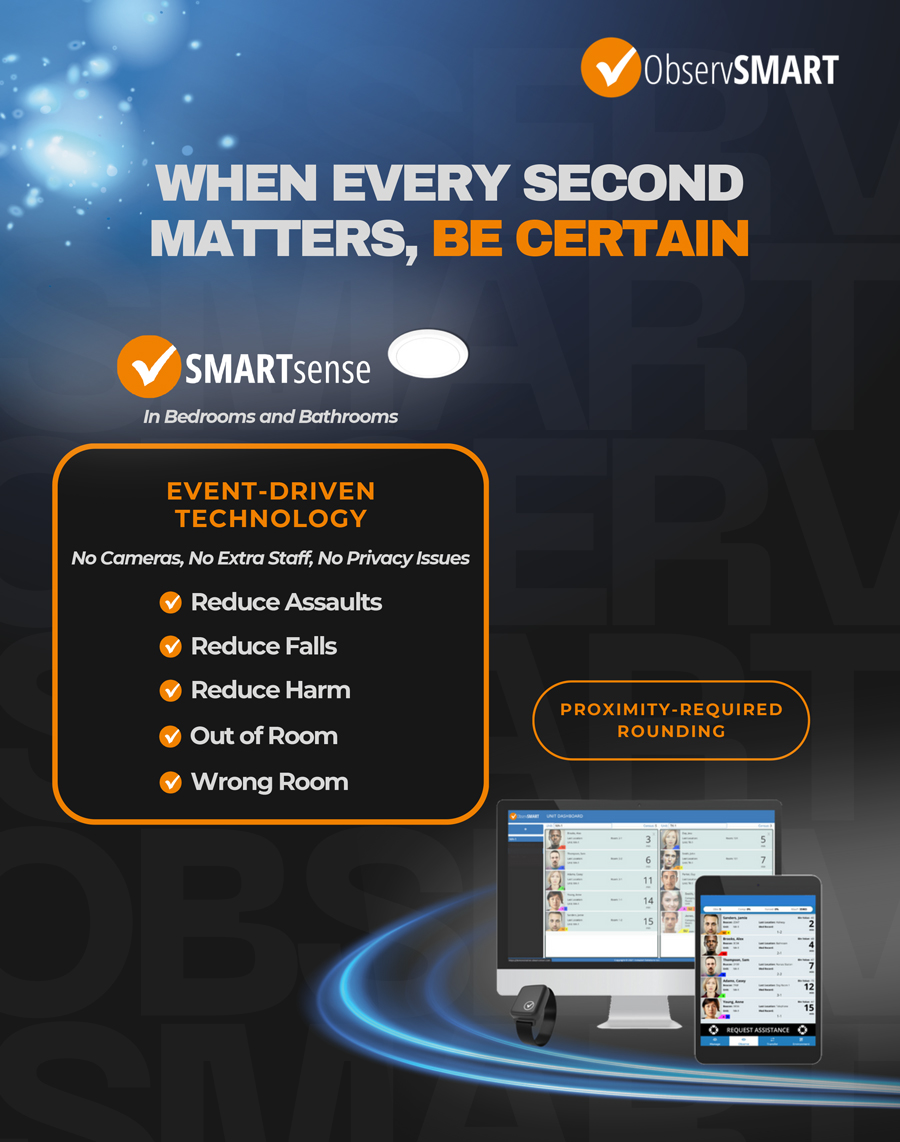
Within this framework of transformation, innovative tools like ObservSMART’s suite of solutions demonstrate how technology can support human connection in trauma-informed care. ObservSMART’s proximity-required rounding promotes staff engagement with patients. Case studies show after using ObservSMART, patient satisfaction improved, aggression decreased, and patient-related employee injury decreased by 60%.
Their SMARTsense technology provides discrete, flush-mounted ceiling nodes in patient bedrooms and bathrooms. Staff can be alerted to immediate concerns without cameras or privacy issues. These silent alerts quickly communicate that staff are needed before escalation occurs, creating an additional layer of safety for everyone in behavioral health settings.
The system’s request assistance feature silently summons support during escalating situations, reducing the traumatic impact of crisis interventions. Staff members know help is at their fingertips, decreasing the hypervigilance that contributes to burnout. This backup allows professionals to remain present and regulated even in challenging moments.
ObservSMART’s approach aligns with trauma-informed principles by prioritizing dignity and respect. The discrete nature prevents situations from escalating due to visible security responses. When professionals feel safer, they maintain the calm, compassionate presence that trauma-informed care requires.
Data collected through such systems supports organizational learning. Patterns in alert usage identify environmental or systemic factors contributing to crisis situations, allowing organizations to address root causes rather than managing symptoms.
Creating Rituals of Resilience and Recovery
Sustainable trauma-informed practice requires intentional rituals that help professionals metabolize difficult experiences. Beginning shifts with brief grounding exercises help teams center themselves before entering clinical work intensity. These moments create a buffer between personal life and professional demands.
Closing rituals are equally important. Taking five minutes at shift end to acknowledge what was witnessed, accomplished, and what can be released prevents accumulation of unprocessed experiences. Some teams light candles for struggling clients, while others share gratitude or sit in silent acknowledgment.
Regular debriefing after critical incidents must become standard practice. These sessions help teams process traumatic events collectively, preventing isolation and promoting post-traumatic growth. The focus extends beyond what happened to explore how team members make meaning of experiences and what support they need.
Sustaining the Journey Together
The path toward a truly trauma-informed workplace isn’t linear. There will be setbacks and moments when old patterns feel easier. This is where collective commitment becomes essential. When organizations embed trauma-informed principles into their mission, policies, and daily practices, transformation becomes sustainable.
Regular assessment using validated tools helps track progress and identify areas needing attention. Staff surveys measuring psychological safety, secondary trauma symptoms, and job satisfaction provide concrete data to guide interventions (Maslach & Leiter, 2016). Creating multiple feedback channels ensures those most affected by policies have voice in shaping them.
A Vision of Transformation
Imagine walking into a behavioral health facility where the atmosphere conveys safety and care. Where staff faces reflect presence rather than exhaustion. Where trust has been carefully cultivated. This is achievable when organizations commit to trauma-informed transformation.
Now imagine Sarah in a different story. She arrives early, not to steel herself, but to enjoy coffee with colleagues in a sanctuary space featuring warm colors, artwork, and comfortable chairs inviting connection.
Her caseload is sustainable to 20 clients. Leadership advocated data about turnover costs and client outcomes. Sarah has time to breathe between sessions, eat lunch, and document thoughtfully. She ends notes with emotional reflection, encouraged by her supervisor who models vulnerability.
Sarah’s family notices too. She comes home with energy for her children, present for dinner conversations. Sunday night dread has been replaced with curiosity about the week ahead. She sleeps through the night. Her therapist observes, “You seem different, not because you’ve changed, but because you’ve been given space to be who you always were.” This may seem like a pipedream to most healthcare workers, but it IS possible!
Picture Sarah now, sitting in her car, feeling something forgotten, genuine excitement to walk through those doors, join her team, do the work she was called to do. This is the promise of trauma-informed transformation.

Susie Branagan, RN, BSN, is a healthcare consultant, trauma-informed care specialist, and founder of Susie Branagan Consulting. For additional information, contact Susie at susiebranaganconsulting@outlook.com or linkedin.com/company/susie-branagan-consulting.
References
Maslach, C., & Leiter, M. P. (2016). Understanding the burnout experience: Recent research and its implications for psychiatry.
National Council for Mental Wellbeing. (2023). 2023 Health Care Workforce Survey: Understanding the mental health crisis among healthcare workers.
Substance Abuse and Mental Health Services Administration. (2014). SAMHSA’s Concept of Trauma and Guidance for a Trauma-Informed Approach. HHS Publication No. (SMA) 14-4884. Rockville, MD: Substance Abuse and Mental Health Services Administration.
The Joint Commissions. (2019). Developing resilience to combat nurse burnout. Quick Safety Issue 50.