Few athletes know pressure like Carli Lloyd. Across two decades on the world’s biggest stages, she not only met it, but she also thrived in it. I wanted to know her secret. With two Olympic gold medals, two FIFA World Cup championships, she’s a National Soccer Hall of Fame member, and two-time FIFA World Player of the Year. She has challenged gender stereotypes, and inspired millions of young athletes globally. Most known for her career with the U.S. Lloyd has made history earning 316 National Team Appearances, 134 goals, and 64 assists. Today she brings that same drive and insight in front of the camera, working as a TV analyst for FOX Sports, covering men’s and women’s soccer for millions of viewers.
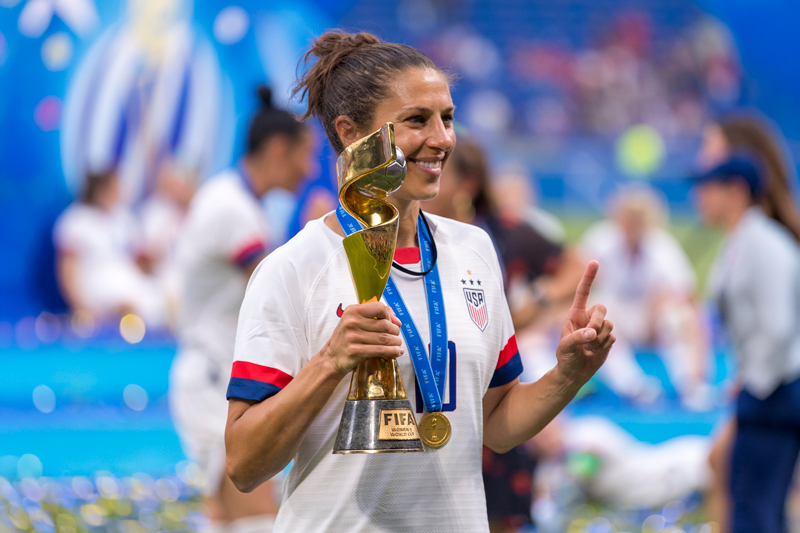
Carli Lloyd on the U.S. Women’s National Team c/o ISI Photos and U.S. Soccer
I had the opportunity to sit down with Carli to talk about the toll pressure can take, how conversations around mental health have evolved, and what advice she has for high school athletes, like me, who are navigating their own challenges.
Chandler: There’s often pressure to ‘tough it out’ in sports. Was there ever a moment where you realized strength also meant allowing yourself to feel and reflect?
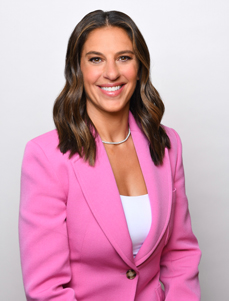
Carli Lloyd
Carli: I pushed myself a good portion of my career. I felt like the space I was in for several years didn’t really give me the grace of not putting as much pressure on myself. That was the environment created within our team was that we had to push, we had to be strong, and you couldn’t show any sign of weakness. I feel like it wasn’t until I got near the end of my career where I kind of let my guard down a little bit and became more vulnerable. I think there’s a fine balance of pushing yourself and knowing the situation you’re in, but also giving yourself that grace to know that it’s ok to show some signs of weakness, but I felt like during my time, there was not a space for me to be able to do that, because I felt like my spot would’ve been taken.
Chandler: Were there any specific moments in your career where you felt that your mental health was being overlooked?
Carli: I think what’s hard is when you get to the top of somewhere, the expectation and the pressures that come with it are really, great. My generation of players, I would say, you had to get through a lot of those moments. There were teammates that doubted me, there were coaches that doubted me, there were media and fans that doubted me, all these things throughout my career, and I just said you know, I’m going to roll my sleeves up. I’m going to work even harder. I’m going to prove the doubters wrong. I think it’s just a different space now, where people are focusing a little more on the mental health side, but I wouldn’t do anything necessarily different because I think that it hardened me, made me stronger, made me into the player and person that I am today. But I don’t think people really made an effort to hone in on people’s mental health. It was just a different time, a different era, but I embraced that and fought back even harder.
Chandler: What advice would you give to a teenager now, who feels like they’re struggling with a personal mental health crisis?
Carli: I think the biggest thing I would say is to remove what’s not healthy in your life. I think you are all growing up in a generation different from the world I grew up in. You have social media, you have everything being plastered everywhere, what you should look like, what you should do, what you should buy, and I think it goes back to just trying to embrace who you are as a human being. If there are some things in your life that aren’t healthy for you, if that’s social media- get rid of it, if it’s your friends- get rid of it. And I know that’s hard because of the pressures, but I just go back to trying to be the best human being you can be. The pressures of growing up are difficult, but if you can surround yourself with the people that help you the most, that can offer you the best advice, I think that would be the best thing.
Chandler: How do you deal with social media hate?
Carli: I think there’s a false reality of life of what’s being put out there in social media. I’ve always tried to lead an authentic life. A lot of what you see isn’t the real true reflection of people’s lives. I don’t get my validation from outside people or social media. I think the most important thing is you can’t look at people who don’t know who you are for feedback in your life. What makes me happy is just being real, being authentic, being with people that mean the most to me. That’s my support system, husband, family, and friends.
Chandler: What tools or practices have helped you the most with your mental health, especially during moments of self-doubt or public criticism?
Carli: Relying on my support system, that is a big one. I think it’s important to have people in your corner who are not going to kill you to death, but they are going to support you and give you tough love. Getting through challenging situations, like failing, struggling, injuries, if a coach benched me or if I got cut, being able to brush that off and fight back and build myself back up allowed me to become more mentally tough. Self-reflection also helped, reading books, self-help books, motivational books, and quotes.
Chandler: What lessons do you try to pass on to kids you coach?
Carli: I do some soccer clinics, and I always tell the parents, I’m not going to turn your son or daughter into a professional soccer player. The most important thing to me is to get across the messaging of just trying to be a good human being. Sports can bring that out in people. It can help in your social life, your athletic life and educational life. It’s just honing those skills of being a good person, being a good teammate, being a good student, working hard, knowing that things aren’t going to be handed to you. Be more in love with yourself. People put so much pressure on how they must be as a person, if you look a certain way, or grew up in a certain household it shouldn’t matter. Everyone brings something unique to the table. I think the most important thing is to know you’re unique and embrace who you are as a person. And every single day just try to do a little something to get better.
Carli Lloyd’s story reminds us that greatness isn’t just measured in medals or goals. It’s also about real conversations, talking honestly about mental health and sharing wisdom to guide the next generation. As I left our conversation, what stayed with me most was how grounded Carli is and that vulnerability is not weakness, resilience doesn’t mean going alone, and protecting your mental health is just as vital as chasing any dream. The biggest action I’m taking from our conversation is evaluating what’s not healthy in my own life and removing it.

Chandler Stone is a high school student, athlete, and mental health advocate. She volunteers at a crisis center answering calls to support people in need and leads community programs that provide tutoring and resources for kids experiencing homelessness in Los Angeles. For more information, email ChandlerGStone@icloud.com.